Blind & Brush

What Size Ground Blind Do I Need?

Blind sizing by the numbers — the floor width one hunter, two hunters or a kid and a mentor actually need, and why every size claim on the box is optimistic.

By Stephen V.Last updated How we pick

How this is funded: we earn a commission if you buy through our links, at no extra cost to you. It never changes which product we recommend, and we’ll tell you plainly when we’d skip one. Full disclosure.

One hunter: a compact hub blind is genuinely enough, and if you carry your blind it is the right answer. Two hunters who both intend to shoot: roughly 75 inches of interior width. Three or four, or a family sit: a 95-inch footprint, and accept that you are now buying a blind you drive to.

The reason sizing goes wrong is that everyone shops the number on the bag. Person-ratings count bodies, not hunters — they tell you how many people fit shoulder to shoulder, and say nothing about whether either of them can draw a bow, swing a crossbow or pivot a rifle on a tripod. A blind sold as 2-person with a 60-inch wall will hold two people and let neither of them shoot.

So the number to shop is the interior dimension at elbow height, and the second number is center height if you draw a bow. Below: the ladder with published footprints, then the four situations that change the answer, then the three things sizing up actually costs you.

Why every size claim is optimistic

A blind’s advertised footprint is measured hub to hub at the widest point, which is not where you are sitting. The walls slope in, so the floor you can actually use is smaller than the number, and the space at shoulder height is smaller again. Then subtract what you brought: a chair takes a square foot and a half, a pack takes another, a heater needs clearance on all sides for safety, and a tripod has three legs splayed.

A practical way to do this at home before you buy. Set your hunting chair in a room, sit in it with your bow or your rifle, and get someone to mark the floor at the widest point of every movement you need to make — drawing, swinging to your weak side, reaching the window. Measure the box you just drew. That is your minimum interior dimension, and it is almost always larger than people expect.

One more subtraction people forget: a heater needs real clearance. Portable propane radiant heaters are the standard blind heat source and they are the reason the safety guidance exists at all — we cover the ventilation rules in ground blind heater safety. If you plan to run one, its footprint and its clearance are part of your size calculation, not an accessory you add later.

The specs that answer this, and the ones nobody publishes

Three published numbers settle the sizing question, and most blinds give you one or none:

Footprint. A hub-to-hub figure like 75 by 75 inches or 95 by 95 inches. This is the most useful single number and plenty of makers simply do not state it.

Center height. 67 inches and 71 inches are real figures from blinds in this list. This is what decides whether a seated draw works.

Packed weight.15 lb is a published figure on one blind here and “Not published” on several others. It decides whether you will carry the thing.

Where a maker does not publish a value we render it as “Not published” rather than estimating it, and on a sizing question that absence is a genuine reason to pick a different blind. You cannot shortlist on a dimension nobody will state.

The size ladder, with published footprints

One blind at each rung, chosen because each publishes a footprint or a capacity you can check rather than a person-rating you cannot. Prices are live — check the “as of” stamp under each button.

Quick picks

Ranked on published specs, concealment fit and value. Select a row to jump to the full write-up. We have not field-tested this gear — here is exactly what we do instead.

#ProductBest forPrice
1
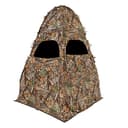
Ameristep Outhouse Lightweight Blind

Ameristep Outhouse Lightweight Blind

The lightweight, low-cost option for a hunter who moves — an easy hub blind you can carry deep and set fast without much weight penalty. It skips the premium features, and for a mobile, budget-first setup that is exactly the point.

One hunter, carried in
$84.99 · View on Amazon

Price as of October 10, 2026. #ad How we’re funded

2
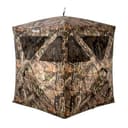
Ameristep Care Taker Ground Blind

Ameristep Care Taker Ground Blind

The blind most hunters should buy first: a genuine hub blind that sets up in seconds, packs small, and costs about a third of the premium names. It is the honest default for a beginner or a run-and-gun setup, and the reason it tops this list is value, not luxury.

One hunter with a bow
$88.00 · View on Amazon

$109.9920% off

Price as of October 10, 2026. #ad How we’re funded

3
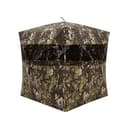
Barronett Ace 250 Hub Blind

Barronett Ace 250 Hub Blind

The pick when floor space matters more than pack size — a 75-by-75-inch hub with a silent panoramic front window, so a gun hunter in a chair and a second person still have room to move. Barronett includes detachable blaze-orange panels for firearm season, a real-world detail most makers ignore.

Two hunters, or one with a gun rest
$158.62 · View on Amazon

Price as of October 10, 2026. #ad How we’re funded

4
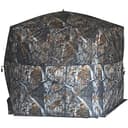
THUNDERBAY Gobbler Lodge 5-Side (4-Person)

THUNDERBAY Gobbler Lodge 5-Side (4-Person)

A lot of blind for the money — a large, tall hub blind with a blackout interior and repositionable windows, at a mid-tier price. The value choice for a family or a comfortable all-day sit where you're not carrying it far.

Three to four, or a family sit
#1One hunter, carried inLightweight hub blind

Ameristep Outhouse Lightweight Blind

The lightweight, low-cost option for a hunter who moves — an easy hub blind you can carry deep and set fast without much weight penalty. It skips the premium features, and for a mobile, budget-first setup that is exactly the point.

Strengths

  • Light and compact for how far you can pack it
  • Fast spring-steel hub setup
  • One of the cheapest real hub blinds available

Trade-offs

  • Thinner shell — it is a value blind, not a fortress
  • Snugger interior; plan on a solo sit
TypeHub-style pop-up
Capacity1-2 hunters
FrameSpring-steel hub
Shoot-through mesh windowsNot published
Packed weightNot published

The spec that matters. For a mobile blind, packed weight and set-up speed beat luxury features — you'll actually carry it to the right spot instead of leaving it in the truck because it's a hassle.

Specs read from the product listing, on July 22, 2026. “Not published” means the maker does not state that figure.

#2One hunter with a bowHub ground blind

Ameristep Care Taker Ground Blind

The blind most hunters should buy first: a genuine hub blind that sets up in seconds, packs small, and costs about a third of the premium names. It is the honest default for a beginner or a run-and-gun setup, and the reason it tops this list is value, not luxury.

Strengths

  • Hub design snaps open and shut in seconds with no pole threading
  • Packs to a compact carry disc that fits behind a truck seat
  • Durametric shell and shoot-through mesh windows at an entry price

Trade-offs

  • Tight for two hunters — it is really a solo or archery-first blind
  • Lighter fabric than the premium blinds; treat the zippers gently in cold
TypeHub-style pop-up
Capacity1 hunter (roomy) / 2 tight
Shoot-through mesh windowsYes
Blackout interiorNot published
Packed weightNot published

The spec that matters. The spec that decides a blind is the WINDOW layout, not the brand. The Care Taker's shoot-through mesh lets you draw a bow behind cover; that matters more for concealment than a few extra denier of fabric.

Specs read from the product listing, on July 22, 2026. “Not published” means the maker does not state that figure.

#3Two hunters, or one with a gun restRoomy hub blind

Barronett Ace 250 Hub Blind

The pick when floor space matters more than pack size — a 75-by-75-inch hub with a silent panoramic front window, so a gun hunter in a chair and a second person still have room to move. Barronett includes detachable blaze-orange panels for firearm season, a real-world detail most makers ignore.

Strengths

  • 75 x 75 in. floor and 67 in. of height — genuine elbow room for two
  • Silent, adjustable panoramic front window suits rifle and shotgun sightlines
  • Detachable blaze-orange safety panels included for gun season

Trade-offs

  • 15 lb packed — not a walk-in-deep blind
  • The shoot-through mesh is rated for broadheads only, so firearms shoot an open window
TypeHub-style pop-up
Footprint75 x 75 in., 67 in. tall
Packed weight15 lb
Shoot-through meshYes — broadhead use only
FabricHD 150 denier, black interior coating

The spec that matters. Room is a trade against concealment: a bigger box is a bigger thing for a deer to notice. If you buy space, plan to brush it in — this one has brush holders built into the shell for exactly that.

Specs read from the product listing, on August 26, 2026. “Not published” means the maker does not state that figure.

#4Three to four, or a family sitLarge hub blind

THUNDERBAY Gobbler Lodge 5-Side (4-Person)

A lot of blind for the money — a large, tall hub blind with a blackout interior and repositionable windows, at a mid-tier price. The value choice for a family or a comfortable all-day sit where you're not carrying it far.

Strengths

  • Roomy 4-person footprint, 95 x 95 inches hub to hub, with a 71-inch center height
  • Black PU-coated interior helps hide movement inside
  • Full-panel sliding windows adjust without noise

Trade-offs

  • Large and heavier — best for a stand-hunt spot you drive to
  • Not the blind for a mobile, cover-ground hunter
Type5-sided hub-style pop-up (6 hubs)
Capacity4 hunters
Blackout interiorYes — black PU coating
Window operationFull-panel sliding, noise-free
Packed weightNot published

The spec that matters. A blackout interior is the underrated concealment spec: it kills the backlight that turns any movement inside the blind into a silhouette a deer can read from the field edge.

Specs read from the product listing, on August 11, 2026. “Not published” means the maker does not state that figure.

The sizing questions that are not about size

Height matters more than floor area for a bowhunter

A seated draw needs vertical clearance above your shoulders and in front of your bow arm. A blind with a generous floor and a low roof will stop you drawing cleanly, and you will find out at the worst moment. The 67-inch and 71-inch center heights on the larger blinds here are what makes them workable for archery, not their square footage. How to shoot a bow from a ground blind covers the mechanics, and bow hunting blind picks rank on draw clearance specifically.

A crossbow needs width, not height

A crossbow is wide at the limbs and long front to back, and you shoot it seated with the forend supported. The binding constraint is the narrowest lateral dimension at seat height — you have to be able to rotate the whole weapon as an animal moves without clipping a wall. That is why the crossbow answer and the bow answer are different blinds; crossbow blind picks ranks on exactly this.

A rifle needs room for a chair and a rest together

A gun hunter’s footprint is a chair plus a tripod plus two boots, and all of it has to be able to pivot. This is the configuration people most consistently under-size for, because they measure themselves and forget the tripod. Blind gun rests and rifle blind picks go through the whole seated-shooting problem.

A kid changes the answer completely

Two adults in a tight blind is uncomfortable. An adult and a bored eleven-year-old in a tight blind is a failed hunt, and possibly a kid who does not want to come again. Buy the floor space, bring snacks, accept that there will be movement, and brush the blind in heavily so the movement does not matter. For a mentored hunt, the blind is the one place to spend more than you think you need — 2-person blinds is the lineup, and the ones with detachable blaze-orange panels solve a legal requirement at the same time.

What sizing up actually costs you

Three costs, and only one of them is money.

Concealment.A bigger blind is a bigger silhouette. That matters because of how deer see: peer-reviewed work on cervid visual ecology describes whitetails as dichromats — sensitive to short blue wavelengths and poor at red and orange — which is a vision system tuned for outline and motion rather than detail. Deer are not reading your camo print, they are reading the shape against the background. A larger shape needs proportionally more cover around it to vanish, which means a bigger blind has to be brushed in rather than merely placed.

Mobility. At the 75-inch size, 15 lb packed is typical. That is a blind you drive to. A heavier blind does not get carried to the right spot, it gets set up in the convenient spot, and that single compromise costs more hunts than any spec on a product page. Where to place a ground blind is the argument for carrying less.

Scent volume.A bigger blind holds a bigger reservoir of human odor and vents it through the windows in a plume. It is not a reason to buy small, but it is a reason to think about your wind before you think about your floor plan — scent control in a ground blind.

One legal note that scales with size

If you hunt public land in firearm season, the blind itself may need blaze orange on it — and the requirement is per-side, so a bigger blind needs more. Minnesota requires a fabric or synthetic ground blind used for deer on public land to carry blaze orange on top visible for 360 degrees, or at least 144 square inches on each side. Wisconsin requires 144 square inches of solid blaze orange or fluorescent pink visible from all directions on DNR-controlled land during firearm deer seasons, plus the owner’s identification on an unoccupied blind. A blind that ships with detachable orange panels has solved this for you; otherwise budget for it. Check your own state’s rules — the numbers differ and the obligation does not.

The short version

Measure yourself, seated, with your weapon and your chair. Then add a foot in the direction you need to swing. Then compare that number to a published interior dimension, not to a person-rating. If the maker does not publish a dimension, that is information too — and it is why the blinds that do publish footprints and heights are the ones worth shortlisting.

If you are still deciding between categories rather than sizes, how to choose a ground blind runs the full decision, and best budget ground blinds covers what each rung of this ladder costs today.
Frequently asked questions

What size ground blind do I need for one person?

A compact hub blind is genuinely enough for one hunter, and it is the right buy if you carry the blind at all. Where one hunter needs more is bow hunting and gun hunting with a rest: drawing a bow seated needs interior height, and a rifle on a tripod needs lateral room to swing. If either applies, step up to roughly a 75-inch interior dimension rather than buying the smallest blind available.

What size deer blind do I need for 2 people?

Think about 75 inches of interior width as the realistic minimum for two adults who both intend to shoot — that is enough for two chairs side by side with room to turn. Blinds marketed as 2-person with a 60-inch wall will physically hold two people and will not let either of them swing a bow or a rifle. For two adults plus gear, or two gun hunters with rests, size up again.

What size blind do I need for 3 or 4 people?

A 95-inch footprint with a center height around 70 inches is the realistic four-person size, and at that point you are buying a blind you drive to rather than carry. Be honest about the trade: a four-person blind is a large, angular object in a deer's living room, so it needs to be brushed in and ideally set weeks early. Three people in a two-person blind fails for a different reason — noise and movement, not floor area.

Are ground blind person-ratings accurate?

Treat them as marketing, not specification. A person-rating counts how many bodies fit, not how many hunters can operate a weapon, and it never accounts for chairs, packs, a heater or a tripod — all of which take floor. The useful number is the interior dimension at elbow height, which is why we list published footprints and heights on every blind and show 'Not published' where a maker will not state one.

Is a bigger ground blind harder to hide?

Yes, and it is the real cost of sizing up. A bigger box is a bigger silhouette for an animal whose vision is tuned for outline and motion rather than detail, and it needs proportionally more natural cover around it to disappear. Bigger blinds also weigh more — 15 lb packed is common at the 75-inch size — so they tend to end up in the convenient spot rather than the right one.

Sources

Keep reading