Blind & Brush

Is Military Camo Good for Hunting?

Army surplus hides you from a human. Hunting camo hides you from a dichromat with motion-tuned eyes — and the gap between those two problems is bigger than the pattern.

By Stephen V.Last updated How we pick

How this is funded:we earn a commission if you buy through our links, at no extra cost to you. It never changes which product we recommend, and we’ll tell you plainly when we’d skip one. Full disclosure.

Military camo works well enough against a deer and badly as hunting clothing — and the reason is noise and insulation, not pattern. Army surplus was designed to defeat human vision at distance, including human vision through optics and across the near-infrared band. Deer are a completely different detection problem: they are dichromats with poor red-and-orange discrimination and motion-tuned eyes, and they are standing at ten to thirty yards rather than at four hundred. Against that, a surplus pattern breaks up your outline about as well as a hunting pattern does.

So if the pattern is fine, what is the catch? Three things: surplus fabric is usually loud, it is cut for moving rather than for sitting motionless in the cold, and it has almost certainly been washed in detergent containing optical brighteners — which is the one way military clothing really can make you more visible to a deer. There is also a legal catch that surprises people. Here is the whole picture.

What deer actually see

A peer-reviewed review of cervid visual ecology describes deer as dichromats: sensitive to short, blue wavelengths and poor at the red and orange end of the spectrum. The foundational electrophysiological measurements on white-tailed and fallow deer put whitetail cone sensitivity peaks at roughly 450-460 nm (blue) and around 537 nm. Two conclusions follow, and they reframe this entire question.

First, pattern detail is not what gives you away.Deer have relatively poor visual acuity compared with a human and no red-green discrimination to speak of. They detect you by motion and by the outline of a large vertical shape that does not belong. A pattern’s job is to disrupt that outline — and a disruptive-pattern military print does that. The National Deer Association, drawing on University of Georgia research, makes the same point: sight is not the whitetail’s primary defense, and the nose is. Our page on deer vision explained and do deer see color go further into the science.

Second, blue is the real enemy.Because deer are most sensitive at the short-wavelength end, fabric that reflects strongly in blue is conspicuous to them in a way it is not to you. Many ordinary household laundry detergents contain optical brighteners designed to do exactly that — make whites look whiter by reflecting in the blue and near-UV range. A surplus jacket that has been through years of standard-issue laundry is a plausible candidate for that problem, and you cannot see it. Washing in a scent-free, brightener-free hunting detergent before you hunt in surplus is not optional; it is the single most important thing you can do to it. Our laundry detergent picks and how to wash hunting clothes cover the routine.

The three things surplus actually costs you

1. Noise

This is the real reason not to hunt in surplus, and it has nothing to do with camouflage. Military outer fabrics are chosen for durability and abrasion resistance, not silence. Ripstop nylon, stiff cotton duck and hook-and-loop closures all make noise when they brush against a blind wall, a branch or your own arm at full draw. A deer at twelve yards hears that. Purpose-built hunting outerwear is designed around brushed fleece and quiet softshell faces for exactly this reason, which is why we rank noise above pattern in our camo picks and why silencing your gear is a bigger lever than most purchases.

2. Insulation for a motionless sit

Military clothing is designed for people who are moving, carrying loads and generating heat. Hunting clothing — especially blind and stand clothing — is designed for someone producing almost no heat for six hours. Those are different garments. A surplus field jacket that is comfortable on a march is cold in a chair at first light, and a cold hunter fidgets, which is the thing that actually gets you spotted. The layering fix is in how to layer for cold-weather hunting and, for a blind specifically, what to wear deer hunting in a blind.

3. Hunting-specific design

Small things, but they add up: a hood cut to work with a face mask, pockets you can reach while seated and harnessed, articulation for drawing a bow, a safety harness slot, quiet cuffs. None of these exist in surplus because nobody designing a uniform was thinking about them. Whether it matters depends on how you hunt — it matters most to bowhunters and least to someone sitting in a dark blind with a rifle.
What to buy instead, at three budgets

If the appeal of surplus is price, these are the three ways to get quiet, purpose-built camo without paying flagship money. Prices are live — check the “as of” stamp under each button.

Quick picks

Ranked on published specs, concealment fit and value. Select a row to jump to the full write-up. We have not field-tested this gear — here is exactly what we do instead.

#ProductBest forPrice
1
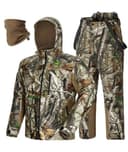
TIDEWE Silent Hunting Suit (Jacket + Pants)

TIDEWE Silent Hunting Suit (Jacket + Pants)

The most gear for the least money — a complete jacket-and-pants suit with a face mask, in a quiet fabric, for the price of a single premium jacket. For a hunter kitting out from scratch on a tight budget, a full silent suit at this price is hard to argue with.

Best budget alternative to surplus
$169.99 · View on Amazon

Price as of October 5, 2026. #ad How we’re funded

2
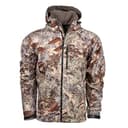
Kings Camo Hunter Series Wind-Defender Fleece Jacket

Kings Camo Hunter Series Wind-Defender Fleece Jacket

The best all-round value in serious camo. Kings' Hunter Series pairs a quiet wind-blocking fleece with the brand's terrain-realistic patterns, giving you Western-grade concealment and warmth without the premium-brand markup. The pick for most hunters who want camo that actually disappears.

Best all-round value
3
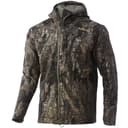
Nomad Harvester NXT Jacket

Nomad Harvester NXT Jacket

The quiet-and-warm specialist for cold sits. Nomad's Harvester is built around a genuinely silent brushed face and wind-blocking membrane — the jacket for a bowhunter who needs to draw at close range in the cold without a single scratch of noise.

Best for quiet cold sits
$130.26 · View on Amazon

Price as of October 5, 2026. #ad How we’re funded

#1Best budget alternative to surplusCamo suit (jacket + pants)

TIDEWE Silent Hunting Suit (Jacket + Pants)

The most gear for the least money — a complete jacket-and-pants suit with a face mask, in a quiet fabric, for the price of a single premium jacket. For a hunter kitting out from scratch on a tight budget, a full silent suit at this price is hard to argue with.

Strengths

  • Full suit — jacket and pants — plus a face mask included
  • Quiet fabric aimed at close-range hunting
  • Remarkable coverage for the price

Trade-offs

  • Sizing runs particular — check the chart before ordering
  • Value construction; not built for a decade of hard seasons
TypeSilent jacket + pants suit
IncludedFace mask
NoiseQuiet fabric
WaterproofNot published
Insulation weightNot published

The spec that matters. Head-to-toe coverage is an underrated concealment spec: a bright face and hands undo a perfect jacket. A suit that includes a face mask solves the two spots hunters most often leave exposed and shining.

Specs read from the product listing, on August 11, 2026. “Not published” means the maker does not state that figure.

#2Best all-round valueCamo jacket (fleece)

Kings Camo Hunter Series Wind-Defender Fleece Jacket

The best all-round value in serious camo. Kings' Hunter Series pairs a quiet wind-blocking fleece with the brand's terrain-realistic patterns, giving you Western-grade concealment and warmth without the premium-brand markup. The pick for most hunters who want camo that actually disappears.

Strengths

  • Quiet wind-defender fleece that blocks wind without rustle
  • Terrain-realistic patterns designed to break up your outline
  • Serious-hunt performance well below premium prices

Trade-offs

  • Fleece is a layer, not a waterproof shell — pair with rain gear
  • Western-style patterns suit open terrain more than deep timber
TypeWind-blocking fleece jacket
PatternKings terrain-realistic camo
NoiseQuiet fleece face
WaterproofNo (wind-resistant)
Insulation weightNot published

The spec that matters. Quiet matters more than the pattern. A deer's eyes read movement and outline, not photorealistic leaves — a silent fabric that doesn't scratch when you draw hides you better than the most detailed pattern in a noisy shell.

Specs read from the product listing, on July 22, 2026. “Not published” means the maker does not state that figure.

#3Best for quiet cold sitsCamo jacket (quiet softshell)

Nomad Harvester NXT Jacket

The quiet-and-warm specialist for cold sits. Nomad's Harvester is built around a genuinely silent brushed face and wind-blocking membrane — the jacket for a bowhunter who needs to draw at close range in the cold without a single scratch of noise.

Strengths

  • Very quiet brushed face for drawing at close range
  • Wind-resistant membrane holds warmth on long sits
  • Cut for layering over a base and mid-layer

Trade-offs

  • Priced above the value jackets
  • Insulation is tuned for cold — too warm for early season
TypeQuiet brushed softshell
NoiseSilent face fabric
Wind resistanceMembrane-backed
PatternNot published
Insulation weightNot published

The spec that matters. For a bowhunter, the single most important clothing spec is noise at full draw. A whisper-quiet face fabric is worth more than an extra layer of insulation — the deer that hears your sleeve scratch is gone before the arrow.

Specs read from the product listing, on July 22, 2026. “Not published” means the maker does not state that figure.

Where military surplus genuinely does work

This is not an argument that surplus is useless. There are four situations where it is a sensible buy, and it is worth being specific about them.

As an outer shell you expect to destroy.Surplus field jackets and trousers are built to be abused, and they are cheap enough to use for scouting, brush clearing, blind-building and setting cameras — work where you will tear fabric and would rather not tear a good jacket. The natural-cover work in building a natural ground blind and brush blinds is exactly that kind of work.

Inside a blind.If you hunt from a blind with a dark interior, the pattern on your clothes is close to irrelevant — a deer looking in sees a dark cavity, not a jacket. Plain dark clothing works as well as any pattern there, which makes a surplus jacket as good as a premium one for the purpose. The full reasoning is in do you need camo in a ground blind.

As a base for a ghillie or leafy layer.If your plan is three-dimensional concealment rather than a printed pattern, what is underneath matters much less. Surplus plus a leafy suit is a legitimately effective and cheap combination — see ghillie suit vs leafy suit and how to use a ghillie suit.

For wool specifically. Surplus wool is the one category where the military product is arguably better than the budget hunting equivalent: genuinely quiet, warm when damp, and built to last. A surplus wool shirt or trousers under a modern shell is a setup plenty of experienced hunters prefer.

The pattern debate matters less than you think

Hunters spend a remarkable amount of energy on which pattern is best, and the evidence does not support the intensity of the argument. If deer read movement and outline rather than pattern detail, then the useful question about any camo — military or hunting — is whether its light and dark areas are the right scale for your distance. Large, high-contrast blobs break up a human outline at a hundred yards and dissolve into a flat shape up close; fine detail does the opposite. That is the actual engineering content of the debate, and it is covered in camo patterns explained, Mossy Oak vs Realtree and choosing camo for your terrain.

Three things do more for your concealment than any pattern choice, and all three are free or nearly so:

  • Breaking up your outline. A straight vertical line in the woods is the most unnatural thing a deer sees all day. Breaking up your outline with cover, position and backdrop beats any garment.
  • Killing your shine.A watch face, a rifle scope, a bow cam, a bare forehead — the specular flashes catch a deer’s eye long before a pattern does. Hiding your shine and glare is a five-minute fix.
  • Not moving. This is the entire game. A hunter in street clothes who does not move is harder to detect than a hunter in flagship camo who fidgets, as staying still while hunting makes plain. Which is also why warmth is a concealment feature: a cold hunter moves.

The legal catch that surprises surplus buyers

Camo pattern is generally not regulated. Blaze orange is, and the rules vary a lot. Texas Parks & Wildlife requires 400 square inches of hunter orange plus orange headgear on public land during firearm seasons. Virginia requires blaze orange or blaze pink during firearms deer season. Those are two states of fifty, and the point is not the specific figures but that you have to check yours— a surplus jacket that is perfectly legal for archery season may put you in violation in November.

If you hunt firearm seasons, that effectively means owning an orange layer regardless of what is underneath, which closes some of the cost gap surplus opens. Our blaze orange picks cover the cheapest compliant options, blaze orange vs camo explains why wearing orange costs you almost nothing against deer, and can deer see blaze orange covers the vision science behind that claim. Bowhunters have their own version of the question in do you need blaze orange for bow season.

The verdict

Military camo is adequate against a deer and inadequate as hunting clothing. The pattern is not the problem — deer were never reading it closely in the first place. The problems are noise at ten yards, no insulation designed for a motionless sit, optical brighteners from a lifetime of ordinary laundry, and a blaze-orange requirement you will have to satisfy separately. Use surplus for scouting, brush work, inside a blind, under a leafy suit, or if it is wool. For the sit itself, a budget quiet suit in a purpose-made fabric is the better buy at a similar price — and the broader lineup is ranked in best hunting camo.

Frequently asked questions

Is military camo good for deer hunting?

It works, with caveats. Deer are dichromats with poor red and orange discrimination, so they read movement and outline rather than pattern detail — which means a surplus pattern that breaks up your shape does most of what a hunting pattern does. What surplus genuinely loses on is fabric noise, warmth for a motionless sit, and the fact that military garments are not made to be quiet at ten yards. Add the legal requirement for blaze orange in many states during firearm seasons and the savings narrow.

Can deer see military camo?

Deer see military camo about as well as they see hunting camo, which is to say not in the detail you imagine. Peer-reviewed work describes deer as dichromats — sensitive to short, blue wavelengths and poor at the red-orange end — and cone-sensitivity measurements on whitetails put their peaks around 450-460 nm and roughly 537 nm. The practical consequence is that any blue-bright fabric stands out to them more than any pattern does, which is why detergent matters more than camo brand.

Why is blue a problem on hunting clothes?

Because deer are most sensitive at the short, blue end of the spectrum. Many household laundry detergents contain optical brighteners that make fabric reflect strongly in that range — invisible to you, conspicuous to a deer. That is a genuine reason to be careful with surplus clothing, which has usually been washed in whatever was available. Wash in a scent-free, brightener-free hunting detergent before you hunt in it.

Is army camo legal to hunt in?

Camo pattern itself is not usually regulated, but blaze orange requirements are, and they are what catch surplus hunters out. Texas requires 400 square inches of hunter orange plus orange headgear on public land during firearm seasons, and Virginia requires blaze orange or pink during firearms deer season — two examples of rules that vary by state. In a ground blind the requirements extend to the blind itself in some states. Read your own regulations before you rely on a surplus jacket.

What should you buy instead of military surplus for hunting?

If budget is the reason you are considering surplus, a complete quiet hunting suit at the budget end of the market solves the same problem better: jacket and pants in a fabric designed to be silent at close range, usually with a face mask included. The two things surplus cannot give you are a quiet face fabric and a cut designed for sitting still in the cold — and those decide more hunts than a pattern does.

Sources

Keep reading