Blind & Brush

Do Grunt Calls Work?

Yes — in a narrow window, at a volume most hunters get wrong, and far less often than the videos suggest. What the published research actually measured, and what to buy once you believe it.

By Stephen V.Last updated How we pick

How this is funded: we earn a commission if you buy through our links, at no extra cost to you. It never changes which product we recommend, and we’ll tell you plainly when we’d skip one. Full disclosure.

The short answer

Yes, grunt calls work — in a narrow seasonal window, at the right volume, and much less reliably than the hunting-show edit implies. A call does not create a buck. It tips a buck that is already in earshot and already in a frame of mind to care. Treat it as a way to turn a deer that would have passed at 150 yards into a deer that passes at 40, and the tool makes sense. Treat it as a way to summon one out of empty woods and it will disappoint you for years.

There is a second answer that matters just as much from a blind: a call that works can still cost you the hunt if you cannot cover the downwind side of your setup. That is the detail most calling advice leaves out, and it is the one that applies hardest to a hunter who cannot get up and move.

What the research actually measured

Here is the honest state of the evidence. The best-documented calling research in whitetails is Dr. Mickey Hellickson’s three-year South Texas study, reported by the National Deer Association, and it measured rattling— not grunting. There is no equivalent published response-rate figure for a grunt tube used on its own. Anyone who gives you one is quoting a feeling.

What the rattling study found is worth reading closely anyway, because the lessons transfer to any sound you make from a fixed position:

  • A 65% overall response rate.Bucks respond to calling far more often than most hunters assume — roughly two sequences in three produced some response.
  • 54% of responses came between 7:30 and 10:30 a.m., against 16% at midday. Morning is when calling pays, which happens to be when most blind hunters are sitting.
  • Loud sequences drew nearly three times the responses of quiet ones. A deer cannot answer a sound it never heard, and timid calling is the default error.
  • 60% of responding bucks approached from downwind. This is the single most important number on this page for a blind hunter.
  • 57% of buck movements were missed by the rattler on the ground but seen from a 30-foot tower. More than half of what responds to your calling, you never know about.
  • Three consecutive 10-minute sequences returned 44%, 34% and 22% of responses. Diminishing returns are steep. The first sequence does most of the work.

Read those six findings together and a picture emerges that is more useful than “calls work.” Deer respond often; they respond mostly in the morning; they need to hear you; they come in from downwind; you will not see most of them; and calling more does not help much. Every piece of practical advice below falls out of that list.

Why 60% downwind is the number that matters in a blind

A buck responding to a call is not walking to the sound. He is walking to a position where he can smellwhatever made the sound before he commits to looking at it. That is why so many responses arrive downwind, and it is a completely rational behavior from an animal whose nose is its primary defense — the National Deer Association’s work with University of Georgia researchers on deer senses is blunt about how far ahead of its eyes a whitetail’s nose operates.

From a tree stand you can sometimes live with that. From a ground blind you often cannot, for a specific reason: you are at nose height, your scent pools and drifts along the ground, and you cannot pick the blind up and move it when the wind swings. So calling from a blind has a prerequisite that calling from a saddle does not:

Before you make a sound, look at where the wind is going and ask whether you can shoot that ground from the chair you are sitting in. If the answer is no, you are not calling in a buck — you are scheduling an appointment for him to smell you. Either change the setup or do not call. Our guide to hunting the wind from a blind and the piece on swirling wind both deal with the version of this problem where there is no clean answer.

The flip side is genuinely encouraging. If your blind sits where the downwind arc is a shootable lane rather than a thicket, calling becomes a much better bet than the response rate alone suggests, because the most likely approach route is the one you are already covering.

Season by season: when calling is worth the noise

Early season (September to mid-October)

Mostly no.Bucks are in bachelor groups, they are not competing for does, and the social pressure a grunt imitates barely exists yet. The one legitimate use is the stopper: a short, soft grunt to halt a deer that is walking through your lane without stopping. Calling to pull a buck across a field in early October is spending movement and sound for very little. Early season is a food and access problem — see hunting early-season deer.

Pre-rut (late October)

Yes, and this is the underrated window. Bucks are on their feet, making scrapes, checking does that are not ready, and genuinely interested in who else is around. Calling is plausible to them for the first time all year, and the woods have not yet filled up with every hunter in the county blowing a tube. If you are going to call twice all season, spend one of them here. Our guide to hunting the pre-rut covers where to sit for it.

The rut (early to mid-November)

Yes — the peak window, with one caveat. Competition is real and a grunt sequence or a rattling sequence makes sense to a buck. The caveat is that a buck locked on a doe is deaf to you in any practical sense; he is already doing the thing your call is advertising. Calling works best in the rut on a cruising buck between does, which is most of what you see in the morning.

Post-rut and the second rut (late November to December)

Worth one honest try. Bucks are tired, thinner and less willing to walk a long way for an argument, but the ones still looking for a late doe will respond. Dial the volume and the aggression down from your November sequence. The second-rut guide covers the timing.

Late season (late December to January)

No. Late-season deer are solving a calorie problem and a pressure problem. The sound that moves them is a food source, not a rival. Calling into a picked cornfield in January mostly announces that there is a human in the blind. Late-season hunting is about food and warmth, not calls.

Does a grunt call ever scare deer?

Yes, in three specific and avoidable ways.

Wrong volume at close range. A loud tube blown at a deer sixty yards away produces a sound no real deer in that spot would make. Deer are not reasoning about it; the sound simply does not fit the picture, and animals built to notice things that do not fit will notice.

Repetition from a fixed address.A real buck moves while he grunts. A hunter in a blind does not. Call ten times in an hour from the same four square feet and you have taught every deer in earshot that something odd lives there — which is a durable problem, because your blind will still be there next weekend. This is the one real disadvantage a blind has over a mobile setup for calling, and it is worth reading alongside mobile versus fixed hunting.

The downwind check. Covered above and worth repeating: the call did not spook the buck that blew at you from the brush behind the blind. Your scent did, and the call is what brought him to the place where he could find it.

Notice that none of the three is the call’s fault. The published evidence does not say deer are suspicious of calling — a 65% response rate says the opposite. It says hunters are bad at volume, discipline and wind, and that a fixed blind makes two of those three harder.

What a call cannot do

It cannot move deer that are not there. A call reaches a few hundred yards at best, and a deer that is bedded a half mile away in a different drainage is not part of your hunt no matter what you blow. That is why the honest answer to “do grunt calls work” always circles back to placement — the work our trail-camera placement and scouting guides are about.

It also cannot overcome weather that has deer on their feet or bedded regardless of what you want. The Penn State Deer-Forest Study’s published work on wind speed and deer movement is a useful corrective to the folklore here: the relationship between weather and movement is weaker and messier than the magazines suggest. Calling does not change that, and neither does anything else you can buy.

What to buy if you are going to call

Four calls, chosen for the hunter in a blind who cannot move and cannot reposition. The order is by how hard each one is to misuse, not by price — because the research says the common failure is the hunter, not the call.

Quick picks

Ranked on published specs, concealment fit and value. Select a row to jump to the full write-up. We have not field-tested this gear — here is exactly what we do instead.

#ProductBest forPrice
1
Illusion Systems Extinguisher 2.0 Deer Call

Illusion Systems Extinguisher 2.0 Deer Call

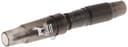
The grunt tube to own if you only own one, because it adjusts. The Extinguisher is sold as a 10-in-1 call: you move the tone from a young buck's grunt up to a mature buck's growl and down to a doe bleat without carrying four calls on four lanyards. In a ground blind, where every extra object is something to knock over in the dark, one call that covers the range beats the perfect single-note tube.

Best overall — volume you can control
$24.97 · View on Amazon

Price as of October 24, 2026. #ad How we’re funded

2
Primos The Great Big Can

Primos The Great Big Can

The call a complete beginner cannot get wrong, and the one a blind hunter should reach for first. You tip it over; it bleats. There is no reed to blow, no breath control to learn, and no mouth movement for a deer already looking at your window to catch. The Great Big Can is the loud member of the family — the one that carries in wind or across a field.

Hardest to get wrong
$10.39 · View on Amazon

$14.9931% off

Price as of October 24, 2026. #ad How we’re funded

3
Illusion Systems Black Rack Rattling System

Illusion Systems Black Rack Rattling System

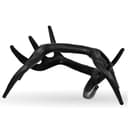
The rattling tool that solves the blind hunter's problem with real antlers: size and swing. Two sheds need a wide, two-armed motion you cannot make inside a pop-up without hitting a wall, and they clatter in your pack the whole way in. The Black Rack is a compact synthetic system built to be worked in a confined space — which is exactly where a blind hunter has to work it.

Best rattling in a confined blind
$26.97 · View on Amazon

Price as of October 24, 2026. #ad How we’re funded

4
Hunters Specialties Ruttin' Buck Rattling Bag

Hunters Specialties Ruttin' Buck Rattling Bag

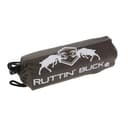
The cheapest way to rattle, and the only rattling tool you can work with one hand while a bow stays in the other. A bag will not produce the sharp crack of heavy antlers, so it reads as sparring rather than a fight — which is the right sound for most of the pre-rut anyway, and a far better fit for a tight blind than two antlers.

Quietest to carry and stow
$8.54 · View on Amazon

$10.4919% off

Price as of October 24, 2026. #ad How we’re funded

5
Primos Trophy Grunter 6-in-1

Primos Trophy Grunter 6-in-1

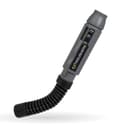
The cheap grunt tube that is genuinely enough. Its listing publishes six settings, which covers the three sounds that actually kill deer — a soft contact grunt, a tending grunt and a doe bleat — for about the price of a box of broadheads. If you are not sure calling fits how you hunt, risk this much rather than four times this much.

Cheapest worth owning
$11.99 · View on Amazon

$14.9920% off

Price as of October 24, 2026. #ad How we’re funded

#1Best overall — volume you can controlAdjustable grunt tube

Illusion Systems Extinguisher 2.0 Deer Call

The grunt tube to own if you only own one, because it adjusts. The Extinguisher is sold as a 10-in-1 call: you move the tone from a young buck's grunt up to a mature buck's growl and down to a doe bleat without carrying four calls on four lanyards. In a ground blind, where every extra object is something to knock over in the dark, one call that covers the range beats the perfect single-note tube.

Strengths

  • Adjustable across the range — buck grunt, tending grunt, growl and doe bleat from one tube
  • Worked from a seated position with no setup, which is what a blind actually allows
  • Compact enough to live in a blind bag or a chest pocket all season

Trade-offs

  • Adjustability means practice: you have to find the two settings you will really use
  • A reed call needs warmth and dry air — keep it inside a layer in hard cold
  • Illusion publishes no measurable spec for any of it; the claim is the design, not a number
Call typeAdjustable grunt tube (10-in-1)
VocalizationsBuck grunt, tending grunt, growl, doe bleat (adjustable)
OperationMouth-blown, hand-held
Weight / dimensionsNot published
Freeze-resistantNot published

The spec that matters. The useful discipline with an adjustable call is to pick two settings before the season — a soft contact grunt and one aggressive tending grunt — and leave it there. Hunters who adjust tone in the moment mostly produce sounds no deer makes.

Specs read from the product listing, on October 10, 2026. “Not published” means the maker does not state that figure.

#2Hardest to get wrongFlip-over doe bleat can

Primos The Great Big Can

The call a complete beginner cannot get wrong, and the one a blind hunter should reach for first. You tip it over; it bleats. There is no reed to blow, no breath control to learn, and no mouth movement for a deer already looking at your window to catch. The Great Big Can is the loud member of the family — the one that carries in wind or across a field.

Strengths

  • Close to impossible to use incorrectly: turn it over and it makes a doe bleat
  • One-handed, with no mouth movement at the window
  • Louder than the standard Can, so it works in wind and across open ground

Trade-offs

  • It makes one sound; it is not a grunt tube and will not imitate a buck
  • Louder is not always better — in tight timber the smaller Can is the right tool
  • The canister can stick in freezing, wet weather if it is left out in the elements
Call typeFlip-over doe bleat canister
VocalizationsDoe / estrus bleat
OperationOne-handed, no breath required
VolumeLoud (largest of the Can family)
Weight / dimensionsNot published

The spec that matters. A bleat can is the lowest-risk call in deer hunting: a doe bleat is a sound every deer in the woods hears constantly and none reads as a threat. If you are nervous about calling at all, start here — one or two bleats, then put it down and wait.

Specs read from the product listing, on October 10, 2026. “Not published” means the maker does not state that figure.

#3Best rattling in a confined blindRattling system

Illusion Systems Black Rack Rattling System

The rattling tool that solves the blind hunter's problem with real antlers: size and swing. Two sheds need a wide, two-armed motion you cannot make inside a pop-up without hitting a wall, and they clatter in your pack the whole way in. The Black Rack is a compact synthetic system built to be worked in a confined space — which is exactly where a blind hunter has to work it.

Strengths

  • Compact enough to work inside a blind or on a saddle platform without a full swing
  • Synthetic and consistent — it does not depend on finding a matched pair of sheds
  • Packs quieter than loose antlers, which matters most on the walk in

Trade-offs

  • Rattling is a loud, committal move: it works some days and empties a field on others
  • No published spec for volume or tone, so judging it means using it
  • Still bulkier than a grunt tube — it rides in a pack, not a pocket
Call typeSynthetic rattling system
VocalizationsBuck sparring and fighting (rattling)
OperationTwo-handed, compact motion
Weight / dimensionsNot published
Carry harness includedNot published

The spec that matters. Research matters more than hardware here. In Mickey Hellickson's three-year South Texas rattling study, loud sequences drew nearly three times the responses of quiet ones, 60% of responding bucks came from downwind, and repeated sequences paid less each time — 44%, then 34%, then 22% across three consecutive 10-minute bouts.

Specs read from the product listing, on October 10, 2026. “Not published” means the maker does not state that figure.

#4Quietest to carry and stowRattling bag

Hunters Specialties Ruttin' Buck Rattling Bag

The cheapest way to rattle, and the only rattling tool you can work with one hand while a bow stays in the other. A bag will not produce the sharp crack of heavy antlers, so it reads as sparring rather than a fight — which is the right sound for most of the pre-rut anyway, and a far better fit for a tight blind than two antlers.

Strengths

  • One-handed operation: you can rattle without putting the bow down
  • Cheapest rattling tool here by a wide margin
  • Soft-sided, so it rides silently in a blind bag with no clatter

Trade-offs

  • Quieter and less sharp than antlers — it reads as sparring, not a serious fight
  • Fabric soaks up water, and a soaked bag sounds dull
  • No published spec for volume or materials beyond the listing's own description
Call typeRattling bag
VocalizationsBuck sparring / rattling
OperationOne-handed
Stated seasonPre-rut and rut
Weight / dimensionsNot published

The spec that matters. Sparring and fighting are different sounds that pull different deer. Light ticking from a bag imitates two bucks testing each other and tends to draw curious younger bucks; heavy antler crashing imitates a real fight and is a mature-buck play. A bag does the first job well and the second not at all.

Specs read from the product listing, on October 10, 2026. “Not published” means the maker does not state that figure.

#5Cheapest worth owningBudget grunt tube

Primos Trophy Grunter 6-in-1

The cheap grunt tube that is genuinely enough. Its listing publishes six settings, which covers the three sounds that actually kill deer — a soft contact grunt, a tending grunt and a doe bleat — for about the price of a box of broadheads. If you are not sure calling fits how you hunt, risk this much rather than four times this much.

Strengths

  • Six published settings at the lowest price of any grunt tube here
  • Simple enough that a first-time caller gets a usable grunt immediately
  • Light enough to carry without a decision — which means it is actually with you

Trade-offs

  • Tone adjustment is coarser than the premium adjustable tubes
  • Plastic body and a basic reed; treat it as a season-to-season item
  • Primos publishes no measurable spec, only the setting count
Call typeAdjustable grunt tube (6-in-1)
VocalizationsBuck grunt range plus doe bleat (stated)
OperationMouth-blown, hand-held
Weight / dimensionsNot published
Freeze-resistantNot published

The spec that matters. Calling volume should match the distance you can see, not the distance you wish you could. In a blind on a field edge, a grunt loud enough to reach the far treeline is also loud enough to make a deer at twenty yards stare at the window it came from.

Specs read from the product listing, on October 10, 2026. “Not published” means the maker does not state that figure.

Five rules that decide whether calling helps you

1. Cover the downwind arc before you make a sound. This is the whole game from a blind. If a responding buck will arrive from downwind and that ground is not shootable, calling converts a deer that might have walked past into a deer that leaves educated. Work out where the wind is going, decide whether you can shoot that arc from the chair you are sitting in, and if you cannot, do not call. Our guides to checking the wind and scent control in a ground blind cover the setup side of that decision.

2. Match volume to distance.Loud for far, soft for close. This is the single most common mistake and it fails in both directions — too quiet at range means the deer never heard you, too loud up close means the sound does not match the world he is standing in.

3. Call less than you want to. One sequence does most of the work. Hunters call every ten minutes because sitting still is boring, and that is a bad reason to make noise on ground you intend to hunt all season.

4. Stop calling once he is coming. A buck working toward a sound he has already located does not need more information; more calling just gives him a chance to notice that the sound is not a deer. Put the call down and get ready.

5. Do not call to a deer you can already shoot. The exception is a short, soft stopper grunt for a deer walking through a lane. Anything more is risk with no upside.

Three hunters who should not bother

The hunter whose blind cannot cover its own downwind side. A blind in the middle of an open field with the wind at your back has no answer to a buck that circles. Fix the setup — see where to place a ground blind — and then call.

The early-season food-plot hunter. In September the deer are answering a food question, not a social one. Calling in that situation is movement and sound you do not need to spend.

The hunter on heavily pressured public ground who is calling from the same spot every weekend. The deer there have heard a lot of calls from a lot of people, and from a fixed blind you cannot change the address the sound comes from. One sequence on arrival, then hunt. Our pressured-deer guide takes the same line on everything else you might be tempted to add.

The honest bottom line

A grunt call is a tool for tipping a decision, not for creating one. It works best in the two or three weeks when a buck is already looking for a reason to come your way, at a volume that matches the distance, used once rather than constantly, from a setup that can cover the downwind arc. Used that way it will add a few real opportunities to a season.

Used as a substitute for being in the right place, it does nothing at all, and the measured evidence does not pretend otherwise. If you have one afternoon to spend improving your odds, spend it figuring out where the deer actually is rather than shopping for a call.

Frequently asked questions

Do grunt calls really work on whitetails?

They work, but not the way the videos imply. The best-measured calling research in whitetails is Dr. Mickey Hellickson's three-year South Texas rattling study, reported by the National Deer Association: a 65% overall response rate to rattling sequences, with 54% of responses coming between 7:30 and 10:30 a.m. against 16% at midday. That is rattling, not grunting — and there is no equivalent published response-rate figure for a grunt tube alone, which is itself worth knowing. Expect calling to tip a deer that is already nearby and already willing, not to pull one in from nowhere.

Do grunt calls work in the early season?

Rarely, and this is the honest answer the category avoids. In early season bucks are in bachelor groups and not competing for does, so the social pressure a grunt imitates barely exists. A soft, short grunt can stop a walking deer for a shot, which is a legitimate use. Trying to call a buck across a field in September is mostly spending movement and noise for nothing. Early season is a food and access problem, not a calling problem.

Do grunt calls work during the rut?

This is the window where calling earns its keep. During the pre-rut and rut, bucks are actively looking for competition and for does, so a grunt sequence or a rattling sequence is plausible to them for the first time all year. The Hellickson data also says more responses came in the morning than at any other time of day, which is when most blind hunters are sitting anyway.

Do grunt calls scare deer?

They can, in three specific ways. Calling too loudly at a deer that is close puts a sound at a volume and location a real deer would not produce. Calling repeatedly from a fixed position teaches a deer there is something wrong with that spot — a particular risk from a blind you cannot move. And a buck that circles downwind to check the caller will smell you before he sees anything: Hellickson recorded roughly 60% of responding bucks approaching from downwind. The call did not spook him. Your scent did.

How loud should a grunt call be?

Louder than most hunters dare, when the deer is far away. The study found loud rattling sequences drew close to three times the responses of quiet ones — a deer cannot answer a sound it never heard. The rule is to match volume to distance: loud for a deer you can see across a field or cannot see at all, soft and short for a deer already inside 60 yards. From inside an enclosed blind, add a little, because the fabric muffles you more than you think.

How often should you call from a blind?

Sparingly, and then stop. The study's three consecutive 10-minute sequences returned 44%, then 34%, then 22% of the responses — the first sequence does most of the work and each repeat does less. A reasonable blind routine is one sequence on arrival, then one every 30 to 45 minutes, and nothing at all once you can see a deer working toward you.

Is rattling better than a grunt call?

It is the better-documented one. Every published response-rate figure we can cite comes from rattling research, not grunt-tube research. Practically, the two do different jobs: rattling says there is a fight here and carries further, while a grunt says there is a buck here and is the better tool up close and as a stopper. Owning both is cheap; a combination kit covers it in one purchase.

Sources

Keep reading