Hunting Blinds & Ground Blinds
The core of staying unseen: ground blinds compared on the specs that decide concealment, plus the crossbows and setup that make a blind work.
A ground blind fixes the single hardest problem in hunting: staying hidden while you draw, aim and fire from a deer’s own backyard. Done right, a blind lets you move, fidget and stay warm inside a black box a deer treats as part of the landscape. Done wrong, it becomes an out-of-place lump that every animal in the field circles at 80 yards. The difference is almost never the brand on the bag — it’s a handful of specs, and how you set the thing up.
We compare blinds on what actually decides whether you get busted: window layout and shoot-through mesh (can you draw a bow without opening a giveaway hole), see-through walls (can you watch game approach without moving), a blackout interior (does the light behind you turn every motion into a silhouette), and packed size versus floor space (will you actually carry it to the right spot). Price barely tracks any of that: some of the best-concealing blinds are the cheap ones, and some expensive blinds are simply bigger.
Everything in Hunting Blinds
Best Ground Blinds
Six ground blinds compared on window layout, see-through walls, room and packability — the specs that actually decide whether a deer busts you.
Best Crossbows for Blind Hunting
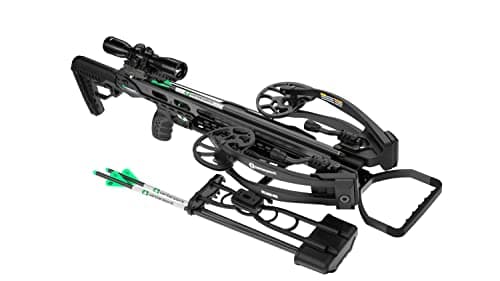
Compact crossbows that maneuver inside a hub blind without clipping a window — ranked on the size specs that matter in tight quarters.
Our top pick
CenterPoint Hellion 400 Crossbow
$339.95 · View on AmazonPrice as of October 24, 2026. #ad How we’re funded
How to Set Up a Ground Blind
Where to place it, how to brush it in, what to carry, and the public-land rules most hunters miss — the full setup, step by step.
Ground Blind vs Tree Stand
Which one actually hides you better, and when — a decision framework for concealment, scent, comfort and terrain.
Best Ground Blinds for Bow Hunting
Blinds compared on the bow-specific specs — shoot-through mesh, draw height and a blackout interior — that let you take the shot without getting busted.
Best Ground Blinds for Turkey Hunting
See-through, run-and-gun and roomy blinds ranked for spring turkey, where you need to track a gobbler and hide a lot of fidgeting.
Our top pick
Primos Full Frontal See-Through Blind
How to Hunt From a Ground Blind
Once it's set and brushed in, this is how you actually hunt it — light discipline, movement, shot angles and staying hidden all day.
How to Choose a Ground Blind
A plain decision framework — by weapon, hunt style, budget and the concealment specs that matter — so you buy the right blind the first time.
Ground Blind vs Box Blind
Soft pop-up versus hard-sided tower blind: which hides you better, keeps you warmer, and fits how and where you actually hunt.
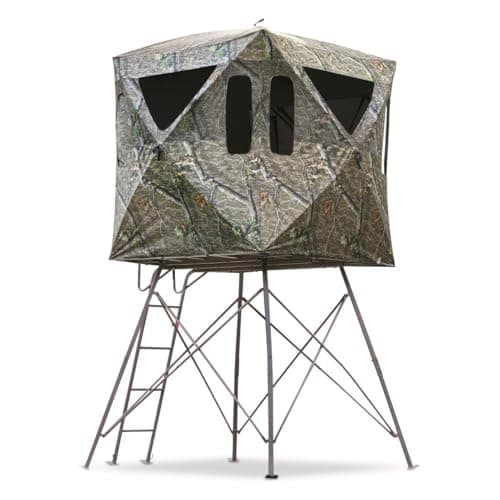
Best Box Blinds & Elevated Deer Blinds
Hard-sided and tower deer blinds compared on platform size, window type, wall material and whether the tower is included — the specs that decide a permanent setup.
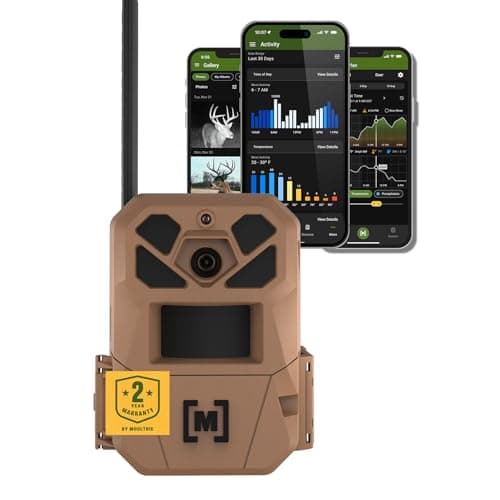
Best Trail Cameras for Deer Hunting
Cellular and SD-card trail cameras compared on trigger speed, detection range, flash type and what the subscription really costs — because the camera decides where the blind goes.
Our top pick
Moultrie Edge 3 Cellular Trail Camera
Best Deer Calls for Grunting, Bleating & Rattling
Grunt tubes, bleat cans and rattling systems ranked for a hunter who cannot move — plus what the rattling research actually found about volume, timing and wind.
Our top pick
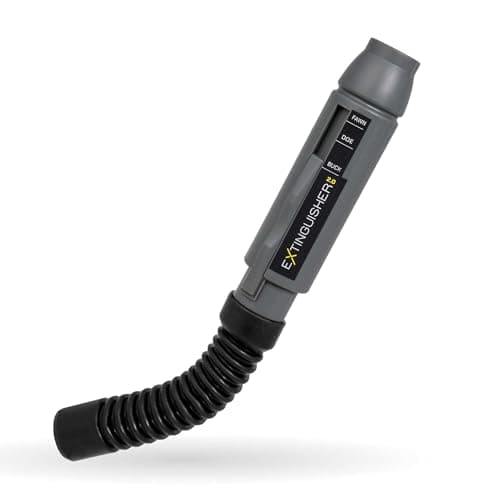
Illusion Systems Extinguisher 2.0 Deer Call
$24.97 · View on AmazonPrice as of October 24, 2026. #ad How we’re funded
Best 2-Person Ground Blinds
Roomy blinds with the floor space, headroom and windows for two hunters — a mentor and a kid, or a hunter and a cameraman — without knees against the wall.
Our top pick
Barronett Ace 250 Hub Blind
$157.09 · View on AmazonPrice as of October 24, 2026. #ad How we’re funded
Crossbow vs Compound Bow for Blind Hunting
Which bow handles better inside a hub blind, and which fits how you hunt — a decision framework for the tight quarters of a ground blind.
Where to Place a Ground Blind
Reading edges, funnels, wind and terrain to put your blind where deer already travel — plus a wind-and-terrain playbook for six kinds of ground.
Ground Blind Hunting Mistakes
The common errors that get hunters busted in a blind — and the simple fixes for each, from setup to light discipline to movement.
How to Shoot a Bow From a Ground Blind
Drawing, clearing the window and making the shot from a seated position in tight quarters — the technique bowhunters have to practice before the season.
How to Hunt Turkeys From a Ground Blind
Why a blind is a turkey hunter's best friend, where to set it, and how to hide the movement a sharp-eyed gobbler would otherwise catch.
Natural Blind vs Pop-Up Blind
Build from brush or buy a hub? Cost, concealment, comfort and effort compared — which blind fits your spot, your budget and how you hunt.
Morning vs Evening Deer Hunting
When to hunt, and how thermals, movement and access differ between dawn and dusk sits — so you pick the right time for your spot.
How to Scout for Deer
Reading sign, food, bedding and travel so you set up where deer already are — the homework that decides a hunt before opening day.
How to Hunt Funnels & Pinch Points
The terrain features that concentrate deer movement into predictable lanes — how to find them and set up to catch a buck on his feet.
How to Hunt Field Edges
Playing the wind, entry and setup on a field edge where deer feed — the classic evening setup, and how to keep from blowing it.
Best Time of Day to Hunt Deer
When deer actually move — dawn, dusk, midday in the rut, and how weather and pressure shift the odds — so you hunt when it counts.
How to Hunt the Rut
The one stretch bucks move in daylight — how to read the phases, where to set up, and why midday sits pay off when the rut is on.
Deer Hunting for Beginners
The honest starter guide — concealment, scent, wind, gear and where to begin — built around staying hidden long enough to fill your first tag.
How to Hunt a Cold Front
A dropping barometer and falling temps get deer on their feet in daylight — how to read a front and be in the right spot when they move.
How to Hunt Bedding Areas
Getting close to where deer sleep without blowing them out — reading bedding, playing the wind, and the razor's edge between close and busted.
How to Hunt Small Properties
Making a few acres hunt big — access, low pressure, wind discipline and blind placement so a small parcel still fills tags.
How to Hunt Pressured Deer
When every deer is nocturnal and edgy — going where others won't, cutting your pressure, and the concealment that matters most on hard-hunted ground.
How to Hunt Public Land
Escaping the crowds, staying mobile, and the rules and concealment that make public ground pay off — a run-and-gun playbook.
How to Quiet a Ground Blind
Sound busts hunters as often as sight — silencing zippers, windows, your chair and the floor so a deer never hears you in the blind.
How to Hunt a Food Plot
Setting up on a food source without spooking it — edge vs. interior, wind, access, and where to put a blind to catch deer feeding.
Hub Blind vs Teepee Blind
Roomy hub or lean, tall teepee? The two pop-up blind shapes compared on room, packability, concealment and how each hides your movement.
How to Hunt Early-Season Deer
Patterning summer-feeding deer before pressure scatters them — food, wind, low-impact access and the early sits that fill a tag before the rut.
How to Hunt Late-Season Deer
Cold, pressured, food-driven deer in the season's final weeks — finding the food, hunting the warm-up trends, and staying warm enough to sit it out.
How to Hunt a Water Source
Ponds, creeks and seeps are overlooked deer magnets, especially in early-season heat — how to find the right water and set up on it without getting winded.
Early Season vs Late Season Deer Hunting
Patternable food deer or cold, pressured survivors? The two ends of the season compared on where deer are, how they move, and how you set up for each.
How to Pattern a Buck
Turning trail-cam photos and sign into a plan — reading a buck's bed-to-food pattern, his timing, and the wind so you're there when he is.
How to Hunt Acorns
When the white oaks drop, deer abandon everything else for them — how to find the hot tree, hunt it before it's gone, and set up without getting winded.
How to Hunt a Creek Bottom
Creek and river bottoms are travel corridors, cover and water in one — how to read the terrain, play the swirling bottom winds, and set up on deer movement.
How to Hunt Deer in the Wind
A windy forecast isn't a reason to stay home — deer often move more in wind. How to find sheltered spots, use the noise, and still keep your scent right.
Still-Hunting vs Blind Hunting
Slip through the woods on foot or sit and wait? The two deer-hunting styles compared on concealment, odds, skill and which fits your ground and temperament.
How to Hunt a Scrape
Scrapes are a buck's signpost and a rut hotspot — how to find an active one, read the licking branch, and set up on it without poisoning it with your scent.
How to Still-Hunt Deer
Hunting on the move means slow, silent, into-the-wind stalking that beats a bedded deer at its own game — the technique, pace and concealment that make it work.
How to Hunt Standing Corn
Standing corn is bedding, food and cover in one, and deer live in it — how to hunt the edges, the trails and the field itself without getting winded or busted.
How to Hunt the Second Rut
A month after the peak, unbred does bring bucks back on their feet — how to spot the late-December second rut and hunt the food where it happens.
Public Land vs Private Land Hunting
Pressured, wide-open public ground or a managed private parcel? Access, pressure, competition and strategy compared to make the most of whatever you hunt.
How to E-Scout for Deer
Find deer from your couch — reading satellite and topo maps for bedding, food, funnels and access so you walk into a new spot already knowing where to sit.
How to Hunt the October Lull
The mid-October slowdown is mostly a shift, not a disappearance — how deer change patterns as food and cover change, and how to keep killing through it.
How to Hunt the Pre-Rut
The days before the chase are when bucks start cruising, scraping and making mistakes in daylight — how to hunt sign and funnels as the pre-rut ramps up.
How to Hunt a Swamp
Swamps and marshes are pressure-proof buck bedding most hunters skip — how to access the wet cover, find the dry islands, and hunt the edges without blowing it.
How to Hunt a Clearcut
A few years after logging, a clearcut is thick bedding and browse deer love — how to hunt the edges and interior trails of this overlooked cover.
How to Hunt a Transition Area
The staging cover between bedding and food is where a daylight buck shows first — how to find and hunt these transition zones for early and late light.
How to Hunt a Ridge
Ridgetops, points and saddles funnel deer travel and stack the wind in your favor — how to read a ridge and set up where thermals and movement meet.
How to Hunt a Fence Line
Old fences and overgrown fencerows are deer highways and pinch points — how to find the gap they use and hunt a fence line without getting winded.
How to Hunt a Logging Road
Logging roads are ready-made travel lanes, edge food and shooting lanes in thick timber — how to hunt them without your scent running the road ahead of you.
How to Hunt a Cut Cornfield
A picked cornfield is a late-season magnet of waste grain in wide-open ground — how to hunt it when there's no standing cover left to hide behind.
How to Hunt a Deer Drive
A safe, organized deer drive pushes bucks out of thick bedding to posted standers — how to set drivers, standers and wind so it works and everyone stays safe.
How to Shoot a Crossbow From a Ground Blind
A crossbow's wide limbs and rail change everything inside a blind — how to set the windows, rest and shooting position so you never clip a wall at the shot.
Best Ground Blinds for Crossbow Hunting
A crossbow needs width to swing, a horizontal window to rest in and an open pane to shoot through — the blinds that give you all three, ranked on published dimensions.
Our top pick
Barronett Ace 250 Hub Blind
$157.09 · View on AmazonPrice as of October 24, 2026. #ad How we’re funded
Are See-Through Ground Blinds Worth It?
One-way mesh walls solve the biggest ground-blind problem — you cannot see game coming. What you give up for it, and who should pay the premium.
Our top pick
Primos Full Frontal See-Through Blind
Best Budget Ground Blinds
The blinds that hide you for the least money — ranked by what they actually cost today, from the cheapest real hub blind to the cheapest way into an elevated box.
Best Ground Blinds for Rifle Hunting
A gun hunter shoots an open window from a chair, in blaze orange, often across a field — the blinds built for that, ranked on window type, floor space and sightlines.
Our top pick
Barronett Ace 250 Hub Blind
$157.09 · View on AmazonPrice as of October 24, 2026. #ad How we’re funded
How Long Do Ground Blinds Last?
What actually kills a ground blind, how long you can leave one out, how long deer take to accept it, and the cheap habits that double a blind's life.
What Size Ground Blind Do I Need?
Blind sizing by the numbers — the floor width one hunter, two hunters or a kid and a mentor actually need, and why every size claim on the box is optimistic.
Where to Put a Trail Camera for Deer
Camera placement decides where the blind goes. The published survey method, the six spots worth a camera, and how to run cameras without educating the deer you are hunting.
Our top pick
Moultrie Edge 3 Cellular Trail Camera
How to Use a Grunt Call
What to blow, how loud, how often, and when to shut up — calling from a blind, where you cannot reposition, built on the published rattling research.
Our top pick
Illusion Systems Extinguisher 2.0 Deer Call
$24.97 · View on AmazonPrice as of October 24, 2026. #ad How we’re funded
Best Cellular Trail Cameras
A cellular camera is bought to keep you out of the woods, not to take prettier pictures. Ranked on the plan, the power and the flash — the three specs that decide it.
Our top pick
Moultrie Edge 3 Cellular Trail Camera
Do Grunt Calls Work?
Yes — in a narrow window, at a volume most hunters get wrong. What the published research measured, and why 60% downwind is the number that decides it from a blind.
Our top pick
Illusion Systems Extinguisher 2.0 Deer Call
$24.97 · View on AmazonPrice as of October 24, 2026. #ad How we’re funded
How to choose a hunting blind
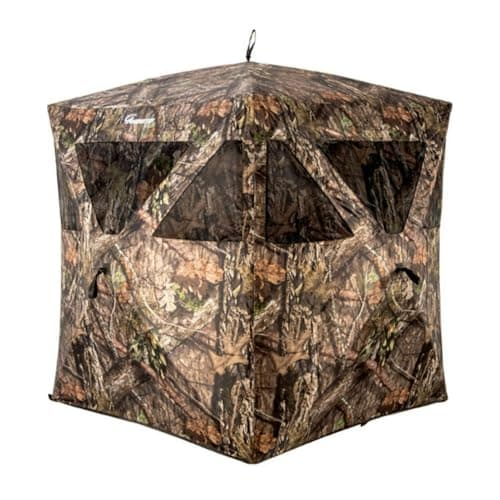
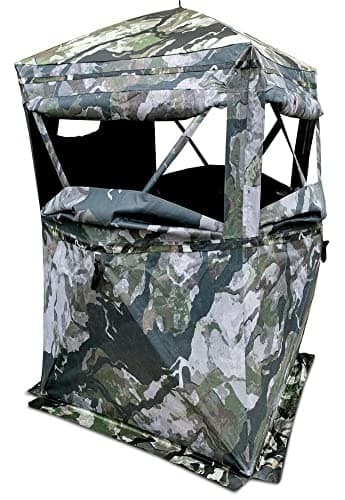
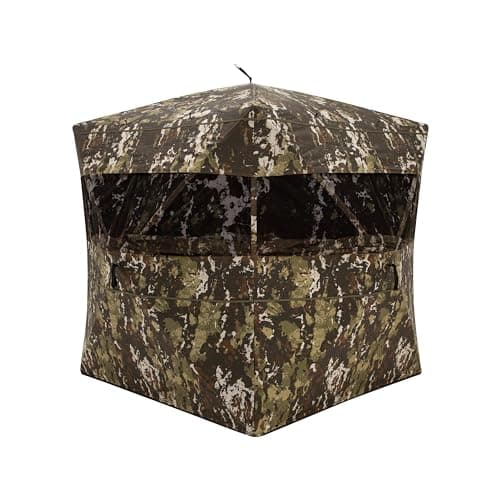
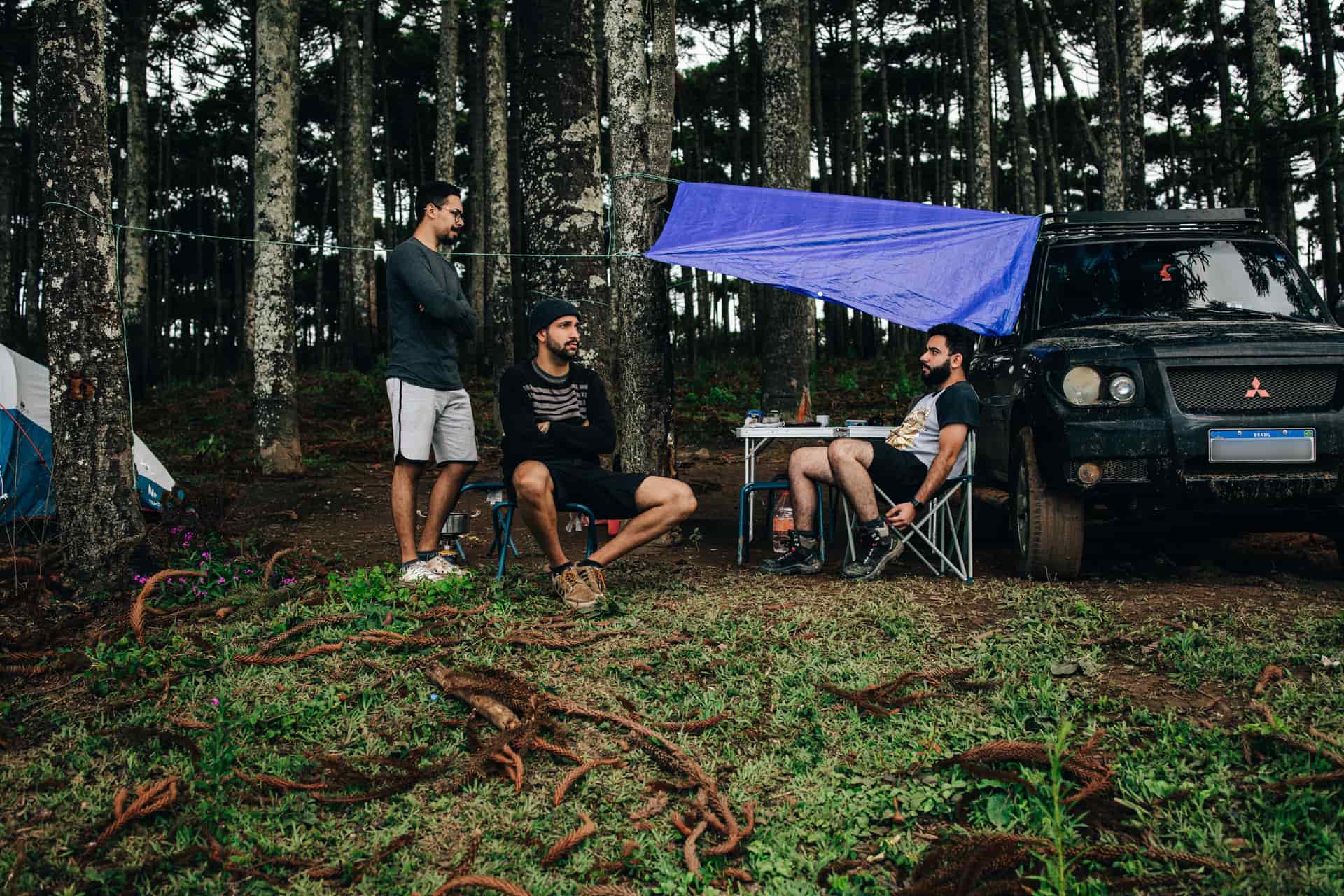
Start with how you hunt, not the price. If you move a lot — new spot most mornings, long walk-ins — a light hub blind you can carry deep beats a fortress you leave in the truck. If you hunt a fixed spot and want to sit all day with a gun and a buddy, buy floor space and comfort and plan to brush it in. If your problem is getting seen before you’re ready, a see-through wall (one-way mesh) is the single feature worth paying up for — you detect deer early and are already still when they commit.
Bow vs. gun changes everything
A bowhunter needs a blind with a low seat, a tall enough interior to draw, and shoot-through mesh so the arrow leaves through cover rather than an open window that leaks scent and telegraphs movement. A gun hunter can run a smaller, cheaper blind with fixed windows because the shot is quick and quiet. Buy for the weapon you’ll actually carry.
The mistake most buyers make
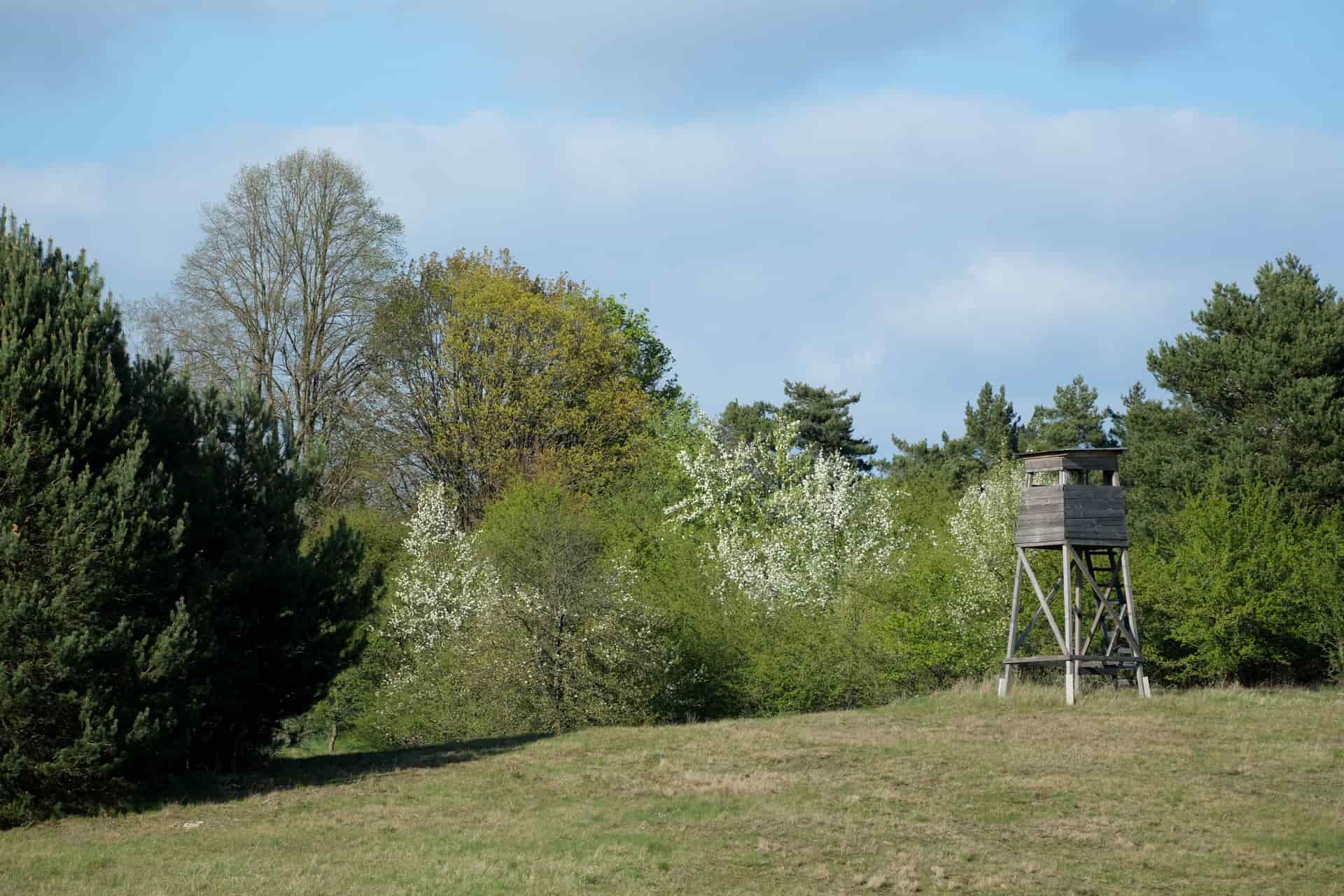
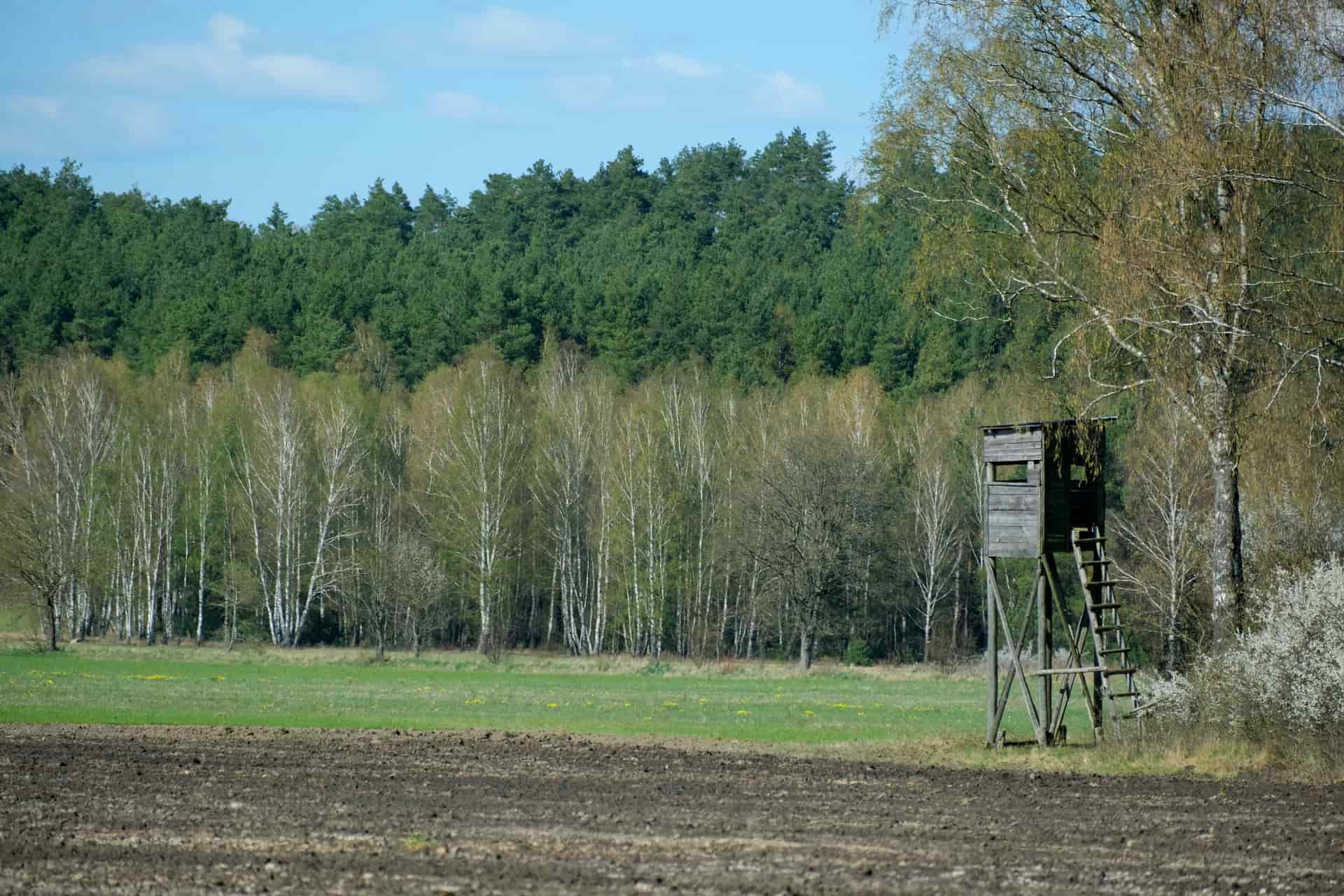
Buying a blind and hunting it the same day. A brand-new blind is a dark, angular, human-smelling object that has appeared overnight in a deer’s living room. The fix is free and it’s the step almost everyone skips: set it up early, let it weather, and brush it inwith natural cover so its outline disappears. A $70 blind that’s brushed in and left to settle out-hunts a $300 blind dropped in fresh that morning.
Frequently asked questions
Do deer really ignore a ground blind?
They can, but not automatically. Deer are wary of new objects. A blind that's been set up for days or weeks, tucked into existing cover and brushed in with natural material, becomes part of the scenery. A blind dropped in fresh that morning, out in the open, gets circled and avoided. The blind matters less than how and when you set it.
What size ground blind do I need?
For one bowhunter, a compact hub blind is plenty and packs smaller. For a gun hunter who wants a chair and elbow room, or for two people or filming, size up to a roomy 2-to-4-person blind — but expect to brush it in, because a bigger box is a bigger thing for a deer to notice.
What is shoot-through mesh and do I need it?
Shoot-through mesh is a fine screen over the window that an arrow passes through, so you can shoot without opening a window and giving away movement or scent. Bowhunters benefit most; gun hunters generally shoot through an open window instead and don't need it.
Are see-through (one-way) blind walls worth it?
If getting spotted before you're ready is your problem, yes. One-way see-through walls let you watch deer approach through the fabric and get settled and drawn before they're in range, instead of catching movement at the last second when you open a window.
Sources
- A Review of Cervidae Visual Ecology (Newman & D'Angelo, Animals, 2024) — Peer-reviewed review: deer are dichromats — sensitive to short/blue wavelengths, poor at red/orange, which is why blaze orange reads as muted to them (accessed July 22, 2026)
- No, Deer Aren't Color Blind: Understanding Deer Senses (National Deer Association, with Dr. Gino D'Angelo, UGA) — National Deer Association / University of Georgia researcher on how deer use sight, hearing and smell — the acuity of the whitetail nose (accessed July 22, 2026)
- Blown Away — wind speed vs. deer movement (Penn State Deer-Forest Study) — GPS-collar research finding deer (especially bucks) move MORE, not less, as daytime wind increases — counter to common belief (accessed July 22, 2026)