Blind & Brush

Best Rubber Hunting Boots

Your boots are the only gear you leave scent with at nose height, on the exact path a deer will walk. Rubber and neoprene picks ranked for containment, warmth and the fit nobody checks. Live prices.

By Stephen V.Last updated How we pick

The Muck Boot Woody Max is the rubber hunting boot most hunters should buy: a rubber lower under a 5 mm neoprene upper, fleece lined, with a published comfort range from -40 F to 40 F. It covers the widest slice of the season of anything here, it pulls on in the dark with cold hands, and its construction is the whole point of the category — no leather, no fabric panel, nothing porous on the part of you that touches the ground.

Here is why boots sit in our scent-control section rather than with the clothing. Everything else you wear leaves scent in the air, where wind carries it away from you at some rate you can plan around. Your boots leave scent on the ground, at nose height, on the exact line a deer is going to walk later, and it stays there long after you have climbed into the blind. A perfect wind plan does not help you when a doe cuts your entry trail at 7:40 a.m. and blows at a scent you left at 5:50.

What rubber does about that is narrower than the marketing suggests, and worth being straight about. Rubber is non-porous, so it has far less to hold and re-release than leather or a fabric upper, and a rubber boot can be hosed down and stored with the rest of your scent-free kit instead of carrying a season of barn, truck and gas-station floor into the woods. What rubber does notdo is make you scentless — no product does, and nobody has published evidence that any boot changes how often you get busted. The boot reduces the dose. The route you walk and the wind decide the rest. Price brackets run from budget to premium; the live price under each button is the real one.

How this is funded: we earn a commission if you buy through our links, at no extra cost to you. It never changes which product we recommend, and we’ll tell you plainly when we’d skip one. Full disclosure.

Quick picks

Ranked on published specs, concealment fit and value. Select a row to jump to the full write-up. We have not field-tested this gear — here is exactly what we do instead.

#ProductBest forPrice
1
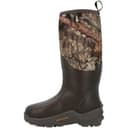
Muck Boot Woody Max Rubber Hunting Boot

Muck Boot Woody Max Rubber Hunting Boot

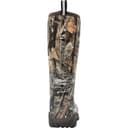
The default rubber hunting boot in the whitetail woods, and the right first buy: a rubber lower under a 5 mm neoprene upper, fleece lined, with a published comfort range down to -40 F. Rubber over neoprene is the combination that matters for scent work, because there is no leather and no fabric panel on the part of you that touches the ground.

Best overall
$124.96 · View on Amazon

$185.0032% off

Price as of October 18, 2026. #ad How we’re funded

2
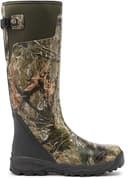
LaCrosse Alphaburly Pro 18 in Hunting Boot

LaCrosse Alphaburly Pro 18 in Hunting Boot

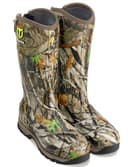
The boot to buy if the others never fit your calf: hand-laid natural rubber over neoprene with an adjustable rear gusset, 18 inches tall, and the only pick here whose fit you can actually change. LaCrosse describes the rubber as scent-free, which is a claim about the material rather than about your boots after a season in them.

Best fit and best for deep water
$209.95 · View on Amazon

Price as of October 18, 2026. #ad How we’re funded

3
Muck Boot Arctic Pro Tall Rubber Hunting Boot

Muck Boot Arctic Pro Tall Rubber Hunting Boot

The late-season boot: 8 mm of neoprene against the Woody Max's 5 mm, fleece lined, with a published comfort range to -60 F. If your season ends with December sits where your feet stop moving for six hours, this is the pick, and it is the one place on this page where more insulation is genuinely the answer.

Best for late season
$135.00 · View on Amazon

$205.0034% off

Price as of October 18, 2026. #ad How we’re funded

4
TIDEWE 800g Insulated Rubber Hunting Boot

TIDEWE 800g Insulated Rubber Hunting Boot

The value insulated boot, and the one that makes the two-boot plan affordable: 7 mm of neoprene and 800 g of insulation for well under the price of the name brands. Buy it as the cold-weather half of a rotation rather than as a do-everything boot.

Best value insulated
$112.99 · View on Amazon

Price as of October 18, 2026. #ad How we’re funded

5
Dryshod Viperstop Snake Hunting Boot

Dryshod Viperstop Snake Hunting Boot

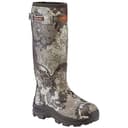
The warm-weather rubber boot, which is the half of the category nobody shops for until September makes the point. Hand-laid rubber for snake protection, a wicking airmesh lining instead of fleece, a gusset for larger calves and a shaft 2 in taller than the rest of the Dryshod line.

Best for early season heat
$214.95 · View on Amazon

Price as of October 18, 2026. #ad How we’re funded

6
TIDEWE 6mm Neoprene Rubber Boot with Steel Shank

TIDEWE 6mm Neoprene Rubber Boot with Steel Shank

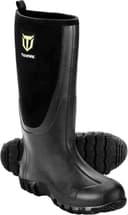
The cheapest honest way into rubber boots, and a perfectly good first pair for a hunter who walks a short way to a blind on mild mornings. It is plain black rather than camo, which costs you nothing a deer can resolve and saves you real money.

Cheapest way in
$63.99 · View on Amazon

Price as of October 18, 2026. #ad How we’re funded

The picks in full

#1Best overallInsulated rubber hunting boot

Muck Boot Woody Max Rubber Hunting Boot

The default rubber hunting boot in the whitetail woods, and the right first buy: a rubber lower under a 5 mm neoprene upper, fleece lined, with a published comfort range down to -40 F. Rubber over neoprene is the combination that matters for scent work, because there is no leather and no fabric panel on the part of you that touches the ground.

Strengths

  • 5 mm CR Flex-Foam neoprene with a fleece lining — warm enough for most of the season
  • Published comfort range of -40 F to 40 F, a wider window than most insulated boots
  • Pull-on, pull-off: nothing to lace with cold hands in the dark

Trade-offs

  • Roughly a 17 in shaft with a stated max calf of about 17 in — tight over bulky pants on big calves
  • No adjustable gusset, so the fit is the fit
  • Neoprene uppers tear on barbed wire more easily than hand-laid rubber
Upper5 mm CR Flex-Foam neoprene over rubber
LiningFleece
Comfort range-40 F to 40 F
HeightAbout 17 in
Footbed2 mm thermal foam over an EVA midsole
Adjustable gussetNo

The spec that matters. Comfort ranges on rubber boots assume you are walking. Sitting still in a blind at 20 F is colder than walking at 0 F, which is why a boot rated to -40 F can still leave your toes numb on a December sit.

Specs read from the product listing, on October 17, 2026. “Not published” means the maker does not state that figure.

#2Best fit and best for deep waterInsulated rubber hunting boot

LaCrosse Alphaburly Pro 18 in Hunting Boot

The boot to buy if the others never fit your calf: hand-laid natural rubber over neoprene with an adjustable rear gusset, 18 inches tall, and the only pick here whose fit you can actually change. LaCrosse describes the rubber as scent-free, which is a claim about the material rather than about your boots after a season in them.

Strengths

  • Adjustable rear gusset — the one real answer to a boot that gapes or binds at the calf
  • 18 in height in hand-laid natural rubber, the most puncture-resistant construction here
  • Sold across insulation weights from uninsulated to 1,600 g: same boot, same fit

Trade-offs

  • Around 5 lb a pair in the insulated versions — this is not a long-walk boot
  • The dearest boot on this page
  • Amazon lists each size and camo as a separate variant, so confirm the size selector before you buy
UpperHand-laid natural rubber over neoprene
Height18 in
Adjustable gussetYes — rear gusset
FootbedEVA midsole, embossed liner
WeightAbout 4.8-5.2 lb per pair depending on insulation
Comfort rangeNot published

The spec that matters. LaCrosse publishes insulation weight and construction but no temperature comfort range, which is the honest position — insulation grams and a rating are not the same thing, and no maker can know how long you sit.

Specs read from the product listing, on October 17, 2026. “Not published” means the maker does not state that figure.

#3Best for late seasonExtreme-cold rubber hunting boot

Muck Boot Arctic Pro Tall Rubber Hunting Boot

The late-season boot: 8 mm of neoprene against the Woody Max's 5 mm, fleece lined, with a published comfort range to -60 F. If your season ends with December sits where your feet stop moving for six hours, this is the pick, and it is the one place on this page where more insulation is genuinely the answer.

Strengths

  • 8 mm CR Flex-Foam neoprene, the thickest here, with a published range to -60 F
  • About 17 in tall, so it covers the gap between boot and bibs
  • Same pull-on, no-lace design as the Woody Max

Trade-offs

  • Far too warm for early season — you will sweat, and sweat is both cold and scent
  • Heavy and bulky to walk any distance in
  • Muck does not publish a weight for this model
Upper8 mm CR Flex-Foam neoprene over rubber
LiningFleece
Comfort range-60 F to 30 F
HeightAbout 17 in
Footbed2 mm thermal foam
WeightNot published

The spec that matters. Two boots, one for early and one for late, beats one compromise boot for scent reasons as much as warmth: the early-season boot you sweat into is the one a deer gets a lungful of in October.

Specs read from the product listing, on October 17, 2026. “Not published” means the maker does not state that figure.

#4Best value insulatedInsulated rubber hunting boot

TIDEWE 800g Insulated Rubber Hunting Boot

The value insulated boot, and the one that makes the two-boot plan affordable: 7 mm of neoprene and 800 g of insulation for well under the price of the name brands. Buy it as the cold-weather half of a rotation rather than as a do-everything boot.

Strengths

  • 7 mm neoprene and 800 g insulation at the lowest insulated price here
  • Full rubber lower with a published non-slip outsole
  • Cheap enough to own alongside an early-season pair

Trade-offs

  • TIDEWE publishes no temperature comfort range for this boot
  • Amazon lists each size as its own variant — check the size in the listing title before ordering
  • A value brand with no long field history behind it; durability is the open question
Upper7 mm neoprene over rubber
Insulation800 g
OutsoleNon-slip rubber
Comfort rangeNot published
HeightNot published

The spec that matters. Insulation grams tell you how much material is in the boot, not how warm it will be. With no published comfort range, 800 g is best read as mid-season weight — warmer than a 400 g boot, nowhere near an 8 mm Arctic Pro.

Specs read from the product listing, on October 17, 2026. “Not published” means the maker does not state that figure.

#5Best for early season heatUninsulated rubber hunting boot

Dryshod Viperstop Snake Hunting Boot

The warm-weather rubber boot, which is the half of the category nobody shops for until September makes the point. Hand-laid rubber for snake protection, a wicking airmesh lining instead of fleece, a gusset for larger calves and a shaft 2 in taller than the rest of the Dryshod line.

Strengths

  • Airmesh wicking lining rather than fleece — the right build for a 70 F morning
  • Hand-laid rubber the maker states is highly resistant to penetration, for snake country
  • Gusset sized for larger calves and for tucking pants in

Trade-offs

  • No insulation at all: wrong boot from November onward
  • Premium price for a boot you will use in a narrow part of the season
  • Dryshod does not publish a weight or a shaft height in inches for this model
UpperHand-laid natural rubber, snake-protection build
LiningWIXIT Cool-Clad wicking airmesh
InsulationNone
Shaft2 in taller than the standard Dryshod line
WeightNot published

The spec that matters. An uninsulated rubber boot is a scent-control decision as much as a comfort one. Overheat on the walk in and the boot you chose to contain odor becomes the thing generating it.

Specs read from the product listing, on October 17, 2026. “Not published” means the maker does not state that figure.

#6Cheapest way inUninsulated rubber boot

TIDEWE 6mm Neoprene Rubber Boot with Steel Shank

The cheapest honest way into rubber boots, and a perfectly good first pair for a hunter who walks a short way to a blind on mild mornings. It is plain black rather than camo, which costs you nothing a deer can resolve and saves you real money.

Strengths

  • 6 mm neoprene with a steel shank for arch support on uneven ground
  • Black, not camo, which is where a lot of the price difference on hunting boots lives
  • Light enough to double as a chore and spring turkey boot

Trade-offs

  • No insulation rating published — treat it as a mild-weather boot
  • Sized as individual Amazon variants, so confirm the size in the listing title
  • Thin neoprene is the first thing to go on thorns
Upper6 mm neoprene over rubber
ShankSteel
InsulationNot published
Comfort rangeNot published
HeightNot published

The spec that matters. Deer are dichromats with poor red and orange discrimination, so a black boot and a camo boot are not meaningfully different to the animal. Pattern on a boot is a preference, not concealment.

Specs read from the product listing, on October 17, 2026. “Not published” means the maker does not state that figure.

What to look for in a rubber hunting boot

Neoprene thickness, not insulation grams

The number most listings lead with is insulation weight in grams — 400 g, 800 g, 1,600 g. It tells you how much insulating material is in the boot, not how warm the boot will be, because the neoprene upper is doing a large share of the work and nobody puts the two figures in the same sentence. On this page the spread is clear: 5 mm of CR Flex-Foam on the Woody Max, 8 mm on the Arctic Pro, 7 mm on the insulated TIDEWE and 6 mm on the uninsulated one.

Published comfort ranges are more useful where they exist — Muck publishes -40 F to 40 F for the Woody Max and -60 F to 30 F for the Arctic Pro — with one large caveat covered below. LaCrosse and TIDEWE publish no comfort range at all for the boots here, which is itself informative: a maker that gives you grams and no temperature is telling you it will not be pinned down.

Comfort ratings assume you are moving

This is the mistake that ruins December sits. A rating is generated by a person walking, generating heat. A hunter in a blind is a stationary object with his feet on cold ground and nothing circulating. Sitting still at 20 F is colder, in boot terms, than walking at 0 F, which is why a -40 F boot can still leave your toes numb by 9 a.m. Buy one bracket warmer than the forecast if you sit, and put a floor mat under your feet so the ground stops pulling heat straight out of the sole. Boot blankets and the rest of the cold-feet toolkit are in how to keep your feet warm hunting.

Calf fit is the spec nobody checks

Rubber boots are returned for calf fit more than any other reason. A pull-on boot has no laces, so the shaft either fits over your bibs or it does not, and the Woody Max publishes a maximum calf circumference of about 17 inches. If you have heavy calves, wear thick pants, or both, the LaCrosse Alphaburly Pro with its adjustable rear gussetis the only pick here whose fit you can actually change — that is why it carries the fit award rather than a warmth one.

Height, and what you are wading

Most hunting rubber boots run 16 to 18 inches. Taller is more coverage through wet grass, flooded timber and the ditch between the truck and the blind; taller is also hotter, heavier and harder to get over a calf. Eighteen inches (the Alphaburly) is the right call if you cross water. Around 17 (the two Muck picks) suits almost everyone else.

Camo is not doing anything

Deer are dichromats with poor discrimination at the red and orange end of the spectrum, and your boots are the part of you lowest to the ground and most often screened by vegetation. A black boot and a camo boot are not meaningfully different to the animal — which is exactly why the plain black TIDEWE makes this list at the price it does. Spend the camo premium on the fit or the insulation instead.

The two-boot plan beats one perfect boot

Ask a hunter why their feet were freezing in January and the answer is usually that they bought a boot for October. Ask why they were soaked in sweat on an early-season walk and the answer is the opposite mistake. There is no single boot that handles a 70 F September evening and a 15 F December morning, and pretending otherwise is how you end up with cold feet half the season.

The scent argument for two boots is just as strong as the comfort one. An overheated foot in an 8 mm insulated boot is a sweating foot, and a sweating foot inside a non-breathable rubber boot produces exactly the bacterial odor you bought the boot to avoid. The uninsulated or lightly insulated pick — the Dryshod Viperstop with its wicking airmesh lining, or the 6 mm TIDEWE — is not an indulgence; it is the half of the plan that keeps your warm boot from being ruined in October.

A workable split: one uninsulated or 400 g boot for early season and turkey spring, one 800 g to 1,600 g boot for the cold half. The value TIDEWE and the budget TIDEWE together cost less than one premium pair, which is the honest route for a hunter who cannot buy an Alphaburly twice.

How to actually use a rubber boot for scent control

The boot is a tool, not a policy. These five habits are what make it worth owning, and most of them are free.

Keep them out of your daily life. Hunting boots that go to the gas station, the feed store and the garage floor arrive in the woods carrying all three. Store them in a tote or a bag with your hunting clothes, not by the back door.

Put them on outside. Pulling boots on in a warm house, then driving in them, undoes most of the point. Carry them to the truck and change at the tailgate.

Hose and dry them after wet or bloody hunts. Plain water on the outside, fully dry on the inside. Rubber does not absorb; the lining does.

Spray the soles and the shaft, not just your jacket. If you use a scent eliminator spray, the bottom six inches of the boot is the part that touches the ground a deer will nose. It is the most-skipped step in every scent-control routine we have read — see the full sequence in how to control boot scent.

Walk the route that costs you least. No boot beats entering from the downwind side, using a creek, a road or a mowed edge, and not walking through the bedding area you are hoping to hunt. The gear reduces your scent; the route decides whether it is anywhere a deer will be.

What a rubber boot cannot do

A deer’s nose is extraordinary and the published research is blunt about it: scent control is dose reduction, not elimination, and no independent testing shows any scent product making a hunter undetectable. A rubber boot removes a leather upper’s capacity to soak up odor and re-release it for days; it does not stop you shedding skin cells, it does not stop sweat from your feet, and it does not stop a swirling thermal from carrying everything about you downhill at dusk. Treat it the way you would treat every other scent-control product: worth doing, never a substitute for the wind.

How we picked

Each ASIN here was resolved from a live retailer lookup and confirmed purchasable before the product went on the page, and the specs were read from the maker’s own published figures or the listing’s own data on that date. We own no pairs and claim no field testing. Where a maker does not publish something — and in this category that includes shaft heights, weights and comfort ranges that genuinely ought to be published — the spec table says “Not published” rather than guessing. One practical note on buying: Amazon lists most hunting boots with each size and camo as its own variant, so confirm the size selector matches the boot you want before you order. Our full method is in how we review gear.
Frequently asked questions

Are rubber boots better for scent control?

Better than leather or fabric, yes, and for a structural reason: rubber is non-porous, so it has far less to absorb and re-release than a material that soaks up odor from the barn, the truck and the gas-station floor. It is dose reduction, not elimination. No independent testing shows any boot making a hunter undetectable to a deer, and your route and the wind still decide most outcomes.

What insulation do I need in a hunting boot?

Match it to how you hunt, not to the coldest day of the year. Walking hunters generate heat and are better served by less insulation; a hunter sitting still in a blind is a stationary object with cold ground under them and should buy one bracket warmer than the forecast suggests. As a rough guide: uninsulated or 400 g for early season, 800 g for mid, 1,200-1,600 g or an 8 mm neoprene boot for December and January sits.

Are Muck boots or LaCrosse better for hunting?

They answer different problems. Muck's Woody Max and Arctic Pro are neoprene-forward pull-ons with published comfort ranges (-40 F and -60 F respectively) and no fit adjustment. The LaCrosse Alphaburly Pro is hand-laid natural rubber over neoprene with an adjustable rear gusset, 18 inches tall, and publishes no comfort rating. Buy the Muck if the standard shaft fits your calf; buy the LaCrosse if it does not, or if you cross water.

How tall should hunting rubber boots be?

Sixteen to eighteen inches covers nearly all whitetail hunting. Go 18 in if you wade a ditch or hunt flooded timber; stay around 16-17 in if your walk is dry and you want less weight and heat. Height is also a fit constraint — a taller shaft has to clear a bigger part of your calf, which is where pull-on boots most often fail to fit.

Do you need camo rubber boots?

No. Deer are dichromats with poor red and orange discrimination, and boots are the part of you lowest to the ground and most often hidden by vegetation. A plain black rubber boot is as invisible to a deer as a camo one and usually cheaper — put the saving into fit or insulation, both of which affect whether you stay in the blind.

How do you keep rubber hunting boots from smelling?

Keep them out of your daily routine, put them on at the truck rather than in the house, hose the outside after wet hunts and dry the inside fully, and store them with your hunting clothes rather than by the back door. The lining is the part that holds odor, not the rubber — which is why an uninsulated boot for warm weather matters: a foot that sweats inside an over-insulated boot produces exactly the odor the boot was bought to prevent.

Sources

Keep reading