Blind & Brush

Where to Put a Trail Camera for Deer

Camera placement decides where the blind goes. The published survey method, the six spots worth a camera, and how to run cameras without educating the deer you are hunting.

By Stephen V.Last updated How we pick

How this is funded: we earn a commission if you buy through our links, at no extra cost to you. It never changes which product we recommend, and we’ll tell you plainly when we’d skip one. Full disclosure.

Put a trail camera where deer movement is already funneled — a trail junction, a fence gap, a creek crossing, the inside corner of a field — mounted at waist height, angled 45 degrees down the trail, facing north or south. That one sentence outperforms most camera advice, because placement beats equipment by a wide margin: a cheap camera on a pinch point out-informs an expensive one in the middle of a field.

The heights and angles are not invented here. Purdue University Extension publishes a trail-camera survey method for white-tailed deer, and it is specific: one camera per 100 acres, mounted about waist height (2.5 to 3 feet), run for 10 to 14 days and checked every 4 to 5 days, faced north or south to avoid over-exposure from the sun, with burst mode off and a 5 to 10 minute delay. It also tells you to check your state’s feeding and baiting law before running a baited survey, which is advice worth taking.

Placement beats equipment, and here is why

Every camera we track publishes a detection range of roughly 60 to 100 feet. That is the whole area a camera can see, which means your job is to choose which 100 feet of your property matters. On a 40-acre block, 100 feet of trail junction is worth more than 100 feet of anywhere else, and no amount of megapixels changes that arithmetic.

Which leads to the one honest warning on this page: a camera is a tool for learning where to hunt, and every time you walk in to check it you teach the deer something too. Purdue’s survey allows a visit every 4 to 5 days because it is a survey. For a spot you intend to hunt in November, the right number of visits is as close to zero as you can manage — which is the entire case for a cellular camera on your best trail.

The cameras that suit each placement

Placement decides which camera you want: cellular where a visit would burn the spot, no-glow on a trail you hunt, and cheap non-cellular where you are covering ground in bulk. Prices are live — check the “as of” stamp under each button.

Quick picks

Ranked on published specs, concealment fit and value. Select a row to jump to the full write-up. We have not field-tested this gear — here is exactly what we do instead.

#ProductBest forPrice
1
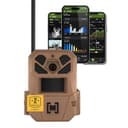
Moultrie Edge 3 Cellular Trail Camera

Moultrie Edge 3 Cellular Trail Camera

The cellular camera to buy first, and the one that removes the most excuses: 40MP stills, a 0.5-second trigger, 100 feet of detection and flash, built-in memory so there is no SD card to forget, and onboard GPS so you know which camera is calling. It costs about what a good non-cellular camera used to, which is why the honest comparison is no longer cellular versus regular — it is cellular versus walking in.

Best for spots you must not walk into
$66.49 · View on Amazon

$99.9934% off

Price as of October 16, 2026. #ad How we’re funded

2
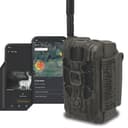
Stealth Cam Deceptor MAX 3.0

Stealth Cam Deceptor MAX 3.0

The pick for pressured deer, because of one number in the listing: 940nm. That is the no-glow infrared band — the flash that does not show a visible red glow at the lens. On public ground, or on a trail where an older buck already treats a lit camera as a reason to move at night, an invisible flash is worth more than extra megapixels.

Best on a trail you will hunt
$110.00 · View on Amazon

$129.9915% off

Price as of October 16, 2026. #ad How we’re funded

3
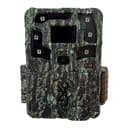
Browning Strike Force Pro X 1080

Browning Strike Force Pro X 1080

The best camera here for a hunter who refuses to pay a subscription, and the best published image and speed numbers of any pick regardless. Browning states a 0.22-second trigger, a 0.35-second recovery and up to a year of battery life on six AA cells — figures the cellular cameras in this list do not print. The catch is the one you already know: you have to walk in to see the pictures.

Best published trigger speed
$106.00 · View on Amazon

Price as of October 16, 2026. #ad How we’re funded

4
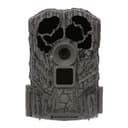
Stealth Cam Browtine 16MP

Stealth Cam Browtine 16MP

The honest cheap one. At a fraction of a cellular setup's first-year cost, this is the camera you buy two or three of and hang on separate trails to answer a yes-or-no question — not the camera you expect magazine photos from. Its published 60-foot detection range is the real limit: put it on a trail at fifteen yards, not across a field.

Best for covering several trails cheaply
$39.99 · View on Amazon

Price as of October 16, 2026. #ad How we’re funded

#1Best for spots you must not walk intoCellular trail camera

Moultrie Edge 3 Cellular Trail Camera

The cellular camera to buy first, and the one that removes the most excuses: 40MP stills, a 0.5-second trigger, 100 feet of detection and flash, built-in memory so there is no SD card to forget, and onboard GPS so you know which camera is calling. It costs about what a good non-cellular camera used to, which is why the honest comparison is no longer cellular versus regular — it is cellular versus walking in.

Strengths

  • Built-in memory — no SD card to buy, forget, corrupt or leave in the truck
  • Published 0.5 s trigger and 100 ft detection range, genuinely enough for a field edge
  • Onboard GPS, so a camera you moved in August still tells you where it is in November

Trade-offs

  • Needs a paid data plan to do the one thing you bought it for — budget the plan, not just the camera
  • Moultrie does not publish a battery type, battery life or a waterproof rating for this model
  • Low-glow flash, not no-glow: a deer standing close can see the IR array light up
TypeCellular (all 4 major networks)
Image resolution40 MP
Trigger speed0.50 s
Detection / flash range100 ft / 100 ft
Flash typeLow-glow IR
StorageBuilt-in — no SD card required (capacity not stated)
GPSYes
Waterproof ratingNot published

The spec that matters. Moultrie publishes 40MP, 0.5 s and 100 ft on its own product page but states no battery type, battery life or IP rating, and sells a separate power pack — which tells you the internal cells are not the long-haul answer. Price the plan before you price the camera: over three seasons the subscription is usually the bigger number.

Specs read from the product listing, on October 10, 2026. “Not published” means the maker does not state that figure.

#2Best on a trail you will huntCellular trail camera (no-glow)

Stealth Cam Deceptor MAX 3.0

The pick for pressured deer, because of one number in the listing: 940nm. That is the no-glow infrared band — the flash that does not show a visible red glow at the lens. On public ground, or on a trail where an older buck already treats a lit camera as a reason to move at night, an invisible flash is worth more than extra megapixels.

Strengths

  • 940nm no-glow LEDs — no visible red glow for a deer, or a passer-by, to notice
  • Published 0.3-second trigger and 50MP stills, the fastest and highest-resolution pick here
  • On-demand image requests and GPS, both stated on the listing

Trade-offs

  • No-glow flash costs night-image brightness and reach — that is physics, not a defect
  • Needs a paid data plan like every other cellular camera on this page
  • Stealth Cam does not publish battery type, battery life or a waterproof rating on this listing
TypeCellular, on-demand image requests
Image resolution50 MP
Video1440p
Trigger speed0.3 s
Detection range100 ft
Flash type940nm no-glow IR
GPSYes
Battery / waterproof ratingNot published

The spec that matters. The 850nm low-glow flash used by most cameras emits a faint red glow at the lens; 940nm does not. Whether deer care is genuinely argued among biologists — what is not argued is that people notice a glowing camera, which matters on public ground where cameras walk off.

Specs read from the product listing, on October 10, 2026. “Not published” means the maker does not state that figure.

#3Best published trigger speedNon-cellular trail camera

Browning Strike Force Pro X 1080

The best camera here for a hunter who refuses to pay a subscription, and the best published image and speed numbers of any pick regardless. Browning states a 0.22-second trigger, a 0.35-second recovery and up to a year of battery life on six AA cells — figures the cellular cameras in this list do not print. The catch is the one you already know: you have to walk in to see the pictures.

Strengths

  • Published 0.22 s trigger and 0.35 s recovery — fast enough to catch a deer crossing, not just standing
  • Up to a year of stated battery life on 6 AA cells, so one visit a season can be enough
  • Takes SDXC cards to 512GB and shoots 1080p video with sound

Trade-offs

  • No cellular: every image check is a trip into the spot, with your scent and noise
  • Batteries and SD card are both sold separately
  • Browning does not publish dimensions or a waterproof rating for it
TypeNon-cellular (SD card)
Image resolution24 MP
Video1080p Full HD with sound, 5 s - 2 min
Trigger / recovery0.22 s / 0.35 s
Detection range100 ft
FlashIR, 120 ft range
Battery6 AA (not included), up to 1 year stated
StorageSDXC to 512 GB (not included)

The spec that matters. Trigger and recovery are the specs that decide whether you get a photo of a deer or a photo of the brush it walked through. Browning publishes both; most cameras under $100 publish neither. Budget lithium AAs for cold weather — alkalines lose capacity fast below freezing.

Specs read from the product listing, on October 10, 2026. “Not published” means the maker does not state that figure.

#4Best for covering several trails cheaplyNon-cellular trail camera (budget)

Stealth Cam Browtine 16MP

The honest cheap one. At a fraction of a cellular setup's first-year cost, this is the camera you buy two or three of and hang on separate trails to answer a yes-or-no question — not the camera you expect magazine photos from. Its published 60-foot detection range is the real limit: put it on a trail at fifteen yards, not across a field.

Strengths

  • Cheap enough to run several at once, which beats one good camera in one wrong spot
  • No subscription, no app, no account — card in, card out
  • Small body is easy to tuck into cover where a bigger camera stands out

Trade-offs

  • Published detection range is only 60 ft — it is a trail camera, not a field camera
  • Stealth Cam does not publish a trigger speed for it, and at this price that usually means slow
  • 16MP stills and a basic IR flash: the images are evidence, not portraits
TypeNon-cellular (SD card)
Image resolution16 MP
Detection / IR range60 ft
Trigger speedNot published
BatteryNot published
StorageNot published

The spec that matters. Three cheap cameras on three trails tell you more than one expensive camera on the wrong trail, because placement — not image quality — is what produces a useful photo. That logic stops working where theft is likely, which is also where a cheap camera is the one you shrug about losing.

Specs read from the product listing, on October 10, 2026. “Not published” means the maker does not state that figure.

The six placements worth a camera

1. A trail junction. Two or three trails meeting is two or three times the traffic of one. The single highest-value camera on most properties.

2. A gap in a fence or a creek crossing.Deer are lazy about obstacles and use the same crossings for years. A camera on the crossing is a camera on everything in that drainage — creek bottoms and fence lines go deeper.

3. The inside corner of a field.Where cover reaches furthest into the open is where deer enter before dark. This is also the first place to think about a blind — see how to hunt field edges.

4. A pinch between two blocks of cover. The terrain does your work for you. Funnels and pinch points is the full treatment.

5. A scrape, from late September. Scrapes are visited by multiple bucks and are a census rather than a sighting. Our guide to hunting a scrape explains why the camera goes on the licking branch side.

6. Your own entry route. The least glamorous and most useful camera on the property. If it shows deer standing on the trail you walk in on at 5 a.m., you have found out why your mornings are dead.

The settings that make the data readable

Purdue Extension’s survey method is the clearest published recipe available: one camera per 100 acres, run for 10 to 14 days, checked every 4 to 5 days, mounted at 2.5 to 3 feet, bait (where legal) placed 10 to 15 feet from the camera, the camera faced north or south, burst mode off and a 5 to 10 minute delay, with surveys run in late summer before season or late winter after it. It also says, before anything else, to check your state’s feeding and baiting law — and camera law. Utah’s big-game rule defines what counts as a trail camera, restricts where one may be placed or used under state code, and makes it unlawful to buy or sell trail-camera images to take or aid in taking big game — proof that this is a state-by-state question rather than a settled one.

Two settings deserve their own line. Delay is what stops one curious doe producing 400 photographs you have to scroll through. And trigger speed is what decides whether you get a deer or a deer-shaped blur: the Browning Strike Force Pro X publishes 0.22 seconds trigger and 0.35 seconds recovery, which is the fastest published figure among the cameras we track, while the Moultrie Edge 3 publishes 0.50 seconds. On a trail crossing, that difference is the difference between a photo of a buck and a photo of his hindquarters.

Why this page sits in the blinds section

Because a camera is not the point. The point is the blind, the stand or the tree you choose because of what the camera told you. A month of photographs from a trail junction gives you three things a blind hunter needs: the direction deer travel through the spot, the time they do it, and the windon the days they do. Place the blind off that trail, not on it — where to place a ground blind covers the offset, the backdrop and the entry route, and playing the wind is what turns the data into a sit.

And set the blind up when you hang the camera, not when you decide to hunt it. Deer accept a blind that has been standing for weeks; they do not accept one that appeared this morning. Hanging cameras in late summer and setting blinds at the same time is the single most useful habit on this page.

Frequently asked questions

Where should you put a trail camera for deer?

Where movement is already funneled: a trail junction, a gap in a fence line, a creek crossing, the inside corner of a field, a scrape, or a pinch between two blocks of cover. Mount it about waist height (Purdue Extension's survey method specifies 2.5 to 3 feet), angle it 45 degrees down the trail rather than square across it, face it north or south to avoid sun over-exposure, and clear the vegetation within about ten feet of the lens.

How high should a trail camera be?

About waist height — 2.5 to 3 feet — per Purdue Extension's published survey method. That puts the sensor level with a deer's body, which is where the infrared detection works best. Higher mounts angled down are a legitimate trick for hiding a camera from people, but they shrink the detection zone and tend to produce photos of backs rather than faces.

How many trail cameras do I need?

Purdue Extension's survey density is one camera per 100 acres, so a 200-acre farm is a two-camera survey. For hunting rather than surveying, cameras on three or four genuine funnels will teach you more than ten cameras spread evenly, because a funnel concentrates the movement you are trying to read.

How often should you check trail cameras?

As rarely as you can stand, and no more than every 4 to 5 days during a survey. Every check leaves scent on the trail you intend to hunt. Go at midday, with the wind in your face, and treat the walk in as a hunt you are not taking. Cellular cameras exist precisely so the spots that matter most never need a visit.

Will trail cameras spook deer?

The camera itself is far less of a problem than you are. A low-glow or no-glow infrared flash is a mild, brief event; your boot prints, your hands on the tree and your scent on the trail are what change deer behavior. If a spot is sensitive enough that you worry about it, put a cellular camera there and stop visiting it. Also check your own state's rules, because camera legality is a state-by-state question rather than a settled one: Utah's big-game rule defines what counts as a trail camera, restricts where one may be placed or used, and makes it unlawful to buy or sell trail-camera images to take or aid in taking big game.

Sources

  • Trail Camera Survey for White-tailed Deer (Purdue University Extension, Forestry & Natural Resources) — Purdue Extension's published survey method: one camera per 100 acres, cameras run 10-14 days and checked every 4-5 days, mounted about waist height (2.5-3 feet), bait placed 10-15 feet from the camera, the camera faced north or south to avoid sun over-exposure, burst mode off with a 5-10 minute delay, surveys run late summer before season or late winter after it, and a reminder to check state feeding and baiting law first (accessed October 17, 2026)
  • Edge 3 Cellular Trail Camera — published specifications (Moultrie) — Moultrie's own spec table: 40MP, 0.50-second trigger, 100-foot detection and flash range, low-glow flash, built-in memory with no SD card required, onboard GPS — and no published battery type, battery life or waterproof rating (accessed October 10, 2026)
  • Strike Force Pro X 1080 — published specifications (Browning Trail Cameras) — Browning publishes what most makers do not: a 0.22-second trigger speed, 0.35-second recovery, 24MP stills, 1080p video with sound, 100-foot detection, 120-foot IR range and up to one year of battery life on six AA cells (accessed October 10, 2026)
  • Administrative Rule R657-5, Taking Big Game (Utah Division of Wildlife Resources) — Utah's big-game rule defines a trail camera as a device not held or operated by a person that captures images, video or location data using heat or motion, prohibits placing or using one as restricted by Utah Code 23A-5-307, and makes it unlawful to buy or sell trail-camera media to take or aid in taking big game — proof that camera legality is a state-by-state question, not a settled one (accessed October 10, 2026)

Keep reading