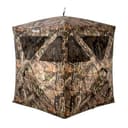
The four specs that decide a rifle blind
1. Window operation, because you open it at the worst moment
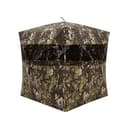
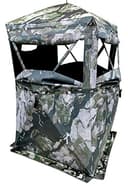
A bowhunter can set up with mesh in place and never touch a window. A gun hunter has to have a pane open to shoot, which means either you open everything in the dark and sit in a draft for six hours, or you open a window while a deer is in the field. A silent slide window makes the second option survivable; a velcro-and-zip flap does not. This is the spec gun hunters under-rate most, and it is why the Barronett and the Primos lead this list while cheaper blinds do not.
2. Window height versus a seated rifle
The forend of a rifle wants to sit on something at roughly chest height when you are in a chair. Blind windows are generally cut for a bow at a lower draw position, so the usual outcome is a sill a few inches too low and a hunter hunched over the gun. Two fixes, and you should plan one before you buy: a chair with adjustable height, or a rest that brings the gun up to you. Our deer blind gun rest picks exist for exactly this, and blind chairs solves the other half.
3. Floor space measured at seat height
Advertised person-ratings are useless here. What matters is the narrowest interior dimension at the height your elbows live, because a rifle plus a chair plus a tripod is a wide, awkward footprint and you have to be able to swing the whole assembly as an animal moves. The 75-by-75-inch footprint on the Barronett is the comfortable minimum for one gun hunter with a real rest; smaller blinds work, but you will be shooting off your knee.
4. A dark interior, because gun season is bright
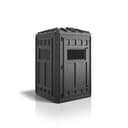
Firearm seasons mostly run in late fall when leaves are off and light is flat and strong. A blind with a light-coloured or uncoated interior backlights you, and the one thing deer vision is genuinely excellent at is detecting movement. Peer-reviewed work on cervid visual ecology describes deer as dichromats — sensitive to short, blue wavelengths and poor at red and orange — which is a vision system tuned for contrast and motion rather than detail. A black interior coating removes the contrast your movement would otherwise create. The Barronett publishes one; several blinds in this price range do not publish it at all.
The elevated option, which most gun hunters should consider first
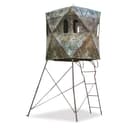
If you hunt the same spot every season on flat ground, the honest answer may not be a pop-up at all. A 6-foot tripod tower blind with an enclosed 4-by-4 platform costs about what a premium pop-up costs and buys you something no fabric blind can: sightlines over standing cover, and a scent cone that starts six feet up instead of at nose height. For a rifle — where a 200-yard shot across a cut field is normal and a 20-yard shot is not required — that trade is heavily in your favour.
The costs are equally real: it does not move, it has to be anchored, and climbing into it in the dark is its own safety problem. We work through the whole decision in ground blind vs box blind, and how to hunt from a box blind covers running one once it is up.
Blaze orange: the blind itself may be regulated
This is the part of rifle-blind buying that gets skipped, and it is law rather than advice. Minnesota requires a fabric or synthetic ground blind used to hunt deer on public land to carry a blaze-orange covering on top visible for 360 degrees, orat least 144 square inches of blaze orange on each side. Wisconsin requires 144 square inches of solid blaze orange or fluorescent pink visible from all directions on DNR-controlled land during firearm deer seasons, plus the owner’s DNR customer ID or name and address on an unoccupied blind — with blinds built entirely of dead vegetation found on the property exempted.
Your own clothing is a separate requirement on top of that. Texas requires 400 square inches of hunter orange plus orange headgear on public land during firearm seasons; Virginia has its own blaze orange or pink rule for firearms deer season. The pattern across states is that the numbers differ and the obligation does not, so read your regulations rather than a forum post. And yes, you can wear it without hurting yourself — can deer see blaze orange goes through what the vision research actually says, and best blaze orange covers what to buy.
What does not matter for a rifle, despite the marketing
Shoot-through mesh. Rated for broadheads; irrelevant to you. Do not pay for it and do not shoot through it.
Packed weight, mostly. Unless you are walking in a mile, a heavier blind is a better blind in gun season because the weight is fabric and frame. The Barronett is 15 lb packed and that is a non-issue for a blind you drive to.
Low-draw interior height. A tall interior is nice, but you are not standing up to draw a bow. Spend the money on floor width instead.
What does matter, and is free: where you put it. A rifle blind wants a long sightline, a wind that does not carry into the field you are watching, and an entry route that does not cross the trail you are hunting. Where to place a ground blind and how to hunt field edges are both worth more than the difference between any two blinds on this page.