Blind & Brush

Best Ground Blinds for Bow Hunting

The six best ground blinds for bowhunters, ranked on shoot-through mesh, interior height to draw seated, a blackout interior and quiet windows — with live prices.

By Stephen V.Last updated How we pick

Bowhunting from a ground blind asks more of the blind than gun hunting does. You have to come to full draw while seated, thread an arrow through a window without clipping the frame, and do all of it inside a deer’s comfort zone. So the specs that matter shift. The big ones are shoot-through mesh— the fine screen you leave closed and shoot straight through, so no black hole opens up when a deer is close — and interior height, because a blind you can’t draw in seated is useless at the moment of truth.

Under those two, a bow blind lives on its blackout interior and quiet, snag-free windows. Deer see blue and green well and shorter reds and oranges poorly, but they read movement and contrast instantly — a dark interior swallows the motion of your draw so your silhouette never appears against the far wall. We ranked these six on drawing room first, then mesh quality, then how quietly the windows work and how well each blind hides you once it’s brushed in. Our overall pick is the blind most bowhunters should start with; the rest sort by the problem you’re solving.

One thing to know before the table: most makers do not publish interior height, which is the single number a bowhunter needs most. Where a figure is published we quote it — the THUNDERBAY Gobbler Lodge states a 71-inch center height across a 95-by-95-inch footprint, and the Barronett Ace 250 states 67 inches over a 75-by-75-inch floor at 15 pounds packed. Where it is not published, our spec tables say “Not published” rather than guessing, and the fix is the same either way: sit in your own chair and mime a draw before opening day.

How this is funded:we earn a commission if you buy through our links, at no extra cost to you. It never changes which product we recommend, and we’ll tell you plainly when we’d skip one. Full disclosure.

Quick picks

Ranked on published specs, concealment fit and value. Select a row to jump to the full write-up. We have not field-tested this gear — here is exactly what we do instead.

#ProductBest forPrice
1
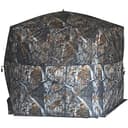
Ameristep Care Taker Ground Blind

Ameristep Care Taker Ground Blind

The blind most hunters should buy first: a genuine hub blind that sets up in seconds, packs small, and costs about a third of the premium names. It is the honest default for a beginner or a run-and-gun setup, and the reason it tops this list is value, not luxury.

Best overall for bow
2
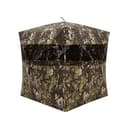
Primos Full Frontal See-Through Blind

Primos Full Frontal See-Through Blind

The one blind here that solves the biggest ground-blind problem — you can't see game approach. Its front wall is one-way see-through mesh: you watch deer come in without opening a window, and they see an opaque wall. If busted setups are your issue, this is the fix.

Best visibility
$288.99 · View on Amazon

Price as of September 18, 2026. #ad How we’re funded

3
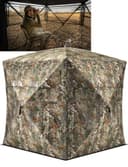
THUNDERBAY Gobbler Lodge 5-Side (4-Person)

THUNDERBAY Gobbler Lodge 5-Side (4-Person)

A lot of blind for the money — a large, tall hub blind with a blackout interior and repositionable windows, at a mid-tier price. The value choice for a family or a comfortable all-day sit where you're not carrying it far.

Most interior height
$149.99 · View on Amazon

Price as of September 18, 2026. #ad How we’re funded

4
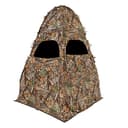
Barronett Ace 250 Hub Blind

Barronett Ace 250 Hub Blind

The pick when floor space matters more than pack size — a 75-by-75-inch hub with a silent panoramic front window, so a gun hunter in a chair and a second person still have room to move. Barronett includes detachable blaze-orange panels for firearm season, a real-world detail most makers ignore.

Best for bow and gun seasons
5
TIDEWE 270° See-Through Hunting Blind

TIDEWE 270° See-Through Hunting Blind

The budget way to get see-through walls. It borrows the one-way-mesh idea from far pricier blinds so you can watch turkeys and deer approach through 270 degrees, at a fraction of the premium cost. The value pick for situational awareness.

Best see-through value
$109.99 · View on Amazon

Price as of September 18, 2026. #ad How we’re funded

6
Ameristep Outhouse Lightweight Blind

Ameristep Outhouse Lightweight Blind

The lightweight, low-cost option for a hunter who moves — an easy hub blind you can carry deep and set fast without much weight penalty. It skips the premium features, and for a mobile, budget-first setup that is exactly the point.

Best lightweight
$74.99 · View on Amazon

Price as of September 18, 2026. #ad How we’re funded

The picks in full

#1Best overall for bowHub ground blind

Ameristep Care Taker Ground Blind

The blind most hunters should buy first: a genuine hub blind that sets up in seconds, packs small, and costs about a third of the premium names. It is the honest default for a beginner or a run-and-gun setup, and the reason it tops this list is value, not luxury.

Strengths

  • Hub design snaps open and shut in seconds with no pole threading
  • Packs to a compact carry disc that fits behind a truck seat
  • Durametric shell and shoot-through mesh windows at an entry price

Trade-offs

  • Tight for two hunters — it is really a solo or archery-first blind
  • Lighter fabric than the premium blinds; treat the zippers gently in cold
TypeHub-style pop-up
Capacity1 hunter (roomy) / 2 tight
Shoot-through mesh windowsYes
Blackout interiorNot published
Packed weightNot published

The spec that matters. The spec that decides a blind is the WINDOW layout, not the brand. The Care Taker's shoot-through mesh lets you draw a bow behind cover; that matters more for concealment than a few extra denier of fabric.

Specs read from the product listing, on July 22, 2026. “Not published” means the maker does not state that figure.

#2Best visibilitySee-through hub blind

Primos Full Frontal See-Through Blind

The one blind here that solves the biggest ground-blind problem — you can't see game approach. Its front wall is one-way see-through mesh: you watch deer come in without opening a window, and they see an opaque wall. If busted setups are your issue, this is the fix.

Strengths

  • One-way see-through mesh front — a huge situational-awareness gain
  • Silent-slide windows adjust without the zip-and-rip noise of a cheap blind
  • Brush straps along the window ridges let you blend it into native cover

Trade-offs

  • Costs more than a standard hub blind
  • The see-through mesh is the front wall, not all four — it is not a 360-degree view
TypeHub-style with one-way see-through front
One-way see-through meshYes (front wall)
WindowsFully adjustable silent-slide
CamoVeil
CapacityNot published

The spec that matters. See-through walls are the feature that actually changes your hunt. You detect deer at 80 yards instead of at the window, which means you're already still and drawn before they're in range.

Specs read from the product listing, on August 26, 2026. “Not published” means the maker does not state that figure.

#3Most interior heightLarge hub blind

THUNDERBAY Gobbler Lodge 5-Side (4-Person)

A lot of blind for the money — a large, tall hub blind with a blackout interior and repositionable windows, at a mid-tier price. The value choice for a family or a comfortable all-day sit where you're not carrying it far.

Strengths

  • Roomy 4-person footprint, 95 x 95 inches hub to hub, with a 71-inch center height
  • Black PU-coated interior helps hide movement inside
  • Full-panel sliding windows adjust without noise

Trade-offs

  • Large and heavier — best for a stand-hunt spot you drive to
  • Not the blind for a mobile, cover-ground hunter
Type5-sided hub-style pop-up (6 hubs)
Capacity4 hunters
Blackout interiorYes — black PU coating
Window operationFull-panel sliding, noise-free
Packed weightNot published

The spec that matters. A blackout interior is the underrated concealment spec: it kills the backlight that turns any movement inside the blind into a silhouette a deer can read from the field edge.

Specs read from the product listing, on August 11, 2026. “Not published” means the maker does not state that figure.

#4Best for bow and gun seasonsRoomy hub blind

Barronett Ace 250 Hub Blind

The pick when floor space matters more than pack size — a 75-by-75-inch hub with a silent panoramic front window, so a gun hunter in a chair and a second person still have room to move. Barronett includes detachable blaze-orange panels for firearm season, a real-world detail most makers ignore.

Strengths

  • 75 x 75 in. floor and 67 in. of height — genuine elbow room for two
  • Silent, adjustable panoramic front window suits rifle and shotgun sightlines
  • Detachable blaze-orange safety panels included for gun season

Trade-offs

  • 15 lb packed — not a walk-in-deep blind
  • The shoot-through mesh is rated for broadheads only, so firearms shoot an open window
TypeHub-style pop-up
Footprint75 x 75 in., 67 in. tall
Packed weight15 lb
Shoot-through meshYes — broadhead use only
FabricHD 150 denier, black interior coating

The spec that matters. Room is a trade against concealment: a bigger box is a bigger thing for a deer to notice. If you buy space, plan to brush it in — this one has brush holders built into the shell for exactly that.

Specs read from the product listing, on August 26, 2026. “Not published” means the maker does not state that figure.

#5Best see-through valueSee-through hub blind

TIDEWE 270° See-Through Hunting Blind

The budget way to get see-through walls. It borrows the one-way-mesh idea from far pricier blinds so you can watch turkeys and deer approach through 270 degrees, at a fraction of the premium cost. The value pick for situational awareness.

Strengths

  • 270° one-way see-through mesh for early game detection
  • Comes with a carry bag and stakes at a low price
  • Popular for spring turkey where you need to track birds

Trade-offs

  • Lighter build than the premium see-through blinds
  • See-through mesh is dimmer in low light than solid windows
TypeHub-style with 270° see-through mesh
One-way see-through wallsYes (270°)
Capacity1-2 hunters
IncludedCarry bag + stakes
Packed weightNot published

The spec that matters. See-through mesh trades a little brightness for a lot of awareness. In the low light of the first and last hour it's dimmer than a clear window — a fair trade for seeing a bird commit before it's in your lap.

Specs read from the product listing, on July 22, 2026. “Not published” means the maker does not state that figure.

#6Best lightweightLightweight hub blind

Ameristep Outhouse Lightweight Blind

The lightweight, low-cost option for a hunter who moves — an easy hub blind you can carry deep and set fast without much weight penalty. It skips the premium features, and for a mobile, budget-first setup that is exactly the point.

Strengths

  • Light and compact for how far you can pack it
  • Fast spring-steel hub setup
  • One of the cheapest real hub blinds available

Trade-offs

  • Thinner shell — it is a value blind, not a fortress
  • Snugger interior; plan on a solo sit
TypeHub-style pop-up
Capacity1-2 hunters
FrameSpring-steel hub
Shoot-through mesh windowsNot published
Packed weightNot published

The spec that matters. For a mobile blind, packed weight and set-up speed beat luxury features — you'll actually carry it to the right spot instead of leaving it in the truck because it's a hassle.

Specs read from the product listing, on July 22, 2026. “Not published” means the maker does not state that figure.

How to choose a ground blind for bow hunting

Start with the draw. Sit in a chair, mime coming to full draw, and add a few inches for a raised elbow — that’s the minimum interior height you need, and it rules out the shortest blinds fast. Next comes shoot-through mesh: leaving a screened window closed means a deer never sees an open black rectangle, and your arrow passes through the fine mesh with negligible effect at bowhunting distances. Confirm your blind has it, and practice a few shots through it before season so nothing surprises you.

The two numbers to measure before you buy

Interior heightdecides whether you can draw. Sit in the chair you actually hunt from, come to full draw, and measure from the floor to the top of your raised elbow, then add a few inches of clearance for the upper limb and the cam. Compare that to the blind’s centerheight, not its wall height — hub blinds slope, and the number in the listing is almost always the peak. Of the blinds here, the THUNDERBAY Gobbler Lodge publishes the most at 71 inches of center height and the Barronett Ace 250 publishes 67 inches; the rest do not state it at all.

Floor widthdecides whether you can turn. A bow needs room to rotate to a different window without the lower limb hitting a wall, and a chair takes up more of the floor than people expect. The Ace 250’s 75-by-75-inch floor is roughly the practical minimum for a bowhunter who wants to face more than one direction; the Gobbler Lodge’s 95-by-95-inch footprint is genuinely spacious but is a big object to hide, and it is the wrong blind to carry any distance. Room is always a trade against concealment — buy the space, then plan to brush it in properly.

Shoot-through mesh: rated for broadheads, not bullets

Read the mesh rating rather than assuming. Barronett, for example, states that the Ace 250’s shoot-through mesh is for broadhead use only— a firearm has to shoot an open window. That distinction matters if you hunt the same blind with a bow in October and a rifle in November: you will be running two different window setups in the same box, and the gun setup is the one that puts a black rectangle next to a close deer.

Whatever mesh you run, shoot it before the season. Set the blind up in the yard, put the chair where it will sit, and send several arrows through the mesh from a seated position at your normal ranges. You are checking three things: that point of impact does not shift meaningfully, that the lower limb and cam clear the window frame at full draw, and that the fletching is not catching on the way through. Fixed-blade and mechanical heads behave differently through a screen, so test the head you will actually hunt.

Window layout is a bow problem before it is a view problem

Gun hunters want a wide horizontal slot; bowhunters want a window they can shoot through while seated, with vertical room for the limb. Look for windows that adjust in heightas well as width, and for silent-slide panels rather than hook-and-loop or a zipper — the Primos Full Frontal and the Gobbler Lodge both use sliding panels for exactly this reason, and the noise difference when a deer is at fifteen yards is not subtle. If you shoot a crossbow instead, measure the width of the bow at full cock as well as your draw height, because a crossbow’s limbs are what catch a window frame; crossbow vs compound in a blind covers that trade in full.

Blackout, silence, and setup do the rest

A blackout interior— dark walls and a dark ceiling — is what actually hides the motion of your draw, so wear dark clothes and keep the back windows shut to kill any backlight that would turn you into a silhouette. Work the windows before you hunt: silence the zippers or Velcro, set your openings for the shot angle you expect, and range a few landmarks. Then set the blind up early and brush it in with natural cover, because a deer that grew up walking past your blind never registers it. A cheaper blind that’s weathered and brushed in beats a premium one dropped in fresh that morning.
Frequently asked questions

Do I really need shoot-through mesh for bow hunting?

It's the single feature that most separates a bow blind from a gun blind. Leaving a fine mesh window closed means no open black rectangle appears next to a close deer, and a broadhead passes through the screen with negligible effect at typical bow ranges. Practice a few shots through the mesh before season so you trust it, and keep the mesh clear of the arrow path.

How much interior height do I need to draw a bow seated?

Enough to reach full draw from a chair with your elbow raised and no part of the bow or arrow touching a wall or the ceiling. The safest test is to sit in your actual hunting chair and mime a draw before you buy or before opening day. The shortest, lowest blinds are the ones that catch bowhunters out, so size up if you're between options.

Why does a blackout interior matter so much for bowhunters?

Deer read movement and contrast far better than fine color detail, and the draw is the biggest movement you'll make. A dark interior and dark clothing absorb that motion so your silhouette never shows against the far wall. Keep rear windows closed to prevent backlight, which is what turns a hidden hunter into an outline a deer can pick out.

What's the best lightweight ground blind for bow hunting?

If you move often and set up in new spots, a lighter hub blind you'll actually carry to the right tree beats a heavier one you leave in the truck. The Ameristep Outhouse is our lightweight pick, though verify it gives you the seated draw height you need first, since compact blinds sometimes trade interior room for pack size.

How tall does a ground blind need to be to bow hunt?

Tall enough that you reach full draw seated in your own chair with the upper limb and cam clear of the ceiling — measure it rather than guessing. Sit in the chair you hunt from, come to full draw, and measure floor to the top of your raised elbow, then add a few inches of clearance. Compare that to the blind's center height, not its wall height, because hub blinds slope and the listed figure is usually the peak. Most makers do not publish interior height at all; among our picks the THUNDERBAY Gobbler Lodge states 71 inches of center height and the Barronett Ace 250 states 67 inches.

Can you shoot a rifle or shotgun through shoot-through mesh?

No — read the rating. Shoot-through mesh is designed for arrows and broadheads, and makers say so explicitly: Barronett rates the Ace 250's mesh for broadhead use only, meaning a firearm has to shoot through an open window. If you hunt the same blind with a bow early and a gun later, plan on running two different window setups, and remember that the gun setup opens a black rectangle next to a close deer, so lean harder on brushing in and a dark interior for those sits.

Should I practice shooting through the mesh before season?

Yes, and do it seated in your actual hunting chair. Set the blind up in the yard, place the chair where it will sit, and shoot several arrows through the mesh at your normal ranges. You are checking three things: that point of impact does not shift meaningfully, that the lower limb and cam clear the window frame at full draw, and that fletching is not catching on the way through. Fixed-blade and mechanical heads behave differently through a screen, so test the exact head you will hunt.

Can I bow hunt from a ground blind without brushing it in?

You can, but you'll get busted more. A blind is a strange new object in a deer's living room, and brushing it into existing cover breaks up its outline so deer walk past without alarm. Set it up days or weeks early where you can, keep windows managed, and pair it with the setup and brushing-in steps we link below.

Sources

Keep reading