How to choose hunting face paint
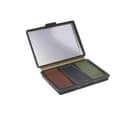
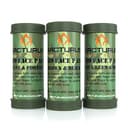
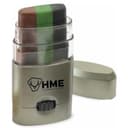
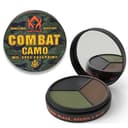
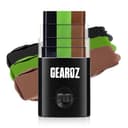
The decision comes down to three things: creme or stick, how many colors, and whether you’ll actually reapply it. Creme in a compact blends beautifully with a fingertip and usually includes a small mirror, but it’s greasier and needs remover wipes to clean off. A twist-up or push-up stick is far less messy, rides in a pocket, and applies straight from the tube — the format most likely to stay in your rotation because it’s so low-effort.
Colors: match the light, not just the leaves
Three colors handle most deer-woods settings. Six colors let you tune to spring green, autumn brown or dark timber, which matters more to a spot-and-stalk or multi-season hunter than to someone who sits one woodlot. But the real trick isn’t matching foliage — it’s matching light and shadow. Darken the high points of your face that catch light (forehead, nose bridge, cheekbones, chin) and lighten the recesses (eye sockets, under the jaw). That inversion flattens the 3D read of a face, which is what actually makes it disappear.
Why the face matters so much
Deer are dichromats with motion-tuned eyes: they don’t resolve fine detail the way we do, but they’re superb at catching contrast, shine and movement. A bare face delivers all three — a pale, glossy, moving oval at the top of your silhouette. Peer-reviewed work on cervid vision is why the priority is breaking up brightness and outline rather than printing a perfect pattern. Gloves and a face treatment fix the two brightest, most mobile parts of you; a jacket alone leaves them exposed.
Application and removal
Go on in a mirror if you can — doing it by feel in a dark truck leaves shiny gaps at the ears, the neck under the jaw, and the strip below the eyes. Warm a stick in a pocket first so it glides on cold skin. For removal, cremes need a wipe or soap; most sticks come off easier. Whatever you carry, the best face paint is the one you’ll bother to put on — application friction is the real reason hunters skip this cheap, high-impact step.
Face paint is one layer, not the whole answer
Painting up won’t save a setup with the wind at your back, and it won’t hide a hunter who fidgets. Think of it as the finishing touch on a concealment system that also includes breaking your outline, using a backdrop, sitting still, and—above all—playing the wind. Get those right and a painted face is the detail that keeps a close deer from picking you apart. For the full picture, read how to stay hidden from deer.