Turkey vision versus deer vision, side by side
This site spends most of its time on deer, so the contrast is worth drawing carefully — the two animals require different things from you.
Color.Deer are dichromats. The peer-reviewed review of cervid visual ecology describes sensitivity to short, blue wavelengths and poor discrimination at the red and orange end, and the foundational electrophysiology work measured whitetail cone sensitivities at roughly 450–460 nm and 537 nm. That is why blaze orange is cheap insurance against other hunters and costs you almost nothing with deer. A turkey, by the NWTF’s account, has a color range exceeding ours and can detect orange.
Acuity.Deer eyes are built for motion in low light rather than for resolving detail. A turkey’s acuity is estimated at three to four times a human’s. Deer see that something moved; a turkey sees what moved and what color it is.
Low light. Here the advantage flips. Deer are crepuscular and handle dim light far better than you do, while the NWTF states that neither turkeys nor humans have accurate night vision. That single fact is why the classic turkey plan works: be settled against your tree in the dark, because the bird cannot see you do it.
What it means in practice. Against deer, the winning moves are wind discipline and outline control. Against turkeys, the winning moves are skin coverage and stillness. Both animals punish movement; only one of them can describe your jacket.
Three things to do differently for turkeys
1. Get set in the dark. No accurate night vision is an exploitable fact. Be at the tree, settled, with your gun on your knee before the woods are light. Everything you do after that is subtracting from your odds.
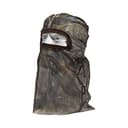
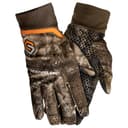
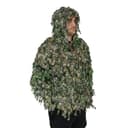
2. Cover skin, then worry about pattern.A 270-degree field of view means there is effectively no blind side on a turkey, and acuity three to four times yours means your hands and face are readable. A head net with an open eye hole and thin gloves fix that for about the price of a box of shells — details in best camo for turkey hunting.
3. Pick a tree wider than your shoulders, and plan the shot before the bird arrives.Because you cannot reposition against an animal that detects movement this fast, your setup has to cover the direction the bird will come from. A blind removes this problem entirely, which is why it is the standard answer for bowhunting turkeys or taking a child — turkey blinds are ranked separately, and turkeys famously tolerate a blind set that same morning in a way deer never will.
What this does not justify
A whole new wardrobe. Two honest limits on the UV story in particular.
The NWTF’s own wording is that turkeys are likelyable to perceive ultraviolet, and the organization notes that color perception depends on colored oil droplets in the cones and the number of cones in the retina. That is a careful claim, not a marketing one, and far less turkey-vision research exists than deer-vision research. Any product promising to “defeat turkey UV vision” is selling you certainty nobody has published.
And no clothing decision outranks being still in the right spot before light. If you have $40 to spend on this problem, spend it on a head net and gloves, not on a detergent claim. The free upgrades — arriving early, picking the right tree, not moving — are worth more than everything on this page put together.