What you are actually buying
You are buying the last fifteen yards.
Camo pattern is a long-range argument: it decides whether a deer at a hundred yards reads you as a shape worth studying. Noise is a short-range argument, and short range is where the shot happens. The sound of a sleeve dragging across a jacket chest, a shell cuff scuffing a gun stock, or a pant leg brushing the frame of a blind window travels perfectly well at twelve yards, and a whitetail that hears an unplaceable scrape at twelve yards does not wait around to work out what made it.
That is why this page exists next to best hunting camo rather than inside it. The camo roundup ranks on pattern, warmth and system versatility. This one throws all of that out and sorts the same market on one question: what does the fabric sound like when something slides across it?
The published gap this category hides
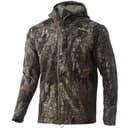
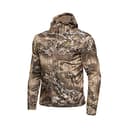
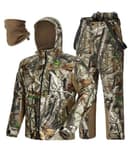
Here is the finding that should change how you shop. Every quiet-clothing claim in hunting is unquantified.Nomad calls the Harvester’s face silent. ScentBlocker names its fabric Silentec. TIDEWE calls its suit a silent hunting suit. Klarny publishes “ultra-quiet.” Not one of them publishes a decibel measurement, a standard they tested against, or a comparison against another fabric. There is no industry noise rating for hunting clothing and no third-party test anyone can point to.
We are not going to invent one. What we can do is read the construction, which the listings do state, and rank on physics that is not in dispute:
- Brushed or fleece face — quietest. A raised nap has no hard surface for another fabric to catch on, so contact becomes a muffled drag rather than a scratch. This is what every genuinely quiet jacket uses.
- Soft woven twill — middling. Warm, cheap, durable, and it has a weave your glove can audibly rasp across. The HOT SHOT insulated twill jacket in the camo roundup is honest about this; its own trade-off line says twill is louder than a brushed or fleece face.
- Coated or laminated shell — loudest. Waterproof membranes and taffeta linings crinkle, and they crinkle most when they are cold. This is the whole reason camo rain gear is a separate buying decision from a camo jacket.
A second published figure matters more than any of them and nobody frames it as a noise spec: fit. A jacket cut tight makes your arm drag across your own chest at full draw. A jacket cut to layer over a base and a mid-layer moves with the arm instead. The Harvester’s listing states that layering cut; the TIDEWE suit’s states that its sizing runs particular. Both of those are noise information.
The order these picks solve the problem in
1. The outer layer your draw arm crosses
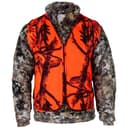
Fix this first, because it is the surface involved in the shot. A brushed softshell — the Harvester, or the Silentec jacket if you also want carbon and odor adsorption — is the single highest-value quiet purchase a bowhunter makes. If you hunt a gun from a blind, the equivalent surface is your forearm and the stock, which is why a quiet vest over a warm jacket is a legitimate cheap answer rather than a compromise.
2. What you are sitting on and leaning against
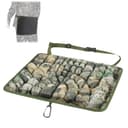
Most hunters never think about this and it makes more noise than their jacket. A crunchy foam seat pad complains every time you shift your weight, and shifting weight is the movement you repeat most over a four-hour sit. The silent-fabric memory-foam pad above costs less than a box of ammunition. The same logic applies to the chair in an enclosed blind — see best ground blind chairs for the models whose frames do not creak.
3. The layers nobody hears but you
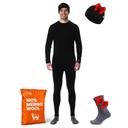
Merino is quiet by nature, which is a small bonus on top of the reason you want it: wool holds warmth when damp and resists odor without a chemistry claim. A merino base under a brushed shell gives you a stack with no hard surfaces in it at all. Synthetic base layers are not loud either — the comparison is laid out in merino vs synthetic base layers — but a fleece-backed synthetic is the quiet one of that pair.
4. The hard parts, which are not clothing
Once the fabric is sorted, the remaining noise on a hunter is zippers, buckles, a rangefinder on a lanyard, a release aid against a riser and loose change in a pocket. Clothing cannot fix those; discipline can, and the method is in how to silence your hunting gear.
The cheap fixes that are not a new jacket
Wash the shell you own in scent-free detergent and skip the softener. Fabric softener and dryer sheets coat fibers; a clean, unsoftened brushed face stays quieter than a coated one. The routine is in how to wash hunting clothes, and it serves your scent plan at the same time.
Put the loud layer on the inside. If your only warm coat is a laminated shell, wear it as a mid-layer under a quiet vest or a fleece. A crinkly fabric with something soft over it is no longer the surface anything touches.
Tape or wrap the hard contact points. A strip of self-cling camo wrapon the gun stock’s contact edge, the bow riser shelf and the blind window frame kills more noise per dollar than any jacket upgrade.
Dress at the blind, not at the truck. Cold laminated fabric is at its loudest, and a hunter who arrives already sweating ends up taking layers off during prime time. Both problems are noise problems.
What we did not include, and why
Wool outer layers from the classic mackinaw makers. Boiled wool is genuinely the quietest outer fabric made, and we would rank it first if the listings we can verify resolved to a currently purchasable product with a live offer. Today they do not, so there is nothing here to point you at. If you can find a wool coat in your size secondhand, it beats everything above on noise.
Anything sold as quiet with no published fabric description. If a listing says silent but will not say what the face is made of, there is nothing for a buying guide to evaluate.
Decibel claims of any kind.We found none that trace to a test, so this page carries none. Where a figure is not published, the spec tables above say “Not published,” which is the honest state of this category.