Blind & Brush

Best Trail Cameras Under $100

Under $100 now buys a cellular camera, not a consolation prize. The six that were under the line at the last price refresh, ranked on what they publish — and the subscription math the sticker price hides.

By Stephen V.Last updated How we pick

Buy the Moultrie Edge 3. It is a cellular camera at roughly two thirds of this page’s price cap, and it publishes the specs that decide a trail camera: 40 MP stills, a 0.50-second trigger, 100 feet of detection and 100 feet of low-glow flash, built-in storage so there is no SD card to forget, and GPS. That is the best buy under this page’s cap for a hunter who wants photos on a phone rather than a weekly walk to a card.

The budget pick is the Stealth Cam Browtine 16MP — the cheapest camera here by a wide margin, and the one to buy in pairs. It is not cellular, its IR range is published at 60 feet and its trigger speed is not published at all, but two of them cover two trails for less than one cellular camera. If you are blanketing a property rather than watching one spot, that is the right trade.

Read this part before you spend anything. On a cellular camera, the price under the button is the entry fee, not the cost. A data plan runs every month the camera is live, and it does not appear on any product page as a price. SPYPOINT is the one maker here that publishes a genuinely free tier — 100 photos per month at no charge — which is why the FLEX-M is on this list even though its resolution is lower than the Moultrie’s. All six picks were under $100 at the last price refresh and three sit within a dollar of the cap, so the live number under each button, with its “as of” date, is the one that counts.

How this is funded: we earn a commission if you buy through our links, at no extra cost to you. It never changes which product we recommend, and we’ll tell you plainly when we’d skip one. Full disclosure.

Quick picks

Ranked on published specs, concealment fit and value. Select a row to jump to the full write-up. We have not field-tested this gear — here is exactly what we do instead.

#ProductBest forPrice
1
Moultrie Edge 3 Cellular Trail Camera

Moultrie Edge 3 Cellular Trail Camera

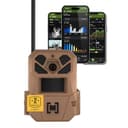
The cellular camera to buy first, and the one that removes the most excuses: 40MP stills, a 0.5-second trigger, 100 feet of detection and flash, built-in memory so there is no SD card to forget, and onboard GPS so you know which camera is calling. It costs about what a good non-cellular camera used to, which is why the honest comparison is no longer cellular versus regular — it is cellular versus walking in.

Best overall under $100
$69.99 · View on Amazon

$99.9930% off

Price as of November 21, 2026. #ad How we’re funded

2
SPYPOINT FLEX-M Cellular Trail Camera (SD card pack)

SPYPOINT FLEX-M Cellular Trail Camera (SD card pack)

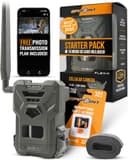
The cheapest honest way to find out whether cellular scouting changes how you hunt, because SPYPOINT includes a free 100-photo-per-month plan on every cellular camera. A hundred photos a month is not enough to run a survey, but it is plenty to answer the only question most hunters actually have: is anything using this trail in daylight?

Best with a free data plan
$49.99 · View on Amazon

$67.9926% off

Price as of November 21, 2026. #ad How we’re funded

3
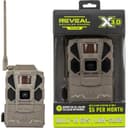
Tactacam REVEAL X 3.0 Cellular Trail Camera

Tactacam REVEAL X 3.0 Cellular Trail Camera

The cellular camera that answers the two questions the category usually dodges: where do the photos go if the signal drops, and how long does it run. Tactacam publishes 8GB of internal storage with an optional SD card slot on top of it, and power from twelve AA cells — roughly half again the battery bay of an eight-cell camera. That is the camera you hang in September and stop thinking about.

Best for the longest unattended run
$84.99 · View on Amazon

$119.9929% off

Price as of November 21, 2026. #ad How we’re funded

4
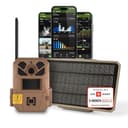
Moultrie Edge 3 Cellular Trail Camera with 3.4W Solar Power Pack

Moultrie Edge 3 Cellular Trail Camera with 3.4W Solar Power Pack

The same Edge 3 bundled with a 3.4W solar pack, and the right buy for the camera you least want to visit — the one watching a bedding-area entrance you cannot walk to in October without ruining the sit. Solar does not make a camera immortal, but it turns the battery from a reason to go in into a non-issue.

Best set-and-forget (at the line)
$119.00 · View on Amazon

$139.9915% off

Price as of November 21, 2026. #ad How we’re funded

5
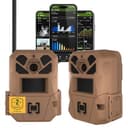
Moultrie Edge 3 Cellular Trail Camera, 2-Pack

Moultrie Edge 3 Cellular Trail Camera, 2-Pack

Two of our top pick in one box, and the right buy for anyone trying to answer a question about a property rather than a question about one trail. Purdue Extension's published deer-survey method asks for roughly one camera per 100 acres, which means a single camera cannot run a survey at all — it can only watch a spot. Compare the live price of the pack against two singles; the pack is usually the cheaper route to two spots.

Best for two spots at once
$96.27 · View on Amazon

$149.9936% off

Price as of November 21, 2026. #ad How we’re funded

6
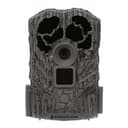
Stealth Cam Browtine 16MP

Stealth Cam Browtine 16MP

The honest cheap one. At a fraction of a cellular setup's first-year cost, this is the camera you buy two or three of and hang on separate trails to answer a yes-or-no question — not the camera you expect magazine photos from. Its published 60-foot detection range is the real limit: put it on a trail at fifteen yards, not across a field.

Budget pick: cheapest camera here
$33.99 · View on Amazon

$39.9915% off

Price as of November 21, 2026. #ad How we’re funded

The picks in full

#1Best overall under $100Cellular trail camera

Moultrie Edge 3 Cellular Trail Camera

The cellular camera to buy first, and the one that removes the most excuses: 40MP stills, a 0.5-second trigger, 100 feet of detection and flash, built-in memory so there is no SD card to forget, and onboard GPS so you know which camera is calling. It costs about what a good non-cellular camera used to, which is why the honest comparison is no longer cellular versus regular — it is cellular versus walking in.

Strengths

  • Built-in memory — no SD card to buy, forget, corrupt or leave in the truck
  • Published 0.5 s trigger and 100 ft detection range, genuinely enough for a field edge
  • Onboard GPS, so a camera you moved in August still tells you where it is in November

Trade-offs

  • Needs a paid data plan to do the one thing you bought it for — budget the plan, not just the camera
  • Moultrie does not publish a battery type, battery life or a waterproof rating for this model
  • Moultrie has since shipped the Edge 4 series, so this is the prior generation of a current lineup — that is why it is cheap, and the Edge 4 adds an IP67 rating and a 0.4 s trigger
  • Low-glow flash, not no-glow: a deer standing close can see the IR array light up
TypeCellular (all 4 major networks)
Image resolution40 MP
Trigger speed0.50 s
Detection / flash range100 ft / 100 ft
Flash typeLow-glow IR
StorageBuilt-in — no SD card required (capacity not stated)
GPSYes
Waterproof ratingNot published

The spec that matters. Moultrie publishes 40MP, 0.5 s and 100 ft on its own product page but states no battery type, battery life or IP rating, and sells a separate power pack — which tells you the internal cells are not the long-haul answer. Price the plan before you price the camera: over three seasons the subscription is usually the bigger number. Worth knowing before you buy: Moultrie's 2026 Edge 4 series replaced this one at the top of its lineup, so the Edge 3 is now the clearance generation — which is exactly why it undercuts everything else here, and why its price is the argument for it rather than its spec sheet.

Specs read from the product listing, on October 10, 2026. “Not published” means the maker does not state that figure.

#2Best with a free data planCellular trail camera

SPYPOINT FLEX-M Cellular Trail Camera (SD card pack)

The cheapest honest way to find out whether cellular scouting changes how you hunt, because SPYPOINT includes a free 100-photo-per-month plan on every cellular camera. A hundred photos a month is not enough to run a survey, but it is plenty to answer the only question most hunters actually have: is anything using this trail in daylight?

Strengths

  • Free 100-photo-per-month plan included — the only pick here that works with no recurring bill
  • Sold as a pack with the microSD card included, so setup is batteries, card, scan the code
  • 0.4 s published trigger speed, quicker than most cameras at this price

Trade-offs

  • Batteries are still not included — a battery pack or 8 AA cells is on top of the price
  • 720p video capped at 15 seconds: this is a stills camera that also shoots clips
  • Detection range is published as under 90 ft, the shortest of our cellular picks
  • IP65 is water-resistant, not submersible — fine on a tree, not a spec to lean on
TypeCellular (dual-SIM LTE, preactivated)
Image resolution28 MP
Trigger speed0.4 s
Detection / flash rangeUnder 90 ft (28 m)
Video720p with sound, 15 s
StoragemicroSD 2-512 GB (card included in this pack)
PowerBattery pack or 8 AA (not included)
Water resistanceIP65 (listing)
Free plan100 photos / month

The spec that matters. SPYPOINT's free tier is the real feature, and it should be read precisely: 100 photos a month, not 100 a day. Set the camera to a single photo per trigger over a pinch point rather than a three-shot burst over a feeder, or the month's allowance is gone in a weekend. This listing is the camera bundled with its microSD card, which is the version currently in stock.

Specs read from the product listing, on October 24, 2026. “Not published” means the maker does not state that figure.

#3Best for the longest unattended runCellular trail camera

Tactacam REVEAL X 3.0 Cellular Trail Camera

The cellular camera that answers the two questions the category usually dodges: where do the photos go if the signal drops, and how long does it run. Tactacam publishes 8GB of internal storage with an optional SD card slot on top of it, and power from twelve AA cells — roughly half again the battery bay of an eight-cell camera. That is the camera you hang in September and stop thinking about.

Strengths

  • 12 AA cells is the largest published battery bay of any pick here, which is what a long unattended run actually needs
  • 8GB of internal storage PLUS an optional SD card slot — images survive a month of bad signal
  • Published 4K (UHD) and 2.5K (WQHD) photo definition, auto carrier selection and built-in GPS

Trade-offs

  • Twelve AA batteries are not included, and twelve lithium AAs is a real line item on top of the camera
  • Trigger speed is published only as “sub-1/2 second” — vaguer than the 0.3 s and 0.5 s figures its rivals print
  • Tactacam has since shipped an X 4.0, so this is the prior generation of a current lineup — fine at the price, worth knowing first
  • Low-glow IR, not no-glow: a deer standing close can see the flash array light up
TypeCellular LTE, auto carrier selection, integrated SIM
Photo definition4K (UHD) / 2.5K (WQHD)
Video1080p FHD, selectable 10 / 15 / 30 s
Trigger speedSub-1/2 second (no exact figure published)
Detection / flash range96 ft+ / 96 ft (29 m)
Flash typeLow-glow IR
Storage8 GB internal + optional SD card slot
Power12 AA batteries (not included); DC 12V external input
GPSBuilt-in
Waterproof ratingNot published

The spec that matters. Tactacam's own page publishes the storage and the battery bay but no IP or waterproof rating and no exact trigger figure. The storage detail is the one worth acting on: a camera with onboard memory keeps shooting when the network is down, so a dead week of signal costs you the alerts, not the photos.

Specs read from the product listing, on October 24, 2026. “Not published” means the maker does not state that figure.

#4Best set-and-forget (at the line)Cellular trail camera (solar)

Moultrie Edge 3 Cellular Trail Camera with 3.4W Solar Power Pack

The same Edge 3 bundled with a 3.4W solar pack, and the right buy for the camera you least want to visit — the one watching a bedding-area entrance you cannot walk to in October without ruining the sit. Solar does not make a camera immortal, but it turns the battery from a reason to go in into a non-issue.

Right at the line. This one and the two-pack sat within a dollar of $100 at the last refresh, so check the live price under the button before you count it as an under-$100 buy.

Strengths

  • Solar pack removes the battery trip, which is the whole point of a camera you cannot approach
  • Identical camera specs to our top pick — 40MP, 0.50 s trigger, 100 ft detection and flash
  • Bundled, so it usually lands under the camera-plus-panel list price

Trade-offs

  • Needs real sky: under heavy canopy a solar panel is a hood ornament
  • A panel and cable add bulk and one more shape for a deer to notice up close
  • Still needs the paid data plan — solar fixes power, not the subscription
TypeCellular with 3.4W solar power pack
Image resolution40 MP
Trigger speed0.50 s
Detection / flash range100 ft / 100 ft
StorageBuilt-in — no SD card required
GPSYes
Battery capacityNot published

The spec that matters. Mount the panel where it gets midday sun, not where the camera view is best, and accept a short cable run between the two. A solar camera in full shade behaves exactly like a non-solar camera, and you find out in November.

Specs read from the product listing, on October 10, 2026. “Not published” means the maker does not state that figure.

#5Best for two spots at onceCellular trail camera (2-pack)

Moultrie Edge 3 Cellular Trail Camera, 2-Pack

Two of our top pick in one box, and the right buy for anyone trying to answer a question about a property rather than a question about one trail. Purdue Extension's published deer-survey method asks for roughly one camera per 100 acres, which means a single camera cannot run a survey at all — it can only watch a spot. Compare the live price of the pack against two singles; the pack is usually the cheaper route to two spots.

Two cameras, one price. At the last refresh this pack worked out to roughly half the single-camera price — the cheapest route to cellular coverage on this page, if the current price still holds.

Strengths

  • Two cameras lets you compare two locations in the same week instead of guessing between them
  • Identical published specs to our top pick — 40MP, 0.5 s trigger, 100 ft detection and flash, GPS, built-in memory
  • Built-in memory on both bodies, so there is no pair of SD cards to buy, label or lose

Trade-offs

  • Two cameras means two data plans — the subscription doubles with the hardware
  • Low-glow flash, so neither body is the right choice for a trail an older buck already avoids
  • Moultrie publishes no battery type, battery life or waterproof rating for the Edge 3
TypeCellular (all 4 major networks), 2 cameras
Image resolution40 MP
Trigger speed0.50 s
Detection / flash range100 ft / 100 ft
Flash typeLow-glow IR
StorageBuilt-in — no SD card required (capacity not stated)
GPSYes
Waterproof ratingNot published

The spec that matters. Two cameras in two places beats one camera in one place, because placement decides whether a photo is useful and nobody picks the right spot first time. Budget two plans before you buy two bodies — over three seasons the subscriptions are the bigger number, not the cameras.

Specs read from the product listing, on October 24, 2026. “Not published” means the maker does not state that figure.

#6Budget pick: cheapest camera hereNon-cellular trail camera (budget)

Stealth Cam Browtine 16MP

The honest cheap one. At a fraction of a cellular setup's first-year cost, this is the camera you buy two or three of and hang on separate trails to answer a yes-or-no question — not the camera you expect magazine photos from. Its published 60-foot detection range is the real limit: put it on a trail at fifteen yards, not across a field.

Strengths

  • Cheap enough to run several at once, which beats one good camera in one wrong spot
  • No subscription, no app, no account — card in, card out
  • Small body is easy to tuck into cover where a bigger camera stands out

Trade-offs

  • Published detection range is only 60 ft — it is a trail camera, not a field camera
  • Stealth Cam does not publish a trigger speed for it, and at this price that usually means slow
  • 16MP stills and a basic IR flash: the images are evidence, not portraits
TypeNon-cellular (SD card)
Image resolution16 MP
Detection / IR range60 ft
Trigger speedNot published
BatteryNot published
StorageNot published

The spec that matters. Three cheap cameras on three trails tell you more than one expensive camera on the wrong trail, because placement — not image quality — is what produces a useful photo. That logic stops working where theft is likely, which is also where a cheap camera is the one you shrug about losing.

Specs read from the product listing, on October 10, 2026. “Not published” means the maker does not state that figure.

What changed about this price band

Five years ago, under $100 meant a slow, low-resolution SD-card camera and a walk into your best spot every week to pull the card. Both halves of that have changed. The entry price of cellular has collapsed, and the cameras at this price now publish specs — trigger speed, flash range, detection range — that used to sit in the next bracket up.

That matters for a reason specific to how this site hunts. The most expensive thing about a non-cellular camera is not the camera. It is you, walking to it.Every card pull is a trip into the spot you intend to hunt, leaving ground scent on the approach and a human outline where deer expect none. A cellular camera at two thirds of this page’s cap removes those trips. That is the real argument for spending a little more than the cheapest camera here, and it has nothing to do with megapixels.

The subscription, which is the actual cost

Here is the arithmetic nobody puts on a product page. A cellular camera needs a data plan, plans are billed monthly or annually per camera, and the camera is useless without one. Run two cameras for a season and the plans can cost more than one of the cameras did.

The honest routes through that:

  • Use the published free tier.SPYPOINT publishes a free transmission plan at 100 photos per month. That is not many photos — one busy night on a food plot will eat it — but it is enough to confirm whether a spot is worth hunting, and it costs nothing.
  • Run the camera as an SD-card camera.The FLEX-M pack above ships with a microSD card and accepts 2–512 GB. A cellular camera with no active plan is still a perfectly good conventional camera, so you can pay for data during the two months you care and stop the rest of the year.
  • Buy one cellular camera and several cheap ones. Put the cellular camera on the spot you refuse to disturb, and SD-card cameras on the peripheral trails you can check on the way in.

The specs that decide a cheap camera, and the ones that do not

Trigger speed and detection range: the two that matter

A deer walking a trail at normal speed crosses the frame in about a second. A published 0.50-second trigger catches it; an unpublished trigger is a coin flip, and the Browtine’s is unpublished. Detection range decides whether the camera sees anything at all on a wide field edge. Moultrie publishes 100 feet of detection and 100 feet of flash; SPYPOINT publishes under 90 feet for the FLEX-M; Tactacam publishes 96 feet and gives trigger speed only as “sub-1/2 second” rather than a figure.

Flash type: the one that decides whether deer notice

Low-glow and no-glow infrared is what you want on a spot you hunt. The visible red flash of an old camera is a light switch going on in the dark next to a trail. All the cellular picks here publish low-glow IR. The pressured-deer version of this argument, plus the no-glow options one bracket up, is in best trail cameras.

Power: the spec that decides how often you go back

Tactacam publishes a 12-AA bay plus a DC 12V external input, which is the longest unattended run on this page. The solar Edge 3 publishes a 3.4W solar pack and — honestly — no battery capacity at all, so its set-and-forget claim cannot be verified from published figures. Both beat a 4-AA budget camera in December, when cold cuts alkaline performance badly.

Megapixels: mostly marketing

A 40 MP label on a camera at this price is interpolation, not sensor resolution, and it has almost no bearing on whether you can tell which buck walked past. Resolution is the spec the category advertises hardest because it is the cheapest to inflate. Judge these cameras on trigger, range, flash and power.

Where to put a cheap camera so it earns its price

A camera from this price band in the right spot outperforms a flagship in the wrong one. Put it on a pinch point, a water source or a trail junction rather than staring across open field; set it at deer-chest height angled slightly down the trail instead of perpendicular to it, so a walking deer is in frame longer; and face it north if you can, to keep the sun out of the lens at dawn and dusk. The full placement logic is in where to put a trail camera, and if you are trying to count deer rather than find one, Purdue Extension publishes an actual survey methodology — camera density, bait stations and duration — which is the only rigorous way to turn photos into a population estimate.

One legal note that catches hunters out: camera rules vary by state and some are season-specific. Utah’s big game rule, for example, restricts the use of trail cameras for taking big game within defined dates. Check your own regulations before you hang anything on public ground.

What we did not include, and why

No-glow cellular cameras. The ones we can verify sit above this price cap. If invisible flash matters because you are hunting pressured deer, that is a reason to spend more than $100, and the options are in best cellular trail cameras.

Anything whose price was over the cap at the last refresh.This is a price-band page, so the band is enforced from the live price layer rather than from a tier label. Two cameras that would otherwise rank well — a no-glow invisible model and a solar cellular unit — are in the roundups linked above instead.

Cameras with no published trigger speed and no live offer. One of those two gaps is survivable. Both together means there is nothing to rank.

Subscription prices quoted as fact.Plan pricing changes often and varies by promotion. The only plan figure on this page is the one SPYPOINT publishes itself: a free tier at 100 photos per month. Check current plan pricing on the maker’s site before you commit to a system.
Frequently asked questions

What is the best trail camera under $100?

The Moultrie Edge 3. It is a cellular camera priced at roughly two thirds of the $100 cap, and Moultrie publishes the figures that actually matter: 40 MP stills, a 0.50-second trigger, 100 feet of detection and 100 feet of low-glow IR flash, built-in storage with no SD card required, and GPS. For a hunter who wants photos on a phone instead of a weekly walk into their best spot, nothing else under the cap matches that combination of published specs.

Can you get a cellular trail camera for under $100?

Yes — several, as of the price refresh stamped under each button on this page. What stays off the sticker is the data plan: cellular cameras need a subscription per camera, billed monthly or annually, and the camera cannot send photos without one. SPYPOINT publishes a free tier at 100 photos a month, which is the honest way to try cellular at zero recurring cost. You can also run any cellular camera with no plan at all as a conventional SD-card camera.

Are cheap trail cameras worth it?

Yes, if you buy them for the right job. A cheap SD-card camera on a peripheral trail you can check on your way in is excellent value, and two of them cover twice the ground. Where cheap costs you is on the spot you refuse to disturb — there, every card pull leaves scent and a human outline, and an inexpensive cellular camera removes those trips entirely. Spend the money where walking in is expensive, and save it where it is not.

Do I need a subscription for a trail camera?

Only for cellular cameras, and then yes — the data plan is what sends the photos to your phone. Plans are per camera, so running three cellular cameras means three plans. Two ways to avoid the bill: use a maker's published free tier, such as SPYPOINT's 100 photos per month, or run the camera as a plain SD-card camera and pay for data only during the weeks you care about. A non-cellular camera has no subscription of any kind.

How many megapixels do you need in a trail camera?

Far fewer than the box advertises. The large megapixel numbers on inexpensive cameras are interpolated rather than true sensor resolution, and they have very little effect on whether you can identify the buck in the photo. The specs that decide a usable picture are trigger speed, detection and flash range, flash type and power source. Judge a camera on those four and treat the resolution claim as the cheapest number on the page to inflate.

How long will batteries last in a budget trail camera?

Published figures are rare, which is itself informative. The Tactacam on this page publishes a 12-AA bay plus a 12V external input, which gives it the longest unattended run here; the solar Moultrie publishes a 3.4W panel but no battery capacity at all, so its runtime cannot be verified from published data. Expect any alkaline-powered camera to lose capacity sharply in December cold, and prefer a camera with a bigger battery bay or an external power option for a set you do not want to revisit.

Are trail cameras legal everywhere?

No. Rules vary by state and sometimes by season or by land ownership — Utah's big game rule, for instance, restricts the use of trail cameras for taking big game within defined dates. Some states also restrict cellular transmission specifically, because a live photo is closer to real-time scouting. Check the current regulation for the unit you hunt before hanging a camera, especially on public land.

Sources

  • Edge 3 Cellular Trail Camera — published specifications (Moultrie) — Moultrie's own spec table: 40MP, 0.50-second trigger, 100-foot detection and flash range, low-glow flash, built-in memory with no SD card required, onboard GPS — and no published battery type, battery life or waterproof rating (accessed October 10, 2026)
  • FLEX-M cellular trail camera — published specifications (SPYPOINT) — SPYPOINT's spec page: 28MP stills, 0.4-second trigger, detection under 90 feet, 720p/15-second video, dual-SIM LTE preactivated, and the free 100-photo-per-month plan included with every SPYPOINT cellular camera (accessed October 10, 2026)
  • REVEAL X 3.0 trail camera — published specifications (Tactacam) — Tactacam's own product page: LTE with auto carrier selection and an integrated SIM, 4K (UHD) / 2.5K (WQHD) photo definition, 1080p FHD video in selectable 10 / 15 / 30 second clips, a 96 ft (29 m) flash range and 96 ft+ detection, low-glow IR, 8 GB of internal storage with an optional SD card slot, power from 12 AA batteries (not included) plus a DC 12V external input, built-in GPS, 3-shot burst and a 1-year warranty from activation — with trigger speed given only as “sub-1/2 second” and no waterproof or IP rating published at all (accessed October 24, 2026)
  • Trail Camera Survey for White-tailed Deer (Purdue University Extension, Forestry & Natural Resources) — Purdue Extension's published survey method: one camera per 100 acres, cameras run 10-14 days and checked every 4-5 days, mounted about waist height (2.5-3 feet), bait placed 10-15 feet from the camera, the camera faced north or south to avoid sun over-exposure, burst mode off with a 5-10 minute delay, surveys run late summer before season or late winter after it, and a reminder to check state feeding and baiting law first (accessed October 17, 2026)
  • Administrative Rule R657-5, Taking Big Game (Utah Division of Wildlife Resources) — Utah's big-game rule defines a trail camera as a device not held or operated by a person that captures images, video or location data using heat or motion, prohibits placing or using one as restricted by Utah Code 23A-5-307, and makes it unlawful to buy or sell trail-camera media to take or aid in taking big game — proof that camera legality is a state-by-state question, not a settled one (accessed October 10, 2026)

Keep reading