Blind & Brush

Best Camo Netting for Tree Stands

A deer does not catch you against the trunk. It catches you against the sky. The netting and overhead cover that break up an elevated stand, ranked on what the rolls actually publish — with live prices.

By Stephen V.Last updated How we pick

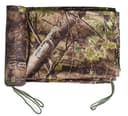
Buy the Allen Vanish camo netting. It is the all-purpose roll — cheap, cut-to-fit, and it works whether you are skirting a hang-on, wrapping a ladder stand’s rails or filling the hole in the canopy above you. A tree-stand hunter is not hiding behind netting the way a ground blind hunter is; you are breaking up a silhouette that a deer reads against open sky. A roll you can cut and zip-tie wherever the gap is beats any purpose-shaped product.

The budget pick is the WINWAY burlap cradle mesh — the cheapest item here and the right material if you intend to weave real branches into it. Burlap’s rough weave holds vegetation that slides straight off smooth mesh, so a burlap-backed stand skirt reads as part of the tree rather than a rectangle hung in it. If you want to watch deer come in through the netting instead of around it, step up to the AUSCAMOTEK one-way see-through mesh.

Two honest notes before you buy. Not one netting roll we track publishes its dimensions — not a length, not a width — so you have to read the size off the listing page itself every time, and the same is true of canopy diameter on both umbrellas here. And netting never goes between you and your harness: run it outside your tether and lifeline, never across them. Prices come from the live price layer — check the “as of” stamp under each button.

How this is funded: we earn a commission if you buy through our links, at no extra cost to you. It never changes which product we recommend, and we’ll tell you plainly when we’d skip one. Full disclosure.

Quick picks

Ranked on published specs, concealment fit and value. Select a row to jump to the full write-up. We have not field-tested this gear — here is exactly what we do instead.

#ProductBest forPrice
1
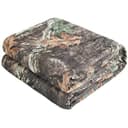
Allen Company Vanish Camo Netting

Allen Company Vanish Camo Netting

The reliable default for camo netting: a big, affordable roll from a trusted hunting brand that you can drape over a pop-up frame, a natural blind, or a gap in your cover. The versatile pick for hiding whatever needs hiding.

Best overall
$36.98 · View on Amazon

Price as of November 21, 2026. #ad How we’re funded

2
AUSCAMOTEK One-Way See-Through Camo Netting

AUSCAMOTEK One-Way See-Through Camo Netting

The clever pick: one-way netting you can see out through while it hides you from the other side, so you build a blind you can actually watch game from. It brings the see-through-wall trick of premium blinds to a DIY setup.

Best see-through mesh
$25.99 · View on Amazon

Price as of November 21, 2026. #ad How we’re funded

3
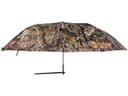
Ameristep Hunter's Umbrella (Mossy Oak Break-Up Country)

Ameristep Hunter's Umbrella (Mossy Oak Break-Up Country)

The concealment pick, because it is camo before it is a roof. In Mossy Oak Break-Up Country it breaks up the hard horizontal line of a stand from below instead of hanging a solid dark disc over your head — and it still keeps the rain off the sit that would otherwise end early.

Best overhead concealment
$23.99 · View on Amazon

Price as of November 21, 2026. #ad How we’re funded

4
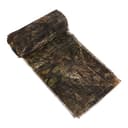
WINWAY Camo Burlap Cradle Mesh

WINWAY Camo Burlap Cradle Mesh

Burlap-style netting is the classic material for building a natural ground blind — its rougher, cloth-like texture takes and holds woven-in brush better than smooth mesh. The pick when you're lashing real vegetation into a homemade blind.

Budget pick: cheapest, best for brushing in
$15.98 · View on Amazon

Price as of November 21, 2026. #ad How we’re funded

5
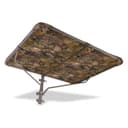
Guide Gear Deluxe Tree Stand Umbrella

Guide Gear Deluxe Tree Stand Umbrella

The roomy, sturdy pick for hunters who sit through real weather. Guide Gear's deluxe umbrella runs large and is built to shed a steady rain, so you and your gear stay dry on an all-day sit. The extra coverage is worth the extra pack bulk if you hunt no matter the forecast.

Best coverage for all-day sits
$49.99 · View on Amazon

$59.9917% off

Price as of November 21, 2026. #ad How we’re funded

The picks in full

#1Best overallCamo netting

Allen Company Vanish Camo Netting

The reliable default for camo netting: a big, affordable roll from a trusted hunting brand that you can drape over a pop-up frame, a natural blind, or a gap in your cover. The versatile pick for hiding whatever needs hiding.

Strengths

  • Large, affordable roll from a known hunting brand
  • Versatile — blinds, natural cover, gear, boats
  • Lightweight and easy to cut to size

Trade-offs

  • Open mesh is concealment, not weather protection
  • You supply the cordage or clips to hang it
TypeCamo mesh netting
UseBlinds, natural cover, gear
Cut-to-fitYes
DimensionsNot published
PatternNot published

The spec that matters. Netting is the cheapest way to fix a blind's weak spots — drape it over a too-open window, a shiny gap, or the frame of a natural blind. It breaks up shape and shine; it doesn't block wind or scent.

Specs read from the product listing, on July 22, 2026. “Not published” means the maker does not state that figure.

#2Best see-through meshSee-through camo netting

AUSCAMOTEK One-Way See-Through Camo Netting

The clever pick: one-way netting you can see out through while it hides you from the other side, so you build a blind you can actually watch game from. It brings the see-through-wall trick of premium blinds to a DIY setup.

Strengths

  • See out while staying hidden — huge situational-awareness gain
  • Turns a natural blind into a see-through one
  • Popular for turkey and waterfowl DIY blinds

Trade-offs

  • Dimmer to look through in low light than open mesh
  • Costs more than plain netting
TypeOne-way see-through mesh
See-outYes
UseDIY blinds, windows
DimensionsNot published
PatternNot published

The spec that matters. One-way mesh is the same principle as a premium see-through blind: you watch game approach through it without being seen, so you're settled and still before the shot. The trade is a little brightness in the first and last light.

Specs read from the product listing, on July 22, 2026. “Not published” means the maker does not state that figure.

#3Best overhead concealmentTreestand umbrella

Ameristep Hunter's Umbrella (Mossy Oak Break-Up Country)

The concealment pick, because it is camo before it is a roof. In Mossy Oak Break-Up Country it breaks up the hard horizontal line of a stand from below instead of hanging a solid dark disc over your head — and it still keeps the rain off the sit that would otherwise end early.

Strengths

  • Mossy Oak Break-Up Country canopy blends into a hardwood canopy from below
  • Weather-resistant cover keeps you and your gear dry through the productive windows
  • Packs down and mounts to the tree above the platform

Trade-offs

  • An umbrella is still a shape overhead — set it before daylight, not with deer in the field
  • Coverage diameter is not published for this model
CamoMossy Oak Break-Up Country
Weather-resistantYes
MountTree-mounted above the stand
Canopy diameterNot published
WeightNot published

The spec that matters. An umbrella over a stand is a trade: you gain a dry sit, you add a shape above you that wasn't there yesterday. Camo canopy plus an early setup is how you take the rain protection without paying for it in busted deer.

Specs read from the product listing, on August 26, 2026. “Not published” means the maker does not state that figure.

#4Budget pick: cheapest, best for brushing inBurlap camo mesh

WINWAY Camo Burlap Cradle Mesh

Burlap-style netting is the classic material for building a natural ground blind — its rougher, cloth-like texture takes and holds woven-in brush better than smooth mesh. The pick when you're lashing real vegetation into a homemade blind.

Why this is the budget pick. It is the cheapest material on this page and the only one whose texture holds woven-in brush. The trade is weight and water: burlap sags when it is soaked, so lash it tight and expect it to take a day to dry out.

Strengths

  • Burlap texture holds woven-in natural brush well
  • Muted, non-shiny finish blends into cover
  • Cheap and easy to work with

Trade-offs

  • Heavier and less see-through than open mesh
  • Holds water and can sag when wet
TypeBurlap cradle mesh
UseNatural blind building
TextureRough (holds brush)
DimensionsNot published
PatternNot published

The spec that matters. Burlap's rough weave is the point: real grass and branches tuck into it and stay, so a burlap-backed blind reads as a brush pile instead of a manufactured wall. It's the backbone of a good homemade natural blind.

Specs read from the product listing, on July 22, 2026. “Not published” means the maker does not state that figure.

#5Best coverage for all-day sitsTreestand umbrella (deluxe)

Guide Gear Deluxe Tree Stand Umbrella

The roomy, sturdy pick for hunters who sit through real weather. Guide Gear's deluxe umbrella runs large and is built to shed a steady rain, so you and your gear stay dry on an all-day sit. The extra coverage is worth the extra pack bulk if you hunt no matter the forecast.

Strengths

  • Large canopy covers you and your gear
  • Sturdier build aimed at repeated all-weather use
  • Clamp mount works on most hang-on and ladder stands

Trade-offs

  • Bigger and heavier to pack than a compact umbrella
  • Priciest of the umbrellas here
CanopyLarge, water-resistant
MountClamp to trunk
BuildDeluxe / heavier-duty
WidthNot published

The spec that matters. Coverage is the whole point of a stand umbrella, and a bigger canopy keeps rain off your lap, pack and bow, not just your head. It's a fixed-stand tool — the size and rigging make it a poor fit for run-and-gun, where a packable rain shell serves better.

Specs read from the product listing, on August 5, 2026. “Not published” means the maker does not state that figure.

What you are actually buying

You are buying the shape of your outline against the sky.

Concealment in a tree is a completely different problem from concealment on the ground, and almost everything written about camo netting addresses the ground version. In a ground blind you are hiding a box inside brush, with cover behind you and around you. Twenty feet up a tree you have a trunk behind you at best, nothing above you, and a deer looking up at a backlit human shape on a horizontal platform. Two features of that shape give you away: the straight horizontal line of the platform and rails, and the movement of your head and arms against bright sky.

Netting fixes the first. Overhead cover fixes the second. That is the whole reason two umbrellas sit on a netting page — and it is why this page is separate from best camo netting for blinds, which ranks the same rolls for an entirely different job.

Worth keeping in proportion: published work on deer vision describes a dichromatic visual system weighted toward motion and contrast rather than color detail — the detail is in deer vision explained. That is good news for a stand hunter. The pattern on the netting matters far less than whether it kills a straight line and dulls a bright backdrop.

Where to put it, in order of payoff

1. Below the platform, not around your head

The first wrap of netting goes on the underside and the railsof the stand — the hard edge a deer sees from forty yards out as it works toward you. Hunters instinctively hang netting at chest height around themselves, which hides them from the one direction they do not need hiding from and leaves the giveaway line untouched. Skirt the platform first. Then wrap the lower rails. Then, if you still have material, build a partial wall on your weak side.

2. The hole above you

A stand set in a hardwood with no leaves left is a hunter sitting under a skylight. An umbrella in a real camo pattern — the Ameristep above publishes Mossy Oak Break-Up Country — breaks that up from below while also keeping the rain off the sit you would otherwise leave early. Both umbrellas here come with the same honest caveat: neither publishes a canopy diameter, so you are buying a size you cannot verify in advance.

Set the umbrella before daylight. You are adding a shape above you that was not there yesterday, and a deer that lives under that tree will notice it; the resident-deer problem is the same one laid out in how to conceal in a tree stand.

3. The see-through trick, in the right spot

One-way mesh lets you watch a trail through the netting rather than leaning out past it, and leaning out is how most stand hunters get busted. The trade is published plainly on the listing: it is dimmer to look through, and first and last light are exactly when you need to see. Use see-through mesh on the one panel you stare through most — usually the trail side — and open mesh everywhere else.

4. Brush it in, or it is a rectangle

Netting hung on its own reads as a flat manufactured panel. Netting with a dozen branches woven through it reads as a brush pile that happens to be in a tree. This is where the burlap earns its place: its weave grips what you tuck into it. Use material from the same stand of timber — the method is the same one described in how to brush in a ground blind, applied vertically.

How to hang it so it survives a season

  • Zip ties or bank line, not bungees. Elastic lets the panel bounce in wind, and a moving panel is worse than no panel.
  • Tension the bottom edge. A loose hem flaps. Tie it off low or weight it.
  • Keep it clear of your harness.Your tether, lifeline and lineman’s rope must run outside the netting, with nothing to snag or hide them. Wisconsin DNR and the Tree Stand Safety Awareness Foundation both put staying connected through every transition at the center of their guidance, and netting that fouls a rope works directly against it.
  • Leave your shooting lanes open. Mesh you can see through is not mesh an arrow passes through cleanly. Cut real windows for the shots you expect, the way you would in a blind.
  • Hang it a week early if the stand is a fixed set. Deer tolerate what was already there. The timing argument is in where to place a ground blind and it applies just as much twenty feet up.

The cheaper answers that are not products

Pick a better tree. A trunk with a fork, a cluster of trunks, or a cedar with leaves on it in December hides you better than any netting you can buy. Netting is what you use when the tree in the right spot is a bare straight pole.

Sit higher, or lower. Height is not concealment on its own, and above a certain point it just changes the angle of the shot. What matters is having something behind your head: a limb, a crotch, a second trunk.

Use the stand you already brushed.If you are rotating a dozen sets, concentrate your netting on the two or three that get hunted most — scattering one roll across ten stands conceals nothing.

What we did not include, and why

Purpose-made stand skirts and “blind kits” for hang-ons. One kit of this type is in our registry and currently shows no live offer, so it is not ranked here. A cut roll of netting does the same job for less.

Bulk military surplus netting.Heavy, open-weave, and designed for vehicles — it is more material than a stand needs and harder to tie off cleanly.

Any claim about how far a deer can see netting. Nobody has published that number, and we are not going to invent one. What is published is how deer vision is weighted, and the practical conclusion drawn from it above: kill the straight line, kill the bright backdrop, do not worry much about the pattern.
Frequently asked questions

Does camo netting work on a tree stand?

Yes, for a narrower job than most hunters expect. Netting on a tree stand is not there to hide you the way it hides a ground blind — it is there to break up the hard horizontal line of the platform and rails, which is the feature a deer picks out from a distance. Skirt the underside and the lower rails first. Hanging netting at chest height around your seat hides you from a direction you do not need hidden and leaves the giveaway line exactly as it was.

What is the best camo netting for deer stands?

An all-purpose cut-to-fit roll, because a stand needs irregular pieces rather than one shaped panel — the Allen Vanish netting is the pick. Choose one-way see-through mesh for the single panel you look through most, so you can watch a trail without leaning out past the netting, and burlap mesh if you plan to weave real branches into it. None of the rolls we track publishes its dimensions, so read the size off the listing before you order.

How much netting do you need for a tree stand?

Enough to skirt the platform and wrap the lower rails, which on a typical hang-on is a few feet by several feet — considerably less than a ground blind needs. The frustrating part is that roll dimensions are not published on any netting listing we track, so you cannot plan the purchase precisely in advance. Buy one roll, cut it for your busiest stand, and see what is left before you decide whether a second roll is needed.

Is a tree stand umbrella good for concealment?

It is a trade, and a worthwhile one on a bare-canopy stand. An umbrella in a real camo pattern breaks up the open sky above your head, which is the backdrop your movement shows against, and it keeps rain off a sit you would otherwise abandon. The cost is that you have added a shape overhead that was not there before, so set it in the dark rather than with deer in the field. Note that neither umbrella here publishes its canopy diameter.

Will camo netting stop a deer from seeing you move?

No, and nothing will. Netting changes what your outline looks like; it does not make motion disappear. Published work on deer vision describes a system weighted toward detecting movement and contrast rather than fine color detail, which is why the useful goals are breaking straight lines and dulling a bright backdrop — and why staying still behind the netting still does more for you than the netting does.

Where should camo netting go on a hang-on stand?

In this order: the underside and front edge of the platform, the lower rails, then a partial wall on whichever side offers you the least natural cover. Keep it off your tether, lifeline and lineman's rope entirely — those have to run outside the netting with nothing snagging or hiding them. Then cut real openings for the shots you expect, because mesh you can see through is not mesh an arrow flies through cleanly.

Burlap or mesh netting for a tree stand?

Mesh if you want to see through it and keep the weight down; burlap if you intend to weave in real vegetation, because its rough weave actually holds what you tuck into it while smooth mesh sheds it. Burlap's drawbacks are published on its own listing: it is heavier, less see-through, and it holds water and sags when wet. A common approach is burlap low where you brush in and mesh higher where you need to look out.

Sources

Keep reading