What Muck is actually known for
A Muck Boot is a rubber lower bonded to a neoprene upper, pull-on, with no laces and a fleece lining. Three things follow from that design, and they are why the brand became the default in the whitetail woods:
- A published comfort range.The Woody Max publishes −40 F to 40 F; the Arctic Pro publishes −60 F to 30 F on 8 mm of CR Flex-Foam neoprene against the Woody Max’s 5 mm. Whatever you think of temperature ratings in general, Muck states a number and most of its competitors do not.
- No leather and no fabric panel. For a site about scent control this is the part that matters: the surface touching the ground is rubber all the way around, with nothing porous to hold the mud, the diesel and the dog that your boots walked through before they walked to the blind. Every alternative on this page is built the same way for the same reason.
- Pull-on, pull-off. Nothing to lace with cold hands in the dark, and nothing to re-tighten at the blind. Mundane until you have done it at 4:30 a.m.
And two published limits, which are where the alternatives earn their place. Muck does not publish an adjustable gusset on either hunting boot in this registry, and the Woody Max is roughly a 17-inch shaft with a stated maximum calf near 17 inches — so over bulky pants, on a big calf, the fit is the fit. Muck also does not publish a weight for the Arctic Pro at all.
The four reasons hunters actually look for a substitute
This page is ranked by complaint rather than by price, because the complaints do not substitute for one another. Find yours:
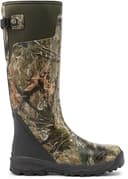
- “It binds or gapes at the calf.” The only real answer is an adjustable gusset, which is a construction feature you cannot fix with sizing. The LaCrosse Alphaburly Pro publishes a rear gusset and the Dryshod Viperstop publishes a gusset sized for larger calves. Nothing else here does.
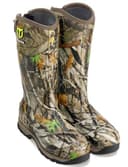
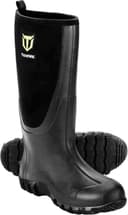
- “It costs too much for a second pair.” The real problem behind this is usually that you need two boots, not one: an early boot you sweat in and a late boot you sit in. The TIDEWE 800 g makes the two-boot plan affordable, and the TIDEWE 6 mm makes it cheap.
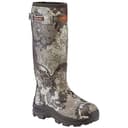
- “It cooks my feet in October.” A fleece-lined, 5 mm-neoprene boot is the wrong tool for a 70 F morning, and overheating is a scent problem as much as a comfort one. The Dryshod Viperstop publishes a wicking airmesh lining instead of fleece and no insulation at all.
- “My feet still go numb on a long sit.” This is the complaint a different boot almost never fixes, and it is why two of the six picks here are not boots. Keep reading.
The complaint a different boot will not fix
Here is the thing worth knowing before you spend $200 on a replacement: comfort ranges on rubber boots assume you are walking. Sitting still in a blind at 20 F is colder than walking at 0 F, because your feet are generating no heat and your boots are compressed against a cold seat or a cold floor. That is why a boot published to −40 F can still leave your toes numb on a December sit, and it is why “I need warmer boots” is so often the wrong diagnosis.
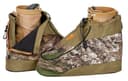
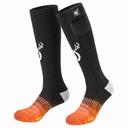
Two of the picks above address it directly and neither replaces the boot. An over-boot insulator adds a dead-air layer over whatever you already own, and unlike a fixed boot muff you can walk to the blind in it. Powered socks put the heat inside the boot where your circulation has stopped delivering it. Both cost a fraction of a new pair of boots, and if cold feet are your only complaint, both are a better purchase than any boot on this page. The full comparison is in best boot blankets and best heated socks, and the argument between them is in boot blanket vs heated socks.
One warning that applies to every warmth fix here: do not size up into compression. Boots and insulators that squeeze cut circulation, and a tight warm boot is colder than a loose cool one. The method is in how to keep your feet warm hunting.
The published gap across the whole category
Lay the specs side by side and one pattern dominates: Muck is the only brand in this registry that publishes a temperature comfort range for a hunting boot. LaCrosse publishes construction and insulation weights and states no range. TIDEWE publishes 7 mm of neoprene and 800 g of insulation for one boot and no range; 6 mm and no insulation figure at all for the other. Dryshod publishes a WIXIT Cool-Clad wicking airmesh lining and no range. The over-boot insulators publish no temperature rating either.
LaCrosse’s silence is arguably the most honest position on the page. Insulation grams and a temperature rating are not the same thing, and no maker can know how long you sit, how wet your socks are or how hard the wind is running under the blind wall. But it leaves you shopping on material quantities, so here is how to read them: millimeters of neoprene is the boot’s own insulation, grams is added insulation on top of it, and more of either is warmer and heavier with no published conversion between them. Treat 800 g as a mid-season weight — warmer than 400 g, nowhere near 8 mm of neoprene.
Two more blanks worth knowing. Dryshod publishes a shaft only relative to its own line(two inches taller than standard), with no number and no weight. None of the TIDEWE boots publishes a height. And every one of these boots is listed on Amazon as individual size-and-color variants, so the listing title is the size you are buying — check it before you order, on all four.
Which alternative is yours
If the calf is the problem
The LaCrosse Alphaburly Pro 18, and accept the weight: around 4.8 to 5.2 lb a pair in the insulated versions, which is not a long-walk boot. The adjustable rear gusset is the only published answer here to a boot that binds over bibs or gapes on a narrow calf, and 18 inches of hand-laid natural rubber is the most puncture-resistant construction on the page. If the walk matters more than the calf, the Dryshod also publishes a gusset sized for larger calves, at a lighter uninsulated build.
If the price is the problem
The TIDEWE 800 g for cold sits or the TIDEWE 6 mm for mild mornings, and understand what you are buying: a value brand with no long field history, so durability is the open question rather than a known quantity. The upside is that two TIDEWE boots cost less than one premium pair, which is how the two-boot plan actually gets built. That plan is a scent decision as much as a warmth one — the early-season boot you sweat into is the one a deer gets a lungful of in October. More in how to control boot scent.
If the heat is the problem
The Dryshod Viperstop. An airmesh wicking lining rather than fleece is the right build for a 70 F morning, and the hand-laid rubber is published as highly resistant to penetration for snake country. It is a premium price for a boot you will use in a narrow part of the season, and it is the wrong boot from November onward. The broader early-season case is in scent control for early season.
If you walk a long way in
Reconsider rubber entirely for the walk. Every boot here is a containment boot first and a hiking boot a distant second, and the heaviest is over five pounds a pair. The honest version of this argument — including the four cases where a hiking boot is the right call — is in hunting boots vs hiking boots.
If cold feet are the only problem
Keep the Mucks and buy the insulators or the socks. This is the cheapest and most reliable fix on the page, and the one most people skip because replacing the boot feels like the obvious move. It usually is not.
Three substitutes that do not work
- Two pairs of socks in the same boot. It compresses the insulation and your circulation at the same time. One good sock with room around it beats two crammed in, every time.
- A camo pattern instead of plain rubber. Whitetails are dichromats with poor red and orange discrimination; a black boot and a camo boot are not meaningfully different to the animal. Pattern on a boot is a preference, which is exactly why the cheapest pick here is black. The vision science is in deer vision explained.
- A spray instead of a rubber boot.No spray beats a bad wind, and the point of a rubber boot is that there is nothing porous on the part of you that touches the ground. A scent product is a complement to that, never a replacement — does scent control work.
What this page does not claim
We own no units and we have run no field test. Every figure above is read from the maker’s or the retailer’s own published data, dated in each product’s spec table, and anything a maker does not publish renders as “Not published” rather than as an estimate. We have not compared these boots at the same temperature for the same number of hours, because nobody here has done that — and the absence of a published range on five of the six picks is itself the finding.
One more honest limit, and it applies to Muck and to every alternative equally: no boot makes a hunter undetectable. A rubber boot reduces the ground scent you leave at nose height on the trail you walked in on. It does nothing about the scent cone coming off the rest of you, which the wind decides. Read how to beat a deer’s nose before you spend money on footwear expecting it to fix a wind problem.