What Ozonics is known for, stated plainly
Ozonics built the in-field ozone category. Its own storefront, read on November 7, 2026, publishes three units for hunting — the HR230, the HR300 and the Hyperboost — each sold on the same short list of attributes: a number of modes of operation, a battery included, and a mount (a tree mount on the two cheaper units, a smart arm mount on the Hyperboost, which also publishes app and remote capability, a toolless replaceable coil, a fan with top air intake and on-board charging). A separate MICRO3 PRO is published for a car or truck. Listed prices on that date were $199.99, $249.99 and $449.99, from regular prices of $299.99, $499.99 and $729.99.
Two things follow from that, and both matter when you shop for an alternative.
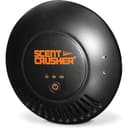
First, the thing being sold is a position, not a chemistry. Ozone is ozone. What an in-field unit does that a tote generator cannot is sit above your head, pointed downwind, running while you hunt. If that specific capability is what you want, the honest answer is that the alternatives on this page do not provide it, and you should buy the real thing or nothing.
Second, the performance figures are not published. Ozonics’ storefront publishes modes, mounts and batteries — not ozone output, not a treated area, not run time per mode. That is not a criticism unique to Ozonics; it is the condition of this entire category. Not one storage ozone unit in our registry publishes an output figure, a coverage area or a timer specification either. Where we could not read a number, the spec tables above say “Not published,” and across a whole category that uniform blank is the finding.
What the evidence actually supports
Before spending anything, it is worth knowing where scent control stands. Reporting on the ScentLok and Rutgers testing concludes that carbon adsorbs a large share of human odor and that total scent elimination is not possible— a deer’s nose is better than any consumer product. No independently published field study establishes a response-rate improvement for in-field ozone, for carbon clothing, or for a spray. We are not going to pretend otherwise, and if you find a site quoting a percentage, ask where the number came from.
That has a practical consequence for how to spend. If no product on the market makes you undetectable, the rational order is:
- Play the wind, because it is free and it is the only method that removes the problem rather than reducing it. See scent control vs hunting the wind.
- Stop adding odor— wash, store and transport clean. This is where ozone genuinely earns its place, and where it is cheapest.
- Reduce what remains with carbon clothing, sprays or in-field ozone, understanding that all three are mitigation rather than solution.
Choosing between the alternatives
If you want ozone for your gear, cheaply
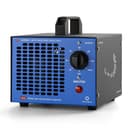
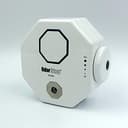
A small room or tote generator is the answer. Put the clothes in a sealed tote with the unit, run it, then air the tote out before you dress. The Halo is the cheapest; the OdorStop OS300 does the same job for a sealed space; the Airthereal MA5000 is the high-output option with an adjustable timer, worth it if you are treating a closet, a truck cab or a season’s worth of gear at once.
One operating rule applies to all of them, and it comes straight from how they are sold: these are units for a closed, unoccupied space. Treat the gear, then air it out, and do not stand over an open tote breathing it in.
If you want the convenience, not the price
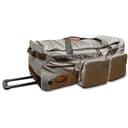
The ozone roller bag is the closest thing here to a system rather than an appliance: generator built into the bag, so treatment happens in the truck on the drive in rather than as a garage chore you will skip in week three. At roughly the price of an entry-level in-field unit, it is the honest comparison point for a hunter weighing the two approaches against the same budget. The whole storage-ozone category is in best ozone scent machines.
If you want something that works while you hunt
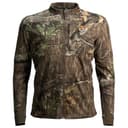
Then the alternative is not ozone at all — it is carbon, worn. A carbon jacket adsorbs odor continuously on your body, is reactivated with dryer heat, and costs less than the cheapest in-field unit. Its limits are honest and well documented in ozone vs carbon scent control, and the quieter alternative within that category is covered in ScentLok vs ScentBlocker.
If you want the thing with the best return per dollar
A wind checker and the discipline to use it. Powder or milkweed tells you where your scent cone is going before you commit to a stand, and the method — including thermals, which are what ruin an otherwise correct wind call — is in how to check the wind hunting and how to hunt thermals.
The free alternatives, which are not products
- Store hunting clothes outside the house. Not in the laundry room, not in the closet next to a fabric softener box. A sealed tote in the garage, with a change at the truck. The routine is in how to store hunting clothes scent free.
- Control your boots. Ground scent sits at nose height for a deer following your approach trail, and boots are the one surface that touches everything you walked through. See how to control boot scent.
- Have two stands for every wind. The cheapest scent-control product ever made is a second stand on the other side of the field.
- Hunt the mornings and evenings the thermals favor. Rising and falling air decides where your scent goes more than the forecast wind does.
What we did not include, and why
Other in-field ozone units.We did not find a competing tree-mounted in-field unit in our registry that resolves to a currently purchasable listing with a live offer, so there is no like-for-like substitute to rank. Saying so is more useful than inventing one — if in-field ozone is specifically what you want, Ozonics is effectively the category.
Ozone claims of our own. We own none of these units and no independent efficacy study exists for in-field ozone, so this page carries no percentage, no reduction figure and no field result. What it carries is what the makers publish and what the reporting on the Rutgers testing concluded.
Any suggestion that cheaper ozone replaces an in-field unit.It does not, and a page that implied it would be selling you something on a false equivalence. These are alternatives in the sense that they address the same goal with a different method at a different price — which, for most hunters, is the better buy.