Blind & Brush

Best Climbing Sticks for the Money

Cost per foot of climb, not cost per stick — the cheapest honest ways to get 20 feet up a tree at today's live prices, including the routes that are not sticks at all.

By Stephen V.Last updated How we pick

The Guide Gear 20′ Rapid Climbing Sticks are the best climbing sticks for the money, and the reason is the only metric that matters here: they publish a reach figure. Guide Gear states roughly 20 feet, which is the height most saddle hunters actually set at, and they cost a fraction of what a specialist set costs. For a hunter trying mobile hunting for the first season — or anyone who would rather own sticks and a platform than sticks alone — that is the buy.

The useful way to shop this category is cost per foot of climb, not cost per stick, and almost nobody does it that way. A four-pack of single-step sticks and a four-pack of double-step sticks are not the same product at the same price: the double-step set gets you higher with fewer attachments, which is both fewer purchases and a quieter climb. A heavy eight-pack is cheap per stick and expensive to carry. And at the very bottom of the market, the cheapest way up a tree is not sticks at all — it is a bag of screw-in steps, with a legal catch we cover below.

Our main climbing stick rankingssort on weight, height and attachment noise. This page sorts on money, which puts a different set on top. Prices are live — check the “as of” stamp under each button, because this is the category where a sale genuinely changes the answer.

How this is funded: we earn a commission if you buy through our links, at no extra cost to you. It never changes which product we recommend, and we’ll tell you plainly when we’d skip one. Full disclosure.

Quick picks

Ranked on published specs, concealment fit and value. Select a row to jump to the full write-up. We have not field-tested this gear — here is exactly what we do instead.

#ProductBest forPrice
1
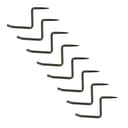
Guide Gear 20' Rapid Climbing Sticks

Guide Gear 20' Rapid Climbing Sticks

The budget entry point. Guide Gear's rapid sticks get you 20 feet up cheaply, which is the honest appeal — a low-cost way to try a mobile setup before committing to a premium system. Heavier and less refined, but they climb the tree.

Best value overall — 20 ft published
$69.99 · View on Amazon

$74.997% off

Price as of October 10, 2026. #ad How we’re funded

2
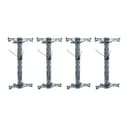
XOP X2 Climbing Sticks (Set of 4)

XOP X2 Climbing Sticks (Set of 4)

The double-step pick. XOP's X2 sticks put two steps per stick, so you climb higher with fewer sticks to carry and hang — a real advantage for a mobile hunter counting every ounce and every noisy attachment. A smart design for run-and-gun.

Best cost per foot (fewest sticks)
$199.99 · View on Amazon

Price as of October 10, 2026. #ad How we’re funded

3
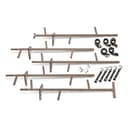
Ameristep ARS Step Up Tree Steps (8-Pack)

Ameristep ARS Step Up Tree Steps (8-Pack)

The trusted-brand pick for screw-in tree steps: solid, grippy steps from a name hunters know, for building a climbing route to a lock-on or hanging a lifeline. Just remember screw-ins damage trees and aren't legal everywhere.

Cheapest route up, where it is legal
$33.24 · View on Amazon

Price as of October 10, 2026. #ad How we’re funded

4
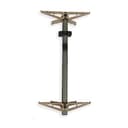
Hawk Helium Gen 2 Climbing Sticks (4-Pack)

Hawk Helium Gen 2 Climbing Sticks (4-Pack)

The best all-round climbing sticks for most hunters — light aluminum, a proven attachment system, and a fair price for a set of four. They're the sensible default whether you're saddle hunting or hanging a lock-on, without paying specialist-brand money.

The value standard, when priced right

The picks in full

#1Best value overall — 20 ft publishedClimbing sticks (20 ft)

Guide Gear 20' Rapid Climbing Sticks

The budget entry point. Guide Gear's rapid sticks get you 20 feet up cheaply, which is the honest appeal — a low-cost way to try a mobile setup before committing to a premium system. Heavier and less refined, but they climb the tree.

Strengths

  • Reaches 20 feet at a low price
  • Rapid attachment straps for a quick set
  • A cheap way to test mobile hunting

Trade-offs

  • Heavier steel-and-aluminum build than premium sticks
  • Straps and steps are noisier than specialist systems
Reach~20 feet
AttachmentRapid straps
CountNot published
WeightNot published
Rated capacityNot published

The spec that matters. Budget sticks are the right call for testing whether mobile hunting suits you before spending premium money. Just run them a few feet off the ground first to learn how they hang — cheap sticks reward practice more than expensive ones do.

Specs read from the product listing, on July 22, 2026. “Not published” means the maker does not state that figure.

#2Best cost per foot (fewest sticks)Climbing sticks (double-step, set of 4)

XOP X2 Climbing Sticks (Set of 4)

The double-step pick. XOP's X2 sticks put two steps per stick, so you climb higher with fewer sticks to carry and hang — a real advantage for a mobile hunter counting every ounce and every noisy attachment. A smart design for run-and-gun.

Strengths

  • Two steps per stick — more height from fewer sticks
  • Fewer attachments means a faster, quieter climb
  • Solid aluminum build from a mobile-hunting specialist

Trade-offs

  • Double steps take a little practice to move on smoothly
  • Priced above the budget single-step sets
MaterialAluminum
Count4 sticks
StepsDouble step
Weight per stickNot published
Rated capacityNot published

The spec that matters. Double-step sticks are the mobile hunter's cheat code: two usable steps per stick means four sticks climb like six, so you carry less and make fewer noisy attachments to get to the same height.

Specs read from the product listing, on July 22, 2026. “Not published” means the maker does not state that figure.

#3Cheapest route up, where it is legalScrew-in tree steps

Ameristep ARS Step Up Tree Steps (8-Pack)

The trusted-brand pick for screw-in tree steps: solid, grippy steps from a name hunters know, for building a climbing route to a lock-on or hanging a lifeline. Just remember screw-ins damage trees and aren't legal everywhere.

Strengths

  • Sturdy, grippy steps from a trusted brand
  • Simple to place a climbing route to a lock-on
  • Reusable season to season

Trade-offs

  • Screw-in steps damage trees and are banned on much public land
  • You still need a lineman's rope — never climb unattached
TypeScrew-in tree steps
Pack8 steps
ReusableYes
Rated capacityNot published
Legal on public landOften no — check rules

The spec that matters. Screw-in steps wound the tree and are prohibited on most public land and many leases — check your regulations first, and consider strap-on steps or climbing sticks where screw-ins aren't allowed. And never climb steps without a lineman's rope keeping you attached.

Specs read from the product listing, on July 22, 2026. “Not published” means the maker does not state that figure.

#4The value standard, when priced rightClimbing sticks (set of 4)

Hawk Helium Gen 2 Climbing Sticks (4-Pack)

The best all-round climbing sticks for most hunters — light aluminum, a proven attachment system, and a fair price for a set of four. They're the sensible default whether you're saddle hunting or hanging a lock-on, without paying specialist-brand money.

Strengths

  • Lightweight aluminum for mobile hunts
  • Proven, widely-used design that's easy to run quietly
  • Set of four at a reasonable per-stick cost

Trade-offs

  • Standoff is modest — add-on aiders help on fat trees
  • Four sticks may be short for very tall setups
MaterialAluminum
Count4 sticks
StepsNot published
Weight per stickNot published
Rated capacityNot published

The spec that matters. The spec that decides quiet is the attachment method. Whatever sticks you buy, a silent cam or rope-and-cinch beats a metal-on-bark buckle every time — noise on the climb spooks more deer than the sticks' weight ever costs you.

Specs read from the product listing, on July 22, 2026. “Not published” means the maker does not state that figure.

Cost per foot: how to do the arithmetic before you buy

Work out your target height first, because it sets everything else. Most saddle hunters set between 15 and 22 feet, and how high a tree stand should be argues that higher is not automatically better. Call it 20 feet.

Now count steps, not sticks. A single-step stick gives you one foot position per attachment; a double-step stick gives you two. XOP publishes double steps on the X2, which is why four of them can replace substantially more single-step sticks and why the per-foot number can beat a cheaper set. The catch, and XOP says it plainly, is that double steps take practice to move on smoothly — so the saving is real and it costs you a few sessions of learning.

Then count attachments. Every stick you hang is a strap to cinch, a clink of aluminium against bark and thirty seconds of noise in the dark. Fewer sticks is not only cheaper, it is quieter, which is the part that actually affects whether you kill a deer. How many climbing sticks do you need works through the count properly, and one stick vs multi stick covers the extreme version of this trade.

Finally, be honest about where the sticks are going to live. An eight-pack is the cheapest per stick in this category and the worst thing you can own if you carry it — it is a hang-and-leave set for a tree you hunt all season, not a mobile kit. That is a legitimate way to spend less, as long as you are buying it on purpose.

The specs that are missing, and what that means for you

This is a category where the published data is thin and you should know that before you shop. Across the sets here, weight per stick and rated capacityare simply not published on the listings we read — we render those as “Not published” rather than guess, because a made-up capacity figure on a load-bearing climbing product is the worst possible kind of invention.

Practically, that means two things. First, if you are a heavier hunter you cannot verify a capacity on most of these, and that is a reason to buy from a maker who does publish one. Second, published reachis unusually valuable precisely because it is rare — it is the main reason the Guide Gear set tops this list rather than a slightly nicer set at a similar price.

The two cheaper routes up a tree

Screw-in steps: cheapest, and often illegal

An eight-pack of screw-in steps costs roughly half of the cheapest stick set and will get you up a tree perfectly well. Two caveats, and neither is negotiable. They damage the tree, which is why they are banned on a great deal of public land — both sets we list carry “often no — check rules” as their published public-land legality, and you need to check your specific property, not your state in general. And they give you no fall protection at all, so a lineman’s rope is not optional equipment to add later. Screw-in steps vs climbing sticks and best tree steps cover the category on its own terms.

One-sticking: cheapest of all, hardest to learn

Buy one good stick, an aider and a rope, and leapfrog the same stick up the tree. It is the lowest-cost route to any height, it is the quietest, and it is a genuine skill with a real fall risk while you learn it. If you are buying on a tight budget and you are willing to practise at three feet until the sequence is automatic, this is the most money-efficient answer in mobile hunting. How to one stick is the method, and ring of steps vs one stick compares it to the other minimalist approach.

What not to economise on

There is one line in a mobile setup where buying cheap is the wrong call, and it is not the sticks. Your lineman’s belt and tether are the things keeping you off the ground, and they are the one part of the system where published strength figures exist — the tether set in our rope rankings publishes a 440 lb safe working load and a 4,420 lb minimum breaking strength on the sewn eye, third-party tested. Buy the rope that publishes numbers, and save money on the aluminium.

The reason to be emphatic: Wisconsin’s DNR guidance is to always wear a full-body harness or fall-arrest system and notes that roughly one in four bowhunters have fallen or nearly fallen. The Tree Stand Safety Awareness Foundation cites a ten-state study in which 99 percent of fall victims were not attached to the tree and 86 percent wore no harness. Every cheap route on this page assumes you are attached from the ground up — how to use a lineman’s belt is the short version, and tree stand safety tips is the long one.

If you want the whole bill rather than just the climbing half, how much a saddle hunting setup costs prices every piece at live numbers, and best saddle hunting kits covers the bundles that come out cheaper than buying part by part.
Frequently asked questions

What are the best climbing sticks for the money?

The Guide Gear 20-foot Rapid Climbing Sticks. They publish a reach figure of roughly 20 feet — which is rare in this category and happens to be the height most saddle hunters set at — and they use rapid attachment straps for a quick set, at a fraction of specialist-set money. They are heavier and noisier than premium sticks, which is the trade you are making.

How do you compare climbing sticks on price?

By cost per foot of climb rather than cost per stick. Set a target height first — 15 to 22 feet covers most saddle hunters — then count steps, not sticks, because a double-step stick gives you two foot positions per attachment and can beat a cheaper single-step set on the per-foot number. Then count attachments, since every stick is another strap to cinch and another noise in the dark.

Are screw-in steps cheaper than climbing sticks?

Yes, roughly half the price of the cheapest stick set, and they work. But they damage the tree and are banned on a lot of public land — the listings themselves say public-land legality is often no and to check the rules — and they provide no fall protection whatsoever. If you hunt private ground where they are allowed and you use a lineman's rope, they are the cheapest legitimate route up a tree.

How many climbing sticks do I need to reach 20 feet?

It depends on steps per stick rather than stick count. Four single-step sticks typically fall short of 20 feet without an aider; four double-step sticks get you meaningfully higher for the same number of attachments. A published reach figure, like the roughly 20 feet Guide Gear states, saves you doing this arithmetic by guesswork — which is exactly why so few makers publish one.

Where should I not save money on a mobile hunting setup?

Your lineman's belt and tether. Those are the components holding you off the ground, and they are also the part of the system where real published strength figures exist — a quality tether set publishes a 440 lb safe working load and a 4,420 lb minimum breaking strength on the sewn eye, third-party tested. Buy the rope that publishes numbers and economise on the aluminium instead.

Sources

Keep reading