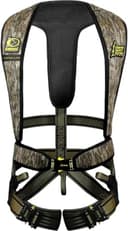
#1Best saddle to build aroundTree saddle
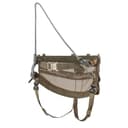
Tethrd Phantom XP Hunting Saddle
Tethrd's current Phantom, and the saddle most hunters should start with. The XP keeps the original Phantom's compact footprint with its panel retracted, then lets out a 3.5-inch expandable comfort panel for long sits, at a published 1 lb 12 oz, from the brand most responsible for the category.
Strengths
- Published 1 lb 12 oz (Regular) — light enough to carry deep
- 3.5 in. expandable comfort panel with a lace-lock tensioner for all-day sits
- Micro Quad Lock bridge adjusts the top and bottom panels independently
Trade-offs
- A bare saddle — you still need a platform, tether and lineman's belt
- There's a learning curve to saddle hunting itself
- The linked Regular size fits a 28-36 in. waist; larger hunters need the XL
| Type | Ultralight saddle, expandable panel |
|---|---|
| Includes platform/sticks | No (saddle only) |
| Rated capacity | 300 lb |
| Weight | 1 lb 12 oz (Regular) |
| Bridge type | Micro Quad Lock Utilibridge |
The spec that matters. A saddle is one part of a system. The Phantom XP is the seat; you still need a climbing method (sticks), a platform to stand on, a tether and a lineman's rope. Buying the saddle alone and expecting to hunt is the beginner's miscalculation.
Specs read from the product listing, on September 10, 2026. “Not published” means the maker does not state that figure.