Blind & Brush

Is Saddle Hunting Worth It?

An honest read on what a saddle actually buys you, what it costs in money and comfort, and the three hunters who should not bother.

By Stephen V.Last updated How we pick

How this is funded: we earn a commission if you buy through our links, at no extra cost to you. It never changes which product we recommend, and we’ll tell you plainly when we’d skip one. Full disclosure.

Saddle hunting is worth it if your hunting is limited by where you can put a stand — and it is not worth it if you hunt one property you can leave stands on. That is the honest version of the answer, and it has nothing to do with being a better hunter. A saddle buys you one thing: the ability to hunt the tree the sign points at, including crooked, skinny and leaning trees no hang-on will fit, and to carry the whole system in and out on your back the same day.

If you already hunt from a stand on ground you control, you will find a saddle less comfortable, slower to get into and no more effective. If you hunt public land, permission ground or several farms, you will find it changes the season, because the right tree stops being a compromise.

What you are actually buying

Not a product — a system of four parts, and the sticker price you have seen is usually one of them. A saddle (the panel you sit in and your fall protection), a platform (the thing you stand on and shoot from), a tether and lineman’s rope (what connects you to the tree, continuously), and a way up the tree. The clearest published total in the category is XOP’s complete system at 9.6 lb for the saddle, platform, all three ropes and a bag — and even that does not include sticks.

That is why hunters report wildly different costs for “a saddle setup.” They are pricing different numbers of parts. Before you decide whether it is worth it, price all four.

What a first saddle setup actually costs

Four purchases, in the order they matter. The complete system is the lowest-risk way in; the other three are what an à la carte buyer assembles. Prices are live — check the “as of” stamp under each button.

Quick picks

Ranked on published specs, concealment fit and value. Select a row to jump to the full write-up. We have not field-tested this gear — here is exactly what we do instead.

#ProductBest forPrice
1
XOP Complete Tree Saddle Hunting System

XOP Complete Tree Saddle Hunting System

The easiest way into saddle hunting: a complete system in one box rather than a bare saddle you have to build a kit around. Harness, platform, carry bag and — the part beginners forget to budget for — the bridge, tether and lineman's belt all arrive matched, which removes the guesswork about what pairs with what.

The cheapest honest way in
$217.79 · View on Amazon

$249.9913% off

Price as of October 16, 2026. #ad How we’re funded

2
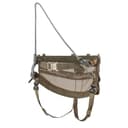
Tethrd Phantom XP Hunting Saddle

Tethrd Phantom XP Hunting Saddle

Tethrd's current Phantom, and the saddle most hunters should start with. The XP keeps the original Phantom's compact footprint with its panel retracted, then lets out a 3.5-inch expandable comfort panel for long sits, at a published 1 lb 12 oz, from the brand most responsible for the category.

If you already know you will keep it
$274.99 · View on Amazon

Price as of October 16, 2026. #ad How we’re funded

3
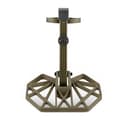
UIIHUNT Saddle Hunting Platform

UIIHUNT Saddle Hunting Platform

A value platform that publishes the two numbers that matter and does well on both: 3.9 lb on your back, 500 lb rated capacity under your boots. Add 35 degrees of built-in levelling and it is the pick for a saddle hunter who wants solid footing without paying flagship money.

The part that decides comfort
$99.99 · View on Amazon

Price as of October 16, 2026. #ad How we’re funded

4
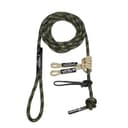
Hang Free 8mm Predator Sewn Tree Tether & Lineman's Belt

Hang Free 8mm Predator Sewn Tree Tether & Lineman's Belt

The tether that publishes its numbers. Most hunting ropes on Amazon list a vague 'heavy duty' rating; this one states a 4,420 lb minimum breaking strength on the sewn eye, a 440 lb safe working load, and third-party testing — and it covers both jobs, tether and lineman's belt, in a single buy.

The part you do not shop on price
$54.99 · View on Amazon

Price as of October 16, 2026. #ad How we’re funded

#1The cheapest honest way inTree saddle system

XOP Complete Tree Saddle Hunting System

The easiest way into saddle hunting: a complete system in one box rather than a bare saddle you have to build a kit around. Harness, platform, carry bag and — the part beginners forget to budget for — the bridge, tether and lineman's belt all arrive matched, which removes the guesswork about what pairs with what.

Strengths

  • Bridge, tether and lineman's belt are included, not sold separately
  • Hybrid harness doubles as a standard fall-arrest system
  • Edge platform is fully levelling, so a leaning tree isn't a problem

Trade-offs

  • Bundled parts may not be exactly what a veteran would choose
  • 9.6 lb as a full kit — heavier than a hand-picked ultralight setup
TypeComplete saddle system
IncludesMondo saddle harness + Edge platform + carry bag
Ropes includedBridge, tether and lineman's belt
Total weight9.6 lb
Rated capacityNot published

The spec that matters. For a first saddle setup, a matched kit beats a pile of separately-bought parts. The single most common beginner failure is a saddle, platform and tether that don't work well together — a complete system sidesteps that entirely.

Specs read from the product listing, on September 23, 2026. “Not published” means the maker does not state that figure.

#2If you already know you will keep itTree saddle

Tethrd Phantom XP Hunting Saddle

Tethrd's current Phantom, and the saddle most hunters should start with. The XP keeps the original Phantom's compact footprint with its panel retracted, then lets out a 3.5-inch expandable comfort panel for long sits, at a published 1 lb 12 oz, from the brand most responsible for the category.

Strengths

  • Published 1 lb 12 oz (Regular) — light enough to carry deep
  • 3.5 in. expandable comfort panel with a lace-lock tensioner for all-day sits
  • Micro Quad Lock bridge adjusts the top and bottom panels independently

Trade-offs

  • A bare saddle — you still need a platform, tether and lineman's belt
  • There's a learning curve to saddle hunting itself
  • The linked Regular size fits a 28-36 in. waist; larger hunters need the XL
TypeUltralight saddle, expandable panel
Includes platform/sticksNo (saddle only)
Rated capacity300 lb
Weight1 lb 12 oz (Regular)
Bridge typeMicro Quad Lock Utilibridge

The spec that matters. A saddle is one part of a system. The Phantom XP is the seat; you still need a climbing method (sticks), a platform to stand on, a tether and a lineman's rope. Buying the saddle alone and expecting to hunt is the beginner's miscalculation.

Specs read from the product listing, on September 10, 2026. “Not published” means the maker does not state that figure.

#3The part that decides comfortSaddle platform

UIIHUNT Saddle Hunting Platform

A value platform that publishes the two numbers that matter and does well on both: 3.9 lb on your back, 500 lb rated capacity under your boots. Add 35 degrees of built-in levelling and it is the pick for a saddle hunter who wants solid footing without paying flagship money.

Strengths

  • 3.9 lb carried against a 500 lb rated capacity
  • 12 x 12 in standing area, non-slip coated with a ridged angled perimeter
  • Built-in levelling system with 35 degrees of adjustment for a leaning tree

Trade-offs

  • Die-cast aluminium — heavier than the machined ultralight platforms
  • 12 x 12 in is a standard footprint; big-deck hunters will want more room
TypeStand-on saddle platform
MaterialDie-cast aluminium
Weight3.9 lb
Rated capacity500 lb
Standing area12 x 12 in, non-slip coated
LevellingBuilt-in, 35° of adjustment

The spec that matters. You don't need the priciest platform to hunt comfortably — a stable, correctly-sized stand-on at a mid price does the job. Spend the difference on a good tether and lineman's rope, where safety actually lives.

Specs read from the product listing, on September 23, 2026. “Not published” means the maker does not state that figure.

#4The part you do not shop on priceSaddle tether rope

Hang Free 8mm Predator Sewn Tree Tether & Lineman's Belt

The tether that publishes its numbers. Most hunting ropes on Amazon list a vague 'heavy duty' rating; this one states a 4,420 lb minimum breaking strength on the sewn eye, a 440 lb safe working load, and third-party testing — and it covers both jobs, tether and lineman's belt, in a single buy.

Strengths

  • Published strength figures: 440 lb safe working load, 4,420 lb MBS on the sewn eye
  • Covers both jobs — tether and lineman's belt — plus an Amsteel-Blue prusik tender
  • Third-party tested and made in the USA

Trade-offs

  • Costs more than a bare tether rope, because it is two ropes and the hardware
  • Learn the correct hitches before trusting your weight to it
TypeTree tether + lineman's belt set
Diameter8 mm rope, 6 mm TRC connector
Length8 ft total; 20 in eye-to-eye connector
Rated440 lb safe working load; 4,420 lb MBS (sewn eye)
Terminations5 in sewn eye; Amsteel-Blue prusik tender
TestingThird-party tested; made in USA

The spec that matters. Your tether is life-safety gear — buy a rope rated for it, learn the hitches (a girth hitch and a friction hitch), and inspect it every season. This is not the place to improvise with hardware-store cord.

Specs read from the product listing, on September 23, 2026. “Not published” means the maker does not state that figure.

The three hunters who should not bother

1. You hunt one property and can leave stands up. A ladder stand you climb into in 40 seconds, sit in a chair-shaped seat all day and never carry is better at the job. Buy a stand, buy a harness, hang two or three sets for different winds, and spend the saved money on cameras.

2. Your problem is comfort, not access. If your sits end early because you are cold or sore, a saddle makes that worse. The honest fixes are in how to stay warm in a tree stand and how to sit all day hunting, and none of them is a saddle.

3. You will not practice.A saddle is a system of ropes, knots and sequence. A hunter who will not run the climb five times in daylight at knee height should hunt from the ground — saddle vs ground blind lays out that comparison, and the ground blind is a perfectly respectable answer.

What it actually costs, in three currencies

Money.Four purchases: saddle, platform, ropes, sticks. The one-box route publishes a complete weight and contents list, which is why we point first-time buyers at it — and then remind them that no kit in this category includes sticks. Every full breakdown lives in how much a saddle hunting setup costs.

Comfort.Real, and front-loaded. Your first sit is about your legs. By the fifth you have a knee-out position you can hold for hours and have stopped noticing. If you want to shorten that curve, the panel and platform matter far more than the saddle brand — most comfortable tree saddles and how to get comfortable in a saddle are the two pages for that.

Attention. A saddle hunt has more steps than a stand hunt, which means more things to do quietly in the dark. That cost falls every time you do it and never reaches zero.

The payoff, stated plainly

A saddle turns tree choice from a constraint into a decision. You are no longer looking for the one straight oak with a fork in the right place; you can hunt the leaning cedar in the funnel because the sign says that is where the deer walk. On public ground that is the entire game, and it compounds with everything else on this site: the right tree for thermals— the National Deer Association’s guidance is to hunt high in the mornings and low in the evenings, because that is where your scent is notgoing — is rarely the tree with a stand already in it.

It also means one setup covers wind directions a fixed stand cannot. Instead of three stands for three winds, you carry one system and pick the tree on the morning. That is the argument in mobile vs fixed hunting, and it is why saddles took over public-land hunting rather than farm hunting.

Our read: if you hunt pressured public ground, or several properties, or you scout in-season and want to act on what you find that week, a saddle is worth it and will change how you hunt. If you hunt one farm you know by heart, it is an expensive way to be less comfortable. Both answers are honest, and they are not about how serious a hunter you are.
Frequently asked questions

Is saddle hunting worth it?

Yes, if your hunting is limited by where you can put a stand. A saddle plus a platform and sticks lets you hunt a crooked, skinny or leaning tree in the exact spot the sign says to be, carry the whole system in on your back, and take it out the same day — which is what public-land and permission-ground hunters need. No, if you hunt one property you can leave stands on, because a fixed ladder stand is more comfortable, faster to get into and cheaper over five seasons.

How much does a saddle hunting setup cost?

Think in four purchases, not one: saddle, platform, ropes and sticks. The cheapest honest route is a complete system — XOP's publishes 9.6 lb for the saddle, platform, bridge, tether, lineman's belt and bag — and then sticks on top, because no complete kit we track includes them. Prices move weekly, so the live buttons on this page are the number to trust rather than any figure typed into an article.

Is saddle hunting more comfortable than a tree stand?

No, not for most people, and anyone telling you otherwise is selling something. You are seated in a fabric panel with your weight through your hips and thighs, and it takes a few sits to find a position you can hold. What a saddle gives you instead is the ability to face any direction, lean out around the trunk, and shoot where a stand would have you blocked. Comfort is the cost; shot options are the payoff.

Is saddle hunting safe?

It is as safe as your habits. The Tree Stand Safety Awareness Foundation cites a ten-state study in which 99 percent of fall victims were not attached to the tree and 86 percent wore no harness, and Wisconsin's DNR notes that roughly one in four bowhunters has fallen or nearly fallen. A saddle is a harness you hunt from, so you are attached continuously once you clip in with a lineman's rope — which is structurally safer than climbing a ladder stand unattached. The risk sits in the transitions and in gear you have not practiced with.

How long does it take to learn saddle hunting?

Plan on three to five practice climbs at knee height in the backyard before you hunt from one, and expect your first two sits to be about figuring out your legs rather than about deer. The climbing sequence is the part to drill: sticks, lineman's rope, tether, platform, in the same order every time, in the dark.

Sources

Keep reading