Blind & Brush

Best Hearing Protection for Hunting

The gear has to do two opposite jobs: let you hear a deer walking in dry leaves, then stop a 150 dB muzzle blast inside a nylon box. Ranked on NRR, fit under a hood, and what each maker actually publishes. Live prices.

By Stephen V.Last updated How we pick

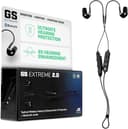
The AXIL GS Extreme 2.0 is the best hearing protection for most blind and stand hunters, because it is the right shape before it is the right product. It sits in your ears, so there is no headband fighting your hood, no cup to clip the window frame when you turn, and nothing between your cheek and the stock when the shot finally comes. AXIL publishes two ratings — 19 dB NRR on the silicone tips and 29 dB on the foam ones — which is unusually honest and tells you exactly which tips to be wearing when you shoot.

Most hunters wear nothing. That is the real competitor on this page, and the numbers say it is a bad bet. CDC/NIOSH research on recreational firearms puts peak levels from roughly 140 to 175 dB, with most guns between 150 and 165 dB, while the NIDCD states that long or repeated exposure at or above 85 dBAcauses hearing loss and that the louder the sound, the less time it takes. A single unprotected shot from a blind is not a small risk you are managing — it is the whole exposure.

And the blind makes it worse, not better. An enclosed hub or box blind puts hard-ish walls and a roof around the muzzle, so the blast has somewhere to bounce before it leaves, and most hunters shoot out of a window roughly an arm’s length from their own ears. The shooting-range advice does not transfer: at a range you can wear bulky muffs, and in a blind you need to hear leaves at 60 yards for four hours first. Price brackets below run from a few dollars a pair up to premium; live prices sit under each button.

How this is funded: we earn a commission if you buy through our links, at no extra cost to you. It never changes which product we recommend, and we’ll tell you plainly when we’d skip one. Full disclosure.

Quick picks

Ranked on published specs, concealment fit and value. Select a row to jump to the full write-up. We have not field-tested this gear — here is exactly what we do instead.

#ProductBest forPrice
1
AXIL GS Extreme 2.0 Shooting Ear Buds

AXIL GS Extreme 2.0 Shooting Ear Buds

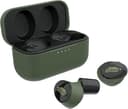
The right shape of hearing protection for a blind: in-ear, so nothing sits on your head to knock a window frame, snag a hood or lift off the stock when you get down on the comb. AXIL publishes two ratings because the tip decides the rating — 19 dB NRR on the silicone tips, 29 dB on the foam ones — which also tells you which tips to run when you actually shoot.

Best overall for hunting
$89.95 · View on Amazon

Price as of October 18, 2026. #ad How we’re funded

2
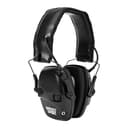
Walker's Razor Slim Electronic Muff

Walker's Razor Slim Electronic Muff

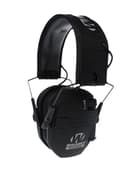
The cheapest electronic muff worth owning, and the one to buy for a kid, a guest or the truck. The listing publishes 23 dB NRR and sound-activated compression, and the low-profile cups are the reason it works on a gun: a fat cup is what bumps the stock and pushes your head off the comb.

Best budget electronic muff
$31.48 · View on Amazon

$35.0910% off

Price as of October 18, 2026. #ad How we’re funded

3
Howard Leight by Honeywell Impact Sport Electronic Earmuff

Howard Leight by Honeywell Impact Sport Electronic Earmuff

The default electronic muff in American shooting, and it earns that for one reason: amplification is capped at a published 82 dB and cuts the instant a shot exceeds it, so you can run it turned up to hear a deer walking and not pay for it when the gun goes off. The NRR is 22 dB, a point below the Walker's.

Best for hearing deer approach
$60.00 · View on Amazon

Price as of October 18, 2026. #ad How we’re funded

4
3M Peltor Sport Tactical 500 Bluetooth Earmuff

3M Peltor Sport Tactical 500 Bluetooth Earmuff

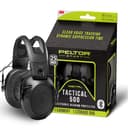
The highest-rated muff here at a published 25 dB NRR, with Bluetooth and 3M's adaptive circuitry. If you shoot a centerfire rifle out of an enclosed box blind — the loudest shot a hunter takes, because the walls give the blast somewhere to bounce — this is the muff to buy.

Best protection in a box blind
$146.88 · View on Amazon

Price as of October 18, 2026. #ad How we’re funded

5
ISOtunes Caliber Bluetooth Shooting Ear Buds

ISOtunes Caliber Bluetooth Shooting Ear Buds

The premium earbud, and the one worth it if you hunt wet: a published 25 dB NRR tested to ANSI S3.19-1974, IP67 sealing and a case carrying two extra charges. The sealed rating is the differentiator — a blind in November is a damp place, and earbuds live in your ears, not in a dry bag.

Best for wet, all-day sits
$187.99 · View on Amazon

Price as of October 18, 2026. #ad How we’re funded

6
Howard Leight by Honeywell MAX-1 Uncorded Foam Earplugs

Howard Leight by Honeywell MAX-1 Uncorded Foam Earplugs

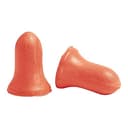
The highest-rated protection on this page costs a few cents a pair and has no battery, no Bluetooth and no amplification. At 33 dB NRR these are what you double up with under a muff when you sight in, and what stays in the blind bag for the hunt where the electronics are dead.

Best cheap backup / doubling up
$47.96 · View on Amazon

Price as of October 18, 2026. #ad How we’re funded

The picks in full

#1Best overall for huntingElectronic earbud

AXIL GS Extreme 2.0 Shooting Ear Buds

The right shape of hearing protection for a blind: in-ear, so nothing sits on your head to knock a window frame, snag a hood or lift off the stock when you get down on the comb. AXIL publishes two ratings because the tip decides the rating — 19 dB NRR on the silicone tips, 29 dB on the foam ones — which also tells you which tips to run when you actually shoot.

Strengths

  • No headband and no cups: nothing to interfere with a cheek weld or a hood
  • Published 29 dB NRR with the foam tips — the second-highest rating on this page
  • Bluetooth and a published 25 hours of battery, charged over USB-C

Trade-offs

  • The 19 dB silicone-tip rating is the one most people will wear day to day — swap tips before you shoot
  • Earbuds are losable in the dark in a way a cheap muff is not
  • AXIL has since launched a 3.0 version, so expect the 2.0 to be discounted and eventually dropped
TypeElectronic in-ear, Bluetooth
NRR19 dB (silicone tips) / 29 dB (foam tips)
BatteryRechargeable, up to 25 hours published, USB-C
BluetoothYes
Hearing enhancementYes

The spec that matters. Read the tip rating, not the headline number. A 19 dB NRR is below what shooting-sport guidance assumes, so the foam tips are not a comfort option — they are the protection.

Specs read from the product listing, on October 17, 2026. “Not published” means the maker does not state that figure.

#2Best budget electronic muffElectronic earmuff

Walker's Razor Slim Electronic Muff

The cheapest electronic muff worth owning, and the one to buy for a kid, a guest or the truck. The listing publishes 23 dB NRR and sound-activated compression, and the low-profile cups are the reason it works on a gun: a fat cup is what bumps the stock and pushes your head off the comb.

Strengths

  • 23 dB NRR, higher than the classic Impact Sport below it
  • Slim cups clear a rifle or shotgun stock better than standard-depth muffs
  • Cheap enough to keep a second pair in the blind bag for whoever forgets theirs

Trade-offs

  • A headband is still a headband: it fights a hood, a head net and a hat
  • Walker's does not publish a battery-life figure on this listing
  • The cups press over time; it is a sit-and-shoot muff, not an all-day one
TypeElectronic over-ear muff
NRR23 dB
Sound-activated compressionYes
Battery2 x AAA
BluetoothNo
Battery lifeNot published

The spec that matters. Muffs are the easy recommendation at the range and the awkward one in a blind, because they compete for the same space as your hood, your hat and your gun stock. Buy them knowing that.

Specs read from the product listing, on October 17, 2026. “Not published” means the maker does not state that figure.

#3Best for hearing deer approachElectronic earmuff

Howard Leight by Honeywell Impact Sport Electronic Earmuff

The default electronic muff in American shooting, and it earns that for one reason: amplification is capped at a published 82 dB and cuts the instant a shot exceeds it, so you can run it turned up to hear a deer walking and not pay for it when the gun goes off. The NRR is 22 dB, a point below the Walker's.

Strengths

  • Amplification capped at a published 82 dB, which is the whole point of an electronic muff
  • Directional microphones that genuinely help you place a sound in thick cover
  • Auxiliary input jack and a folding frame, with pads and parts easy to find

Trade-offs

  • 22 dB NRR is the lowest of the muffs here
  • Standard-depth cups bump a gun stock more than the slim Walker's
  • Auto shutoff after four hours — fine at a range, annoying on an all-day sit
TypeElectronic over-ear muff
NRR22 dB
Amplification cutoff82 dB
Battery2 x AAA
Auto shutoffAfter 4 hours
BluetoothNo

The spec that matters. The 82 dB cap is the spec to compare across electronic protection. It is what separates hearing enhancement from a pair of speakers pointed at the ears you are trying to save.

Specs read from the product listing, on October 17, 2026. “Not published” means the maker does not state that figure.

#4Best protection in a box blindElectronic earmuff

3M Peltor Sport Tactical 500 Bluetooth Earmuff

The highest-rated muff here at a published 25 dB NRR, with Bluetooth and 3M's adaptive circuitry. If you shoot a centerfire rifle out of an enclosed box blind — the loudest shot a hunter takes, because the walls give the blast somewhere to bounce — this is the muff to buy.

Strengths

  • 25 dB NRR, the highest-rated muff on this page
  • Bluetooth, so it doubles as the thing you wear on the drive and in the stand
  • 3M publishes full attenuation data for this family, which most brands do not

Trade-offs

  • The most expensive muff here by a wide margin
  • Runs on 2 x AA cells rather than a rechargeable pack, so carry spares in the cold
  • Full-size cups: the least hood-friendly option on the page
TypeElectronic over-ear muff, Bluetooth
NRR25 dB
Battery2 x AA
BluetoothYes
Hearing enhancementYes

The spec that matters. NRR is measured in a laboratory and real-world attenuation is usually lower, so a 3 dB gap between muffs matters less than a good seal. If you wear glasses, the temple arm breaking the cup seal costs you more dB than the difference between any two muffs here.

Specs read from the product listing, on October 17, 2026. “Not published” means the maker does not state that figure.

#5Best for wet, all-day sitsElectronic earbud

ISOtunes Caliber Bluetooth Shooting Ear Buds

The premium earbud, and the one worth it if you hunt wet: a published 25 dB NRR tested to ANSI S3.19-1974, IP67 sealing and a case carrying two extra charges. The sealed rating is the differentiator — a blind in November is a damp place, and earbuds live in your ears, not in a dry bag.

Strengths

  • 25 dB NRR tested to ANSI S3.19-1974 — a published standard, not a marketing number
  • IP67 rating, the only weather-sealed pick here
  • Published 13 hours of battery plus two more charges in the case

Trade-offs

  • The most expensive option on this page
  • Output is capped at 85 dB, which is correct and will still annoy anyone wanting loud music
  • Like any earbud, small, dark and easy to lose in leaf litter
TypeElectronic in-ear, Bluetooth 5.2
NRR25 dB (ANSI S3.19-1974)
Weather ratingIP67
BatteryUp to 13 hours plus two case charges
Output limit85 dB

The spec that matters. An 85 dB output cap matches the level the NIDCD names as the point where long or repeated exposure starts causing hearing loss. It is the rare spec where the limitation is the feature.

Specs read from the product listing, on October 17, 2026. “Not published” means the maker does not state that figure.

#6Best cheap backup / doubling upDisposable foam earplug

Howard Leight by Honeywell MAX-1 Uncorded Foam Earplugs

The highest-rated protection on this page costs a few cents a pair and has no battery, no Bluetooth and no amplification. At 33 dB NRR these are what you double up with under a muff when you sight in, and what stays in the blind bag for the hunt where the electronics are dead.

Strengths

  • 33 dB NRR — the highest-rated option here by 4 dB, for a fraction of the price
  • Nothing to charge, nothing to break, nothing to interfere with a gun stock or a hood
  • The correct inner layer when you want plugs AND muffs for a loud rifle

Trade-offs

  • Zero hearing enhancement: you will not hear a deer coming, which is the trade
  • Sold by the box of 200 pairs, so the per-pair price is great and the entry price is not
  • Only works if rolled and seated properly; a badly fitted plug loses most of its rating
TypeDisposable foam earplug, uncorded
NRR33 dB
Quantity200 pairs per box
BatteryNone
Hearing enhancementNone

The spec that matters. CDC/NIOSH research on recreational firearms puts peak levels from roughly 140 to 175 dB, with most guns between 150 and 165 dB — which is why the cheapest item on this page is also the one with the most protection.

Specs read from the product listing, on October 17, 2026. “Not published” means the maker does not state that figure.

What the numbers actually mean

NRR is a laboratory number, and you will not get all of it

Noise Reduction Rating is measured under laboratory conditions with a perfect fit. In the real world, a seal broken by glasses, a hat brim, a hood seam or a badly rolled foam plug costs you more decibels than the difference between any two products on this page. The practical readings: a 3 dB gap between two muffs matters less than whether you can get a good seal with the hat and glasses you actually hunt in, and the highest NRR here (33 dB, on the foam plugs) belongs to the cheapest item by a wide margin.

One more thing worth knowing: decibels are logarithmic, so every 3 dB is a halving of sound energy. That is why the jump from 22 dB to 25 dB is not trivial on paper — and why a leaky 25 dB muff can still protect you less than a well-seated 22 dB one.

The amplification cutoff is the spec nobody compares

Every electronic product here amplifies quiet sound and cuts loud sound. The number that matters is where the cut happens. Howard Leight publishes it: amplification on the Impact Sport is capped at 82 dB, so ambient noise is boosted up to that ceiling and clamped the instant a shot exceeds it. ISOtunes caps output at 85 dB— the exact level the NIDCD names as the point where repeated exposure starts doing damage.

Products that do not publish a cutoff are asking you to trust that their speakers are not pointed at the ears you are trying to protect. Ask for the number.

Reaction time, and why passive protection still wins on paper

Electronic protection works by compressing or cutting the signal when it spikes. Good systems do this in milliseconds — ISOtunes publishes under 2 ms for the Caliber. A gunshot’s pressure peak arrives faster than that, which is why the passive attenuation of the cup or the plug is doing the real work on the shot itself and the electronics are doing the work for the four hours before it. Read the NRR as your protection; read the electronics as what makes you willing to wear it.

Earbuds or muffs for hunting?

At a range, muffs win: easy on and off, cheap, nothing to charge. In a blind or a saddle, earbuds win for three physical reasons that have nothing to do with sound quality.

The stock.A muff cup is the thing your rifle or shotgun stock hits as you mount the gun, and it pushes your head off the comb — which changes your eye position behind the scope at the worst possible moment. Slim-cup muffs like the Walker’s Razor Slim exist precisely to reduce this, and they reduce it rather than removing it.

The hood. Most cold-weather blind hunting involves a hood, a beanie or a full head net. A headband over or under any of those is a compromise; earbuds ignore the problem entirely.

The space. Hub blinds are tight, and the wall is often inches from your head. Cups catch fabric, and fabric noise inside a blind is amplified by the very electronics you are wearing.

The honest counter-argument for muffs: they are cheaper, you can get them on and off one-handed without losing a tiny object in the dark, they run on AAs you can buy at a gas station, and they are the better choice for a youth hunter or a guest who will not manage tips and charging. That is why three of the six picks here are muffs.

Double up when you sight in

The one place we would not compromise: sighting in a centerfire rifle off a bench, under a roof, next to other shooters. That is the highest-exposure hour of your year and none of it is time-sensitive. Run foam plugs under muffs — the combination is worth more than either alone, and the MAX-1 plugs on this page cost cents a pair. The same applies to anyone sitting next to you in a box blind: the person who did not pull the trigger took the same blast.

Buying for how you hunt

Bow hunters

A bow is quiet, so protection is optional — but amplification is not just protection. Running an electronic set turned up is a genuine detection upgrade in thick cover, and the reason some hunters buy these with no intention of ever shooting a gun. If that is you, buy on fit and battery life rather than NRR, and pair it with the habits in how to hunt from a ground blind.

Rifle hunters in an enclosed blind

Buy on NRR first. The Peltor Sport Tactical 500 at a published 25 dB is the highest-rated muff here; the ISOtunes Caliber matches it in an earbud with an ANSI-tested figure. If you shoot a braked rifle, double up — a muzzle brake redirects blast sideways, which means toward the blind walls and back at you. See also ground blinds for rifle hunting, where window height and silence matter for the same shot.

Crossbow hunters

A crossbow is loud enough to be unpleasant inside a blind and nowhere near firearm levels. Electronic protection is comfort and detection here, not injury prevention. Spend the money on the rest instead and buy the budget muff.

Hunters who already have hearing loss

This is the group electronic protection serves best and the group most likely to go without, because the first thing people with hearing loss notice is that protection makes them hear less. Directional amplification with a hard cutoff — the Impact Sport is the classic example — is the answer: it gives you back more than it takes, while still clamping the shot.

What we did not include, and why

Custom-molded electronic plugs. Genuinely the best fit money buys, and they require an audiologist appointment and several hundred dollars. If you shoot enough to justify that, you already know.

Suppressors. Legal in most states for hunting and the most effective single fix there is, but they are a months-long federal process and not a product we can route you to. If you own one, you still want protection on this page: a suppressed centerfire rifle is quieter, not quiet.

Passive “filter” plugs. Non-electronic valved plugs claim to pass speech and block impulse noise. The category is real, the published NRRs tend to be low, and for a hunter the electronic sets do the same job better.

We own no units and we do not claim bench tests we have not run. What we do is read the published rating for each product, confirm the listing is currently purchasable before it goes on the page, and say plainly where a maker leaves a figure out — Walker’s does not publish a battery life for the Razor Slim, so the spec table says so. Our method is in how we review gear.
Frequently asked questions

Do you need hearing protection for deer hunting?

For one shot a season it is easy to assume not, but that single shot is the entire exposure. CDC/NIOSH research on recreational firearms puts peak levels from roughly 140 to 175 dB, with most firearms between 150 and 165 dB, and the NIDCD states that hearing loss happens at or above 85 dBA with the damage arriving faster the louder the sound. Inside an enclosed blind, with the muzzle an arm's length from your ears and walls for the blast to bounce off, it is the loudest thing most hunters ever do.

Can you hear deer with electronic hearing protection on?

Better than without it, which is the point. Electronic protection amplifies quiet ambient sound up to a safe ceiling — Howard Leight publishes an 82 dB cap on the Impact Sport — and clamps the moment a shot exceeds it. Many hunters with some existing hearing loss run them purely as a detection aid: leaves at 60 yards and a buck grunting out of sight both come through louder than with bare ears.

Earbuds or earmuffs for hunting?

Earbuds for blind, stand and saddle hunting; muffs for the range, for youth hunters and for anyone who wants one-handed on-and-off. The case for earbuds is physical, not acoustic: no headband to fight a hood or a head net, no cup to clip the window frame, and nothing between your cheek and the stock when you mount the gun. Muffs are cheaper, run on AA or AAA cells and are much harder to lose in the dark.

What NRR do I need for hunting?

Higher is better, but fit beats rating. A well-seated 22 dB muff protects you more than a 25 dB one leaking around the arm of your glasses, and NRR is a laboratory figure you will never fully realize in the field. For a centerfire rifle fired inside an enclosed blind, start at 25 dB or double up with foam plugs under muffs — the plugs on this page are rated 33 dB and cost cents a pair.

Should you wear plugs and muffs at the same time?

For sighting in, yes — that is the highest-exposure, least time-critical shooting you will do all year, and doubling up is worth more than either layer alone. Hunting is the trade-off case: doubled protection also removes the ambient hearing you need to detect an approaching deer, so most hunters run a single electronic layer in the blind and double up at the bench.

Will hearing protection fit under a hood or a head net?

Earbuds will, with nothing to adjust. Muffs are the problem: a headband over a hood breaks the cup seal and a headband under one is uncomfortable and noisy. If you hunt in full head cover for concealment — which we recommend — try the muff with the net on before you buy, or buy the earbuds and stop fighting it.

Sources

Keep reading