Blind & Brush

Best Mosquito Repellent for Hunting

Bugs do not cost you a deer by biting you. They cost you a deer by making you move. Ranked on what is actually published — zone size, hours of protection and what the repellent does to your scent routine — with live prices.

By Stephen V.Last updated How we pick

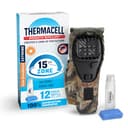
Buy the Thermacell Fuel-ZoneGuard Extreme Hunt Pack, because it is the only approach on this page that does not put a smell on you. Thermacell publishes a 15-foot zone of protection built on D-cis/trans allethrin, scent-free and DEET-free, with 12 hours of refills in the box. The repeller sits on the blind floor. Nothing goes on your hands, your face, your bowstring or your arrow fletching — which is the entire reason it leads a list on a site about beating a deer’s nose.

If you only buy one thing, though, make it the Sawyer permethrin treatment. It is the cheapest pick here and the one almost nobody uses, because it has to be done days in advance: you spray the clothes in the garage, let them dry, and Sawyer publishes that the treatment bonds to the fabric for up to 6 weeks or 6 washings and is 100% odorless after drying. A repellent you applied last month cannot smell like anything this morning.

Everything below is ranked for a hunter who has to sit still, not for a backyard barbecue. That means the criteria are zone size and hours of published protection first, and then a question no other roundup asks: what does this do to the scent routine you spent all summer on? Prices come from the live price layer — check the “as of” stamp under each button.

How this is funded: we earn a commission if you buy through our links, at no extra cost to you. It never changes which product we recommend, and we’ll tell you plainly when we’d skip one. Full disclosure.

Quick picks

Ranked on published specs, concealment fit and value. Select a row to jump to the full write-up. We have not field-tested this gear — here is exactly what we do instead.

#ProductBest forPrice
1
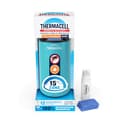
Thermacell Fuel-ZoneGuard Extreme Mosquito Repeller, Hunt Pack

Thermacell Fuel-ZoneGuard Extreme Mosquito Repeller, Hunt Pack

The right answer for a hunter sitting still, because it is the only approach here that does not put a smell on you. Thermacell publishes a 15-foot zone of protection built on D-cis/trans allethrin, scent-free and DEET-free, with 12 hours of refills in the box — so the repellent sits on the blind floor instead of on your hands, your bowstring and your face. The Hunt Pack is the same repeller as the base unit with extra mats and cartridges, which is the part you actually run out of.

Best overall
$33.99 · View on Amazon

$35.996% off

Price as of October 31, 2026. #ad How we’re funded

2
Sawyer Products Premium Permethrin Fabric Treatment, 24 oz Trigger Spray

Sawyer Products Premium Permethrin Fabric Treatment, 24 oz Trigger Spray

The pick that belongs on a scent-control site, and the one most hunters have never tried. You treat the clothes days before the hunt, not your skin on the morning of it, and Sawyer publishes that the treatment bonds to fabric for up to 6 weeks or 6 washings and is 100% odorless after drying. That last claim is the whole argument: a repellent you applied in the garage last month cannot smell like anything in the blind.

Best for scent control
$17.99 · View on Amazon

Price as of October 31, 2026. #ad How we’re funded

3
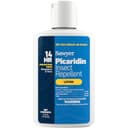
Sawyer Products 20% Picaridin Insect Repellent, 4 oz Lotion

Sawyer Products 20% Picaridin Insect Repellent, 4 oz Lotion

The one to put on exposed skin if you are going to put anything on at all. Sawyer publishes up to 14 hours against mosquitoes and ticks for the lotion — two hours longer than its own pump spray — and, the spec a hunter should care about most, that it will not damage plastics or synthetic coatings, naming firearm finishes and fishing line specifically. A lotion also means no aerosol cloud settling on the bow you spent the summer tuning.

Best for exposed skin
$9.99 · View on Amazon

$10.959% off

Price as of October 31, 2026. #ad How we’re funded

4
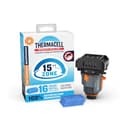
Thermacell Backpacker Mosquito Repeller Gen 2.0

Thermacell Backpacker Mosquito Repeller Gen 2.0

The pick for a hunter who walks in. Thermacell publishes the same 15-foot zone and the same D-cis/trans allethrin as its blind-sized units, in a 0.2 lb (114 g) body that screws onto an EN417 backpacking stove canister instead of carrying its own fuel cartridges — published at up to 90 hours on a 4 oz canister and up to 360 hours on a 16 oz one. If you already carry a canister stove, the fuel is weight you brought anyway.

Best for a walk-in hunt
$40.98 · View on Amazon

Price as of October 31, 2026. #ad How we’re funded

5
Thermacell Fuel-ZoneGuard Base Patio Shield Mosquito Repeller

Thermacell Fuel-ZoneGuard Base Patio Shield Mosquito Repeller

The cheapest way to find out whether a zone repeller works on your ground. Thermacell publishes the identical numbers it publishes for the hunting-badged units — 15-foot zone, D-cis/trans allethrin, 12 hours of protection included — in the plainest body in the line. You are not buying less repellent; you are buying a repeller that was photographed on a deck instead of in a blind.

Cheapest way into a zone
$22.94 · View on Amazon

$26.9915% off

Price as of October 31, 2026. #ad How we’re funded

6
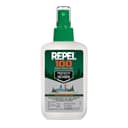
Repel Repel 100 Insect Repellent, 98% DEET, 4 oz

Repel Repel 100 Insect Repellent, 98% DEET, 4 oz

The one you keep for the hunt that is genuinely unbearable — a September swamp sit, a flooded timber morning, the week the gnats arrive. The listing publishes 98% DEET and up to 10 hours against mosquitoes, ticks, gnats, biting flies, chiggers and fleas, which is the strongest stated protection on this page. It is also the pick we would reach for last, and the cons below are the reason.

Best for the worst of it
$7.48 · View on Amazon

Price as of October 31, 2026. #ad How we’re funded

The picks in full

#1Best overallFuel-powered zone repeller

Thermacell Fuel-ZoneGuard Extreme Mosquito Repeller, Hunt Pack

The right answer for a hunter sitting still, because it is the only approach here that does not put a smell on you. Thermacell publishes a 15-foot zone of protection built on D-cis/trans allethrin, scent-free and DEET-free, with 12 hours of refills in the box — so the repellent sits on the blind floor instead of on your hands, your bowstring and your face. The Hunt Pack is the same repeller as the base unit with extra mats and cartridges, which is the part you actually run out of.

Strengths

  • Published 15-foot zone with nothing applied to skin or clothing — the only picks here that leave you untouched
  • Thermacell publishes the active ingredient (D-cis/trans allethrin) and the claim scent-free and DEET-free
  • Comes with 12 hours of refills, and the Hunt Pack adds the mats and cartridges you burn through first

Trade-offs

  • The zone is a heated-mat zone, so a crosswind through two open blind windows moves it — and Thermacell publishes nothing at all about wind
  • Thermacell publishes no figure for how long the zone takes to establish; the ZoneCheck LED only tells you the unit is up to temperature
  • Consumable: mats and fuel cartridges are an ongoing cost, and a dead cartridge at 4 a.m. is a dead repeller
Zone of protection15 ft (published)
Active ingredientD-cis/trans allethrin
Hours of protection included12
Applied to skin or clothingNo
PowerFuel cartridge (butane) + CR2032 for the electronics
Time to establish the zoneNot published
Wind performanceNot published

The spec that matters. The reason a zone repeller beats a spray on a scent-control site is not that allethrin is odorless to a deer — nobody has published that test. It is that a zone repeller never contacts your hands, your face, your release or your arrow fletching, so whatever it smells like, it is not smeared on the three things that pass closest to a deer's nose.

Specs read from the product listing, on October 31, 2026. “Not published” means the maker does not state that figure.

#2Best for scent controlPermethrin clothing treatment

Sawyer Products Premium Permethrin Fabric Treatment, 24 oz Trigger Spray

The pick that belongs on a scent-control site, and the one most hunters have never tried. You treat the clothes days before the hunt, not your skin on the morning of it, and Sawyer publishes that the treatment bonds to fabric for up to 6 weeks or 6 washings and is 100% odorless after drying. That last claim is the whole argument: a repellent you applied in the garage last month cannot smell like anything in the blind.

Strengths

  • Sawyer publishes 100% odorless after drying — the only pick here with a stated no-odor claim once it is on
  • One treatment is published to last up to 6 weeks (42 days) of sun and air, or 6 washings, whichever comes first
  • Treats the clothing, so it works on the hours you are not wearing repellent on your hands — and Sawyer states it repels and kills ticks

Trade-offs

  • Sawyer's own page does not publish the permethrin concentration, which is the figure you would most want to compare
  • Clothing and gear only — Sawyer states do not apply directly to skin, face or eyes, so exposed hands and face still need something else
  • You have to plan it: the garment must be sprayed and fully dried before the hunt, and Sawyer warns it is toxic to cats until dry
Active ingredientPermethrin (concentration not published)
Published durationUp to 6 weeks (42 days) sun and air, or 6 washings
Odor once dry100% odorless after drying (maker's claim)
Coverage24 oz treats 5 outfits (4.5 oz per outfit)
Apply to skinNo — clothing and gear only
TargetsTicks, mosquitoes, 55+ other insects

The spec that matters. Sawyer's 4.5 oz per outfit is EPA's recommendation for a shirt, a pair of pants and a pair of socks — which means a 24 oz bottle is five outfits, not five seasons. Treat boots, pack straps and the blind-chair seat too; ticks come up from the ground, and EPA's own guidance notes that with treated clothing only the skin the fabric covers is protected.

Specs read from the product listing, on October 31, 2026. “Not published” means the maker does not state that figure.

#3Best for exposed skinPicaridin skin repellent (lotion)

Sawyer Products 20% Picaridin Insect Repellent, 4 oz Lotion

The one to put on exposed skin if you are going to put anything on at all. Sawyer publishes up to 14 hours against mosquitoes and ticks for the lotion — two hours longer than its own pump spray — and, the spec a hunter should care about most, that it will not damage plastics or synthetic coatings, naming firearm finishes and fishing line specifically. A lotion also means no aerosol cloud settling on the bow you spent the summer tuning.

Strengths

  • Published up to 14 hours against mosquitoes and ticks, and 8 hours against biting flies, gnats, chiggers and sand flies
  • Sawyer publishes that it will not damage plastics or synthetic coatings, and names firearm finishes, sunglasses and fishing line
  • A lotion applies where you rub it instead of drifting onto your string, your rest and your face mask

Trade-offs

  • Sawyer describes a pleasant low odor that evaporates when dry, not an odorless product — on a scent-control hunt that is a real distinction and we are not going to paper over it
  • It goes on skin, which is the part of you closest to a deer's nose at the moment of the shot
  • 4 oz is one bottle for a season of early-season sits, not a family supply
Active ingredient20% picaridin
Published duration (mosquitoes, ticks)Up to 14 hours
Published duration (flies, gnats, chiggers)8 hours
OdorPleasant low odor that evaporates when dry (maker's wording)
Damages plastics / synthetic coatingsNo (maker's claim)
FormNon-greasy lotion, 4 oz

The spec that matters. Picaridin's practical advantage over DEET for a hunter has nothing to do with biting insects: DEET is a known solvent on plastics and finishes, and a rangefinder housing, a riser finish and a synthetic stock are all plastic. Sawyer's published claim that picaridin does not attack those coatings is the reason it belongs in a blind bag that also holds optics.

Specs read from the product listing, on October 31, 2026. “Not published” means the maker does not state that figure.

#4Best for a walk-in huntCanister-fueled zone repeller

Thermacell Backpacker Mosquito Repeller Gen 2.0

The pick for a hunter who walks in. Thermacell publishes the same 15-foot zone and the same D-cis/trans allethrin as its blind-sized units, in a 0.2 lb (114 g) body that screws onto an EN417 backpacking stove canister instead of carrying its own fuel cartridges — published at up to 90 hours on a 4 oz canister and up to 360 hours on a 16 oz one. If you already carry a canister stove, the fuel is weight you brought anyway.

Strengths

  • Published 0.2 lb / 4.0 oz without fuel — the lightest way to carry a published 15-foot zone
  • Runs on a standard EN417 isobutane-propane canister, published at up to 90 hours on a 4 oz can and 360 on a 16 oz
  • Thermacell publishes dependable performance up to 7,000 feet of elevation, which the sealed-cartridge units do not state

Trade-offs

  • The canister is not included, and Thermacell states it will not work on 100% propane — the wrong canister is a dead repeller
  • The published 90-hour figure is FUEL life, not mat life; the mats run out long before the canister does and are a separate purchase
  • Most expensive way into a Thermacell zone, and a hunter who drives to a box blind is paying for weight savings he will never feel
Zone of protection15 ft (published)
Active ingredientD-cis/trans allethrin
Weight0.2 lb (114 g / 4.0 oz)
FuelEN417 (iso)butane-propane canister, not included
Published fuel run timeUp to 90 h on 4 oz; up to 360 h on 16 oz
ElevationPublished dependable to 7,000 ft
Mat life per matNot published

The spec that matters. Read the two run-time numbers separately or you will get this wrong. Thermacell's 90 and 360 hours describe how long the CANISTER lasts; the heated mat that actually carries the allethrin is the consumable that expires first, and Thermacell does not publish a per-mat life on this page. Carry spare mats, not a spare canister.

Specs read from the product listing, on October 31, 2026. “Not published” means the maker does not state that figure.

#5Cheapest way into a zoneFuel-powered zone repeller (base model)

Thermacell Fuel-ZoneGuard Base Patio Shield Mosquito Repeller

The cheapest way to find out whether a zone repeller works on your ground. Thermacell publishes the identical numbers it publishes for the hunting-badged units — 15-foot zone, D-cis/trans allethrin, 12 hours of protection included — in the plainest body in the line. You are not buying less repellent; you are buying a repeller that was photographed on a deck instead of in a blind.

Strengths

  • Thermacell publishes the same 15-foot zone and the same D-cis/trans allethrin as the hunting-marketed models
  • 12 hours of protection included, same as the premium units in the line
  • Cheap enough to leave one in the blind and one in the truck rather than carrying one back and forth

Trade-offs

  • Not armored or camo — a glossy consumer body in a blind window is one more shape and shine to deal with
  • No belt clip or carry case, so it is a set-it-on-the-floor unit, not a walk-in one
  • Same consumables and the same unpublished wind behavior as every other Thermacell here
Zone of protection15 ft (published)
Active ingredientD-cis/trans allethrin
Hours of protection included12
BatteriesN/A (published)
Camo or armored bodyNo
Wind performanceNot published

The spec that matters. Worth knowing before you pay the hunting premium: Thermacell's own spec tables for the Patio Shield and the hunting-badged Extreme publish the same zone size, the same active ingredient and the same included hours. What the hunting versions add is the body — armor, camo, a clip, a case — not the chemistry.

Specs read from the product listing, on October 31, 2026. “Not published” means the maker does not state that figure.

#6Best for the worst of itDEET skin and clothing repellent

Repel Repel 100 Insect Repellent, 98% DEET, 4 oz

The one you keep for the hunt that is genuinely unbearable — a September swamp sit, a flooded timber morning, the week the gnats arrive. The listing publishes 98% DEET and up to 10 hours against mosquitoes, ticks, gnats, biting flies, chiggers and fleas, which is the strongest stated protection on this page. It is also the pick we would reach for last, and the cons below are the reason.

Strengths

  • 98% DEET and a published up-to-10-hour claim — the longest stated single-application protection here
  • Covers gnats, biting flies and chiggers as well as mosquitoes and ticks, which is the early-season reality
  • A 1 oz or 4 oz bottle lives in a blind bag indefinitely and costs less than a tank of gas

Trade-offs

  • DEET at this concentration is a solvent: it attacks plastics and synthetic finishes, so keep it away from your rangefinder, riser, stock and optics
  • It smells, strongly, and it goes on skin and clothing — the opposite of everything a scent-control routine is for
  • EPA's own guidance says apply only to exposed skin and clothing and do not use under clothing, which is awkward under a layered cold-weather system
Active ingredient98% DEET
Published durationUp to 10 hours
TargetsMosquitoes, ticks, gnats, biting flies, chiggers, fleas
Size4 oz pump
Safe on plastics / finishesNo
OdorStrong (not published as low-odor or odorless)

The spec that matters. Use it the way you would use a tool you do not entirely trust: on the walk-in, on scouting trips, on hunts where nothing is coming anyway. EPA does not tie duration of protection to concentration, and it specifically names perspiration, water and air temperature as the things that shorten a repellent's working life — which is a reminder that 98% is not a license to apply it once in the dark and forget it.

Specs read from the product listing, on October 31, 2026. “Not published” means the maker does not state that figure.

What you are actually buying

You are not buying comfort. You are buying stillness.

A whitetail does not catch you because a mosquito bit you. He catches you because of what you did about it — the hand that came up to the neck, the shoulder roll, the slow wave at the gnat crossing your eye. That is movement inside a blind window at exactly the moment something is walking in, and it is the same failure mode this site writes about under how to stay still while hunting: the swat is the tell, not the bite.

Reframe the purchase that way and the ranking changes completely. The question is no longer “which repellent is strongest.” It is “which repellent keeps my hands in my lap for four hours without adding a smell a deer can work out at sixty yards.” Those two goals pull against each other, and every pick above is a different answer to the tension.

The criteria, in the order they decide the buy

1. Does it touch you at all?

This is the first question on a scent-control site and it splits the category cleanly in two. A zone repeller heats a mat and puts repellent into the air around you; a spray or a lotion puts it on your skin and your clothing. The first never contacts your release, your string, your rest, your gun stock or your face. The second does, by design.

Be clear about what that does and does not prove. Nobody has published a study measuring whether allethrin, picaridin or DEET spooks whitetails.We are not going to pretend otherwise, and if you find a site that quotes a number for it, ask where the number came from. What is genuinely true is narrower and still useful: a zone repeller is never smeared on the three or four objects that pass closest to a deer’s nose at the moment of the shot. Whatever it smells like, it is not on your hands.

That is the same logic the site applies to boot scent— you cannot make yourself odorless, so you control where your odor is put.

2. The published zone, and the thing nobody publishes about it

Every Thermacell on this page publishes the same figure: a 15-foot zone of protection. The Backpacker publishes 15 feet, the hunting-badged Extreme publishes 15 feet, and the plain Patio Shield publishes 15 feet. That consistency is worth noticing before you pay a hunting premium — Thermacell’s own spec tables give all three the same zone size, the same D-cis/trans allethrin active ingredient and the same 12 hours of protection included. What the hunting models add is the body: armor, camo, a belt clip, a case. Not the chemistry.

Now the gap. Thermacell publishes nothing at all about wind, and no figure for how long the zone takes to establish.The ZoneCheck LED tells you the unit is up to temperature and emitting — it does not tell you the air around you is protected. That matters in a blind, because a blind with two windows open on a crosswind is a wind tunnel, and a 15-foot zone of heated vapor in a wind tunnel is not a 15-foot zone. Treat the published number as a still-air figure, run the unit for several minutes before you need it, and if you are managing wind through the windows anyway — see scent control in a ground blind — put the repeller upwind of your chair, not downwind of it.

3. Hours of protection, and which hours they are

The published durations here are not comparable, because they measure different things.

Sawyer publishes up to 14 hoursagainst mosquitoes and ticks for the picaridin lotion, and 8 hours against biting flies, gnats, chiggers and sand flies — two separate numbers, because flies are harder. Note which form you buy: Sawyer publishes 14 hours for the lotion and 12 for its own pump spray. Repel publishes up to 10 hours at 98% DEET. The Sawyer permethrin treatment publishes up to 6 weeks (42 days) of sun and air exposure or 6 washings, whichever comes first— which is not hours of wear at all, it is shelf life on the garment. And every Thermacell publishes 12 hours of protection included, which is the mats in the box, not a single run.

EPA is blunt about the thing that erodes all of these: it names perspiration and physical activity, water exposure and air temperature as factors that shorten how long a repellent works, and it explicitly does not tie duration to concentration. So a 98% DEET bottle is not nine times better than a 10% one, and a hard walk in to a morning sit costs you some of whatever you applied. Apply at the blind, not at the truck.

4. What it does to your gear

This is the criterion that moves picaridin ahead of DEET for most hunters, and it has nothing to do with insects. DEET is a solvent. Sawyer publishes that its picaridin will not damage plastics or synthetic coatings, and names firearm finishes, sunglasses, watches, fishing line and backpacks specifically. A blind bag in October holds a rangefinder housing, a bow riser, a synthetic stock, a riflescope turret and a phone. One of those two chemistries belongs in that bag.

If you do carry DEET — and the last pick above is there because sometimes you should — keep it in a separate pocket, apply it before you handle optics, and do not set the open bottle on the shelf next to your rangefinder.

5. Ticks, which are the real health question

Mosquitoes in a blind are an annoyance. Ticks are the reason to take any of this seriously, and they are the one place the published guidance is unambiguous.

EPA states that permethrin is the only insect repellent currently used for the factory treatment of clothing, that it requires manufacturers to submit efficacy data for pests of public health concern such as mosquitoes and ticks, and that it “found that the clothing is effective in repelling target pests.” Sawyer states its treatment “repels and kills” ticks. That is a stronger published position than anything on the spray side of the category.

EPA also states the limit plainly, and it is the sentence most people miss: with treated clothing, only the skin the fabric covers is protected. Treated pants and socks do nothing for your wrists and the back of your neck. The full answer is treated clothing plus something on the exposed skin — which is why picks two and three above are a pair, not alternatives.

The setup we would actually run

Three things, in this order, and the first one happens weeks before the season.

In the garage, in August:treat the hunting clothes with permethrin and let them dry fully. Sawyer publishes 4.5 oz per outfit — EPA’s recommendation for a shirt, a pair of pants and a pair of socks — so a 24 oz bottle is five outfits, not five seasons. Do the boots, the pack straps and the seat of the blind chair while you are at it; ticks come up from the ground, not down from the trees. Then wash the treated clothes separately from untreated ones, which is EPA’s instruction because small amounts of permethrin can wash off. If you already run a scent-free laundry routine, this slots in ahead of it, not instead of it.

On the blind floor: the zone repeller, lit and up to temperature before you need it, placed upwind of your chair and away from your propane heater— two heat sources sharing a one-square-yard footprint in an enclosed fabric blind is a bad habit, and the heater-safety rules apply to anything with a flame in them.

In the bag, for exposed skin only:the picaridin lotion, applied to the back of the neck, the wrists and the ears once you are seated. EPA’s guidance is to apply only to exposed skin and clothing and “do not use under clothing,” and for the face, to spray or squeeze onto your hands first and then apply, avoiding eyes and mouth. A lotion makes that easy; an aerosol in a closed blind does not.

The cheaper answers that are not products

A head net.The most underrated bug tool in hunting is a mesh head net, which you may already own for concealment. It stops the single most maddening category of insect — the one crossing your eye — with zero chemistry and zero scent, and it does the camo job at the same time. See best hunting headnets and gloves; covered hands do not need repellent.

Zip the blind. An enclosed hub blind with the mesh windows closed and the door zipped is a bug barrier you already paid for. The reason most hunters are eaten alive in a blind is that they left the door open for air.

Hunt a different hour.Mosquitoes are worst at dusk in still, humid air near water. If your early-season spot is a creek bottom and you are being destroyed on evening sits, the morning sit is the same spot with a tenth of the insects — one of several reasons morning and evening sits are not interchangeable.

Do not buy a clip-on fan repeller for a blind.They exist, they work on a patio, and in a seated hunter’s chest pocket they put a small moving fan noise and a vapor plume at nose height for four hours. The floor unit is the better form factor for the same chemistry.

What we did not include, and why

Thermacell’s rechargeable E-ZoneGuard units.They are real and currently sold, but Thermacell’s own product page for the model we looked at published no spec table at all — no zone size, no active ingredient, no battery figure. We are not going to rank a product on numbers scraped off a retail title when the maker’s own page is blank, and the fuel-powered units publish everything.

Citronella candles, coils and wristbands. No published zone, no published duration, an open flame in a fabric blind, and a smell you will be sitting in. Nothing to rank.

“Scent-free” natural repellents with no published active ingredient. If the label does not name what is in it and how long it lasts, there is nothing for a buying guide to compare.

Anything we could not confirm as currently purchasable.Every pick above was checked against a live retail listing before it went on this page and confirmed in stock with a live offer. Every spec was read from the maker’s own published page where one exists — checkout.thermacell.com and sawyer.com — and from the listing’s own published data otherwise. Where a figure is not published, the spec table says “Not published.” Sawyer does not publish the permethrin concentration on its own product page; Thermacell publishes nothing about wind or spin-up time. Those gaps are findings about the category, not oversights in the table.
Frequently asked questions

What is the best mosquito repellent for hunting?

For a hunter who has to sit still, a zone repeller — the Thermacell Fuel-ZoneGuard Extreme Hunt Pack. Thermacell publishes a 15-foot zone of protection on D-cis/trans allethrin, scent-free and DEET-free, with 12 hours of refills included. The reason it beats a spray on a scent-control site is not that allethrin is invisible to deer — nobody has published that test — it is that the repeller sits on the blind floor and never touches your hands, your face, your bowstring or your arrows.

Will bug spray spook deer?

There is no published study measuring it, and anyone who gives you a number is guessing. What is certain is the mechanism you can control: a spray or lotion applied to your hands and face puts a foreign smell on the exact surfaces that pass closest to a deer's nose, while a zone repeller and permethrin-treated clothing do not. Sawyer publishes that its permethrin treatment is 100% odorless after drying, which is the strongest no-odor claim in the category. Picaridin is published as a low odor that evaporates when dry — not odorless. DEET at 98% smells, strongly, and goes on skin.

Does Thermacell work in a ground blind?

In still air, yes — Thermacell publishes a 15-foot zone of protection, which covers a hub blind several times over. The caveat is that Thermacell publishes nothing at all about wind, and a blind with two windows open on a crosswind moves a zone of heated vapor out of it. Light the unit several minutes before you need it, set it on the floor upwind of your chair rather than downwind, and keep it well away from a propane heater — two flames in one enclosed fabric blind is a bad habit.

Is permethrin or DEET better for hunting?

They do different jobs and the right answer is usually both, used correctly. Permethrin treats clothing and gear — never skin — and Sawyer publishes up to 6 weeks or 6 washings per treatment, 100% odorless after drying, repelling and killing ticks. DEET goes on exposed skin and is published at up to 10 hours at 98%, but it is a solvent that attacks plastics and synthetic finishes, so it does not belong near a rangefinder, a riser or a scope. EPA notes that permethrin-treated clothing protects only the skin the fabric covers, which is why you still need something on your wrists and neck.

Is picaridin better than DEET for hunters?

For most hunters, yes, for one reason that has nothing to do with insects: Sawyer publishes that its 20% picaridin will not damage plastics or synthetic coatings, and names firearm finishes, sunglasses and fishing line specifically. DEET will. Sawyer also publishes up to 14 hours against mosquitoes and ticks for the lotion against Repel's up-to-10-hour claim at 98% DEET, and calls picaridin more effective than DEET at repelling biting flies. DEET's edge is raw strength in genuinely brutal conditions — a September swamp sit is where it earns its place.

How do I keep ticks off me while hunting?

Treat the clothing with permethrin before the season, not your skin on the morning of the hunt. EPA states permethrin is the only insect repellent used for factory treatment of clothing and that it found such clothing effective against target pests including ticks; Sawyer states its treatment repels and kills them. Do the pants, socks, boots and pack straps — ticks come up from the ground. Then cover the gap EPA names: treated clothing protects only the skin it covers, so exposed wrists, neck and ears need a skin repellent such as 20% picaridin as well.

How many outfits does a bottle of Sawyer permethrin treat?

Sawyer lists the 24 oz bottle as treating 5 outfits, at the EPA recommendation of 4.5 oz per outfit — one shirt, one pair of pants and one pair of socks. That is worth doing the arithmetic on before you buy: a bottle is five outfits, not five seasons, and the published treatment life is up to 6 weeks (42 days) of sun and air exposure or 6 washings, whichever comes first. Sawyer also warns the product is toxic to cats until fully dried, so treat garments where a cat cannot reach them and let them dry completely.

Can I use a Thermacell while bowhunting?

Yes, and it is arguably the best case for one. A bowhunter has to draw, which is the largest movement anyone makes from a blind, and a bug landing mid-draw is how that movement gets rushed. A zone repeller also keeps repellent off the two surfaces a bowhunter cannot afford to contaminate: the string and the arrow fletching. Light it early, put it on the floor rather than a shelf where it can be knocked during the draw, and keep the cord and body clear of your shooting lane inside the blind.

Sources

  • Fuel-ZoneGuard Extreme + and Patio Shield repellers — published specifications (Thermacell) — Thermacell's own spec table for its fuel-powered ZoneGuard repellers: “Zone of Protection Size: 15 Feet,” active ingredient “D-cis/trans allethrin,” “Hours of Protection Included: 12,” a ZoneCheck LED that “illuminates when the Repeller is up to temperature and emitting the Zone of Protection,” and the marketing claim “No spray and no mess. Scent-free and DEET-free.” The same 15 ft / allethrin / 12-hour rows are published for the Patio Shield base model at https://checkout.thermacell.com/products/patio-shield-mosquito-repeller. Thermacell publishes NO figure for how long the zone takes to establish and nothing at all about wind (accessed October 31, 2026)
  • Backpacker Mosquito Repeller Gen 2.0 — published specifications (Thermacell) — Thermacell's own page for the canister-fueled Backpacker: “Zone of Protection Size: 15 Feet,” “Active ingredient: D-cis/trans allethrin,” “Weight (lb): 0.2” (114 g / 4.0 oz), and it “Runs on a backpacking stove fuel canister (not included)” which must be a “pressurized self-sealing (iso)butane and propane fuel mix (product will not function with 100% propane)” and is “Only compatible with valves designed to the EN417 specification.” Published run time is “up to 90 hours on a 4 oz canister and up to 360 hours on a 16 oz canister,” with dependable performance published up to 7,000 feet of elevation — which is fuel life, not mat life (accessed October 31, 2026)
  • Permethrin Fabric Treatment, 24 oz trigger spray — published claims (Sawyer Products) — Sawyer's own product page: the treatment “bonds to fabric fibers for up to 6 weeks (42 days) of exposure to sun and air or 6 washings” (whichever comes first), is “100% odorless after drying,” and “repels and kills” ticks plus mosquitoes and “more than 55 other kinds of insects.” The 24 oz bottle is listed as treating 5 outfits at the EPA-recommended 4.5 oz per outfit (one shirt, one pair of pants, one pair of socks). Sawyer states “Do not apply Permethrin directly to skin, face, or eyes. It is for clothing and gear treatment only,” and warns it is toxic to cats until fully dried. The page does NOT publish the permethrin concentration (accessed October 31, 2026)
  • 20% Picaridin Insect Repellent, 4 oz lotion — published claims (Sawyer Products) — Sawyer's own product page for the 20% picaridin lotion: “effective for up to 14 hours against mosquitoes and ticks” and “8 hours of protection against biting flies, gnats, chiggers, and sand flies” (the pump spray is published at 12 hours against mosquitoes and ticks, two fewer than the lotion). The formula is “non-greasy” with “a pleasant low odor that evaporates when dry” — Sawyer's text does not use the word odorless — and it “won't damage plastics or synthetic coatings — safe for use on clothing, backpacks, watches, sunglasses, fishing line, firearm finishes, and more.” Sawyer calls picaridin “An effective alternative to DEET” and “More effective at repelling biting flies than DEET” (accessed October 31, 2026)
  • Repellent-Treated Clothing (US Environmental Protection Agency) — EPA's own guidance page: permethrin is the only insect repellent currently used for the FACTORY treatment of clothing, while self-treatment sprays for clothing contain DEET, permethrin or picaridin. EPA requires manufacturers to submit efficacy data for pests of public health concern such as mosquitoes and ticks, and states it “found that the clothing is effective in repelling target pests.” It also states the limit plainly: with factory-treated clothing “only the skin surface covered with the factory-treated clothing is protected,” and exposed skin needs a repellent separately labeled for use on skin. Treated clothing should be washed separately from untreated clothing because small amounts of permethrin can wash off. No washing-count figure is published on the page — EPA points to the garment's own hang-tag label (accessed October 31, 2026)
  • Using Insect Repellents Safely and Effectively (US Environmental Protection Agency) — EPA's published application guidance: “Apply repellents only to exposed skin and/or clothing. Do not use under clothing.” For the face, “do not spray directly into face; spray on hands first and then apply to face,” and “do not apply near eyes and mouth, and apply sparingly around ears.” EPA lists perspiration and physical activity, water exposure and air temperature as factors that shorten how long a repellent works, and states there is no restriction on the percentage of DEET in a product used on children. It does NOT tie duration of protection to concentration (accessed October 31, 2026)

Keep reading