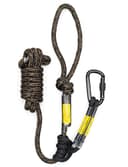
Blind & Brush

Best Lineman's Ropes

The rope that keeps you attached while you climb and hang gear — where most falls happen. Lineman's ropes ranked, from prusik kits to budget tethers. Live prices.

By Stephen V.Last updated How we pick

Most tree-stand and saddle falls don’t happen while you’re sitting — they happen during the climb and the setup, in the gap between the ground and being clipped to your tether. The lineman’s rope closes that gap. It wraps the trunk and keeps you connected the whole way up and while you hang a stand or set your sticks, so a slip is a scare instead of a tragedy. Safety authorities are blunt about it: the overwhelming majority of fall victims weren’t attached to the tree.

We ranked five real, currently available lineman’s ropes on what actually matters: how well they let you stay tied in and adjust as you climb, grip and ergonomics, and value. You’ll find a trusted-name overall pick, a complete prusik-and-carabiner kit, a heavy-duty camo rope built for saddle hunters, a money-saving three-pack, and a budget tether to get a new hunter attached today. A lineman’s rope is one piece of your life-safety rope system; for how to actually use one, see how to use a lineman’s belt, and to understand the difference from a fixed belt, read lineman’s rope vs lineman’s belt.

How this is funded:we earn a commission if you buy through our links, at no extra cost to you. It never changes which product we recommend, and we’ll tell you plainly when we’d skip one. Full disclosure.

Quick picks

Ranked on published specs, concealment fit and value. Select a row to jump to the full write-up. We have not field-tested this gear — here is exactly what we do instead.

#ProductBest forPrice
1
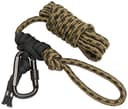
Hunter Safety System Rope-Style Tree Strap

Hunter Safety System Rope-Style Tree Strap

The trusted-name pick for staying attached the whole climb. From the brand that leads the harness category, this rope-style tree strap wraps the trunk and keeps you tied in while you hang a stand or set your sticks — the piece most fall victims didn't have. Simple, proven, and the one to buy if you climb.

Best overall
$29.99 · View on Amazon

Price as of August 5, 2026. #ad How we’re funded

2
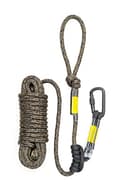
SENFU Lineman's Rope 30ft (Prusik + Carabiner)

SENFU Lineman's Rope 30ft (Prusik + Carabiner)

The best complete kit for the money. A 30-foot lineman's rope that comes with a prusik knot and carabiner already rigged, so you can adjust your distance to the trunk on the fly — exactly what saddle and hang-on hunters want. More adjustable than a plain strap, and priced fairly.

Best complete kit
$39.99 · View on Amazon

Price as of August 5, 2026. #ad How we’re funded

3
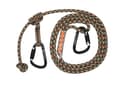
ZOOK Lineman's Rope 2.0 (11mm, Camo)

ZOOK Lineman's Rope 2.0 (11mm, Camo)

The pick built specifically for saddle hunters. A thicker 11mm camo climbing rope with a stated rating, made for the mobile crowd who live on their lineman's rope all season. The heavier diameter is easier to grip with gloves and feels reassuring under load; the camo keeps it from flagging your setup.

Best for saddle hunters
$39.99 · View on Amazon

Price as of August 5, 2026. #ad How we’re funded

4
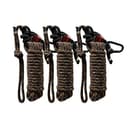
THUNDERBAY Lineman's Rope 30ft (3-Pack)

THUNDERBAY Lineman's Rope 30ft (3-Pack)

The best value if you hunt more than one stand — or hunt with family. A three-pack of 30-foot rope-style tree straps that works out cheapest per rope here, so you can leave one at each set or outfit the whole camp. The same climb-attached protection, bought in bulk.

Best value multipack
$62.99 · View on Amazon

Price as of August 5, 2026. #ad How we’re funded

5
SENFU Treestand Safety / Lineman's Tether Rope

SENFU Treestand Safety / Lineman's Tether Rope

The budget rope to get a new hunter attached today. A simple, low-cost tree tether rope that does the basic job — keeping you connected to the trunk — without a big outlay. Not as adjustable as a prusik kit, but far better than climbing unattached, which is the only truly wrong option.

Best budget
$23.99 · View on Amazon

Price as of August 5, 2026. #ad How we’re funded

The picks in full

#1Best overallLineman rope / tree strap

Hunter Safety System Rope-Style Tree Strap

The trusted-name pick for staying attached the whole climb. From the brand that leads the harness category, this rope-style tree strap wraps the trunk and keeps you tied in while you hang a stand or set your sticks — the piece most fall victims didn't have. Simple, proven, and the one to buy if you climb.

Strengths

  • From the harness category leader — proven, widely used design
  • Rope-style strap adjusts smoothly around the trunk as you climb
  • Keeps you attached during the most dangerous part of the hunt

Trade-offs

  • A strap, not a full prusik-and-carabiner kit — simpler but less adjustable
  • You still need a separate tether once you're set at hunting height
TypeRope-style tree strap
UseLineman's belt (staying attached while climbing)
Rated capacityNot published
LengthNot published

The spec that matters. The lineman's rope is the piece that stops the fall before it starts — it keeps you connected to the tree during the climb and setup, when most accidents happen. A tether protects you once you're settled; a lineman's rope protects you getting there.

Specs read from the product listing, on August 5, 2026. “Not published” means the maker does not state that figure.

#2Best complete kitLineman's rope (with prusik)

SENFU Lineman's Rope 30ft (Prusik + Carabiner)

The best complete kit for the money. A 30-foot lineman's rope that comes with a prusik knot and carabiner already rigged, so you can adjust your distance to the trunk on the fly — exactly what saddle and hang-on hunters want. More adjustable than a plain strap, and priced fairly.

Strengths

  • Ships with a prusik and carabiner — adjustable out of the box
  • 30 ft handles fat trunks and lets you rig at ground level
  • Prusik lets you cinch tight or feed slack one-handed as you climb

Trade-offs

  • Off-brand; inspect the stitching and prusik cord each season
  • More rope to manage than a short strap for a quick set
TypeRope + prusik + carabiner
Length30 ft
AdjustableYes (prusik)
Rated capacityNot published

The spec that matters. A prusik-and-carabiner setup is what makes a lineman's rope genuinely useful: you can shorten it to lean back against the tree and free both hands, then feed slack to move up. Learn to tie a prusik yourself so you can re-rig or replace a worn cord in the field.

Specs read from the product listing, on August 5, 2026. “Not published” means the maker does not state that figure.

#3Best for saddle huntersLineman's rope (11mm camo)

ZOOK Lineman's Rope 2.0 (11mm, Camo)

The pick built specifically for saddle hunters. A thicker 11mm camo climbing rope with a stated rating, made for the mobile crowd who live on their lineman's rope all season. The heavier diameter is easier to grip with gloves and feels reassuring under load; the camo keeps it from flagging your setup.

Strengths

  • Thicker 11mm rope is easy to grip and cinch with cold, gloved hands
  • Camo pattern doesn't advertise your tree
  • Stated load rating; built for daily saddle-hunting use

Trade-offs

  • Heavier and bulkier than a thin lineman's rope
  • Premium of the rope-only options here
TypeClimbing rope (lineman's)
Diameter11 mm
Rated capacity~350 lb (stated)
CamoYes

The spec that matters. Rope diameter is a real ergonomic factor most buyers overlook. A thicker 11mm rope is easier to grab and hold with numb, gloved hands in November than a thin cord — a small comfort that matters when your grip is what's keeping you on the tree.

Specs read from the product listing, on August 5, 2026. “Not published” means the maker does not state that figure.

#4Best value multipackLineman's rope (3-pack)

THUNDERBAY Lineman's Rope 30ft (3-Pack)

The best value if you hunt more than one stand — or hunt with family. A three-pack of 30-foot rope-style tree straps that works out cheapest per rope here, so you can leave one at each set or outfit the whole camp. The same climb-attached protection, bought in bulk.

Strengths

  • Three ropes — lowest cost per unit in the group
  • Leave one at each fixed set, or gear up the whole family
  • 30 ft length suits most trunk sizes

Trade-offs

  • Off-brand; inspect each rope before trusting your weight to it
  • More rope than a single-stand, run-and-gun hunter needs
TypeRope-style tree strap
Length30 ft each
Pack3
Rated capacityNot published

The spec that matters. Life-safety rope is cheap insurance, and a multipack makes it easy to never skip it — leave a rope at every fixed stand so there's no excuse to climb unattached because your one rope is in the other pack. Still inspect each before every season.

Specs read from the product listing, on August 5, 2026. “Not published” means the maker does not state that figure.

#5Best budgetLineman/tether rope (budget)

SENFU Treestand Safety / Lineman's Tether Rope

The budget rope to get a new hunter attached today. A simple, low-cost tree tether rope that does the basic job — keeping you connected to the trunk — without a big outlay. Not as adjustable as a prusik kit, but far better than climbing unattached, which is the only truly wrong option.

Strengths

  • Lowest price here — no reason to climb unroped
  • Simple loop-and-cinch setup is easy for a beginner
  • Compact and light to carry on a mobile hunt

Trade-offs

  • Basic adjustment compared with a prusik-and-carabiner kit
  • Off-brand — inspect closely and retire at any sign of wear
TypeTree tether / lineman's rope
AdjustableBasic
Rated capacityNot published
LengthNot published

The spec that matters. The right lineman's rope is the one that gets you to buy in and use it every climb. If price is the barrier between a hunter and staying attached, a cheap rope that's actually on the tree beats an expensive one still in the cart.

Specs read from the product listing, on August 5, 2026. “Not published” means the maker does not state that figure.

How to choose a lineman's rope

The main decision is adjustable rope-and-prusik versus simple strap. A prusik-and-carabiner setup lets you cinch tight to lean back against the tree and free both hands, then feed slack to move up — the versatility saddle hunters and mobile hang-on hunters want. A plain rope-style strap is simpler and faster for a quick set but offers less fine adjustment. Both are far better than climbing unattached, which is the only genuinely wrong answer.

Length, diameter and grip

Length needs to wrap the trunk plus give you working slack; 30 feet handles fat trees and lets you rig at ground level. Diameter is an ergonomic factor most buyers overlook: a thicker 11mm rope is far easier to grab and cinch with numb, gloved hands in November than a thin cord — and your grip is part of what keeps you on the tree. A camo pattern is a minor concealment bonus that keeps the rope from flagging your setup.

Ratings, inspection and retirement

Many hunting ropes state a rated capacity; treat a stated number on an off-brand product as a starting point, not gospel, and always inspect before you trust your weight to it. Check the rope, stitching and prusik cord every season and after any hard load or abrasion. Retire anything with cuts, glazing, heavy fuzzing or unknown history — life-safety rope is cheap, and a failed one is not something you get to learn from twice.

One rope isn't the whole system

A lineman’s rope protects you getting to hunting height; a tether protects you once you’re there, and a lifelineprotects you on a fixed ladder or set of steps. Saddle hunters run all three. Don’t buy a lineman’s rope and think you’re covered for the sit — see the full saddle-hunting rope system and our tree-stand safety tips for how the pieces fit together.

Frequently asked questions

What is a lineman's rope and why do I need one?

A lineman's rope (or lineman's belt) is a rope that wraps around the tree trunk and connects to both sides of your harness or saddle, keeping you attached to the tree while you climb and hang gear. You need it because most stand and saddle falls happen during the climb and setup — before you're clipped to a tether. It keeps a slip from becoming a fall.

What's the difference between a lineman's rope and a tether?

A lineman's rope keeps you attached while you climb and set up, letting you lean back and work with both hands as you ascend. A tether attaches you to the tree above your head once you're settled at hunting height. Saddle hunters use both — plus a lifeline on fixed steps or ladders. They're not interchangeable; each covers a different phase of getting off the ground.

How long should a lineman's rope be?

About 30 feet is a good all-around length. It needs to wrap around the trunk — which can be substantial on a big tree — and still leave you working slack and enough rope to rig comfortably at ground level. A rope that's too short forces you tight against the tree; too long is just extra to manage. Thirty feet suits most whitetail-woods trunks.

Do I need a prusik knot on my lineman's rope?

A prusik (or a mechanical adjuster) is what makes a lineman's rope genuinely useful — it lets you shorten the rope to lean back against the tree and free both hands, then loosen it to feed slack as you move up. Some ropes ship with a prusik and carabiner rigged; on others you tie your own. Learning to tie a prusik yourself is worth it so you can re-rig or replace a worn cord in the field.

When should I replace a lineman's rope?

Inspect it before every season and after any hard load or abrasion, and retire it at any sign of trouble: cuts, glazing or melted spots, heavy fuzzing, damaged stitching, or an unknown history. Life-safety rope is inexpensive relative to what it protects, so when in doubt, replace it. Never trust your weight to a rope you're unsure about.

Sources

Keep reading