Blind & Brush

Best Camo Netting for Turkey Hunting

A turkey has the best eyes in the woods and no nose worth beating, which flips the whole netting decision: you need to see out and you need the netting to take woven brush. Four picks sorted by which of those you need most.

By Stephen V.Last updated How we pick

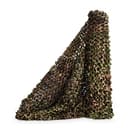
Buy the AUSCAMOTEK one-way see-through netting. For turkeys it is the only pick here that solves the actual problem, which is not being seen — it is seeing a bird commit without moving your head. It publishes a one-way see-through mesh you can look out of while staying hidden, and it is specifically popular for turkey and waterfowl DIY blinds. It is for the hunter who keeps getting picked off at forty yards because he leaned to look.

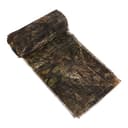
The budget pick is the WINWAY burlap cradle mesh, the cheapest netting in our registry and the one that holds natural brush best. Its rough burlap texture is the point: you weave grass, cedar and leaf litter into it and the netting disappears. It is heavier than open mesh, it holds water and it sags when wet, and for a spring morning against a tree trunk none of that matters.

Here is why turkey netting is a different purchase from deer netting. A turkey will not smell you and will see almost anything you do. Wild turkeys have excellent daytime colour vision and a wide field of view, which is the opposite problem to a whitetail’s nose. That means the netting is working on sight alone, so what matters is whether it breaks your outline, whether it holds brush, and whether you can see out of it — not whether it blocks scent or wind. Prices under each button come from a live layer with an “as of” date.

How this is funded: we earn a commission if you buy through our links, at no extra cost to you. It never changes which product we recommend, and we’ll tell you plainly when we’d skip one. Full disclosure.

Quick picks

Ranked on published specs, concealment fit and value. Select a row to jump to the full write-up. We have not field-tested this gear — here is exactly what we do instead.

#ProductBest forPrice
1
AUSCAMOTEK One-Way See-Through Camo Netting

AUSCAMOTEK One-Way See-Through Camo Netting

The clever pick: one-way netting you can see out through while it hides you from the other side, so you build a blind you can actually watch game from. It brings the see-through-wall trick of premium blinds to a DIY setup.

Best overall: you can see out
$25.99 · View on Amazon

Price as of November 21, 2026. #ad How we’re funded

2
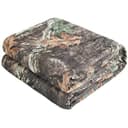
Allen Company Vanish Camo Netting

Allen Company Vanish Camo Netting

The reliable default for camo netting: a big, affordable roll from a trusted hunting brand that you can drape over a pop-up frame, a natural blind, or a gap in your cover. The versatile pick for hiding whatever needs hiding.

Best big roll from a known brand
$36.98 · View on Amazon

Price as of November 21, 2026. #ad How we’re funded

3
LOOGU Camo Netting (Bulk Roll)

LOOGU Camo Netting (Bulk Roll)

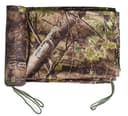
The budget bulk option — cheap netting by the yard for covering a lot of ground, or for the hunter who treats netting as consumable and re-cuts it every season. Buy a big roll and don't worry about being precious with it.

Best bulk value for one season
$15.99 · View on Amazon

Price as of November 21, 2026. #ad How we’re funded

4
WINWAY Camo Burlap Cradle Mesh

WINWAY Camo Burlap Cradle Mesh

Burlap-style netting is the classic material for building a natural ground blind — its rougher, cloth-like texture takes and holds woven-in brush better than smooth mesh. The pick when you're lashing real vegetation into a homemade blind.

Budget pick: cheapest, holds brush best
$15.98 · View on Amazon

Price as of November 21, 2026. #ad How we’re funded

The picks in full

#1Best overall: you can see outSee-through camo netting

AUSCAMOTEK One-Way See-Through Camo Netting

The clever pick: one-way netting you can see out through while it hides you from the other side, so you build a blind you can actually watch game from. It brings the see-through-wall trick of premium blinds to a DIY setup.

The gradient does the work. One-way mesh is one-way because the side you are on is darker than the side the bird is on. Sit in shade, keep your face and hands dark, and it works. Sit with the morning sun behind you and you are the brightest thing inside a screen.

Strengths

  • See out while staying hidden — huge situational-awareness gain
  • Turns a natural blind into a see-through one
  • Popular for turkey and waterfowl DIY blinds

Trade-offs

  • Dimmer to look through in low light than open mesh
  • Costs more than plain netting
TypeOne-way see-through mesh
See-outYes
UseDIY blinds, windows
DimensionsNot published
PatternNot published

The spec that matters. One-way mesh is the same principle as a premium see-through blind: you watch game approach through it without being seen, so you're settled and still before the shot. The trade is a little brightness in the first and last light.

Specs read from the product listing, on July 22, 2026. “Not published” means the maker does not state that figure.

#2Best big roll from a known brandCamo netting

Allen Company Vanish Camo Netting

The reliable default for camo netting: a big, affordable roll from a trusted hunting brand that you can drape over a pop-up frame, a natural blind, or a gap in your cover. The versatile pick for hiding whatever needs hiding.

Strengths

  • Large, affordable roll from a known hunting brand
  • Versatile — blinds, natural cover, gear, boats
  • Lightweight and easy to cut to size

Trade-offs

  • Open mesh is concealment, not weather protection
  • You supply the cordage or clips to hang it
TypeCamo mesh netting
UseBlinds, natural cover, gear
Cut-to-fitYes
DimensionsNot published
PatternNot published

The spec that matters. Netting is the cheapest way to fix a blind's weak spots — drape it over a too-open window, a shiny gap, or the frame of a natural blind. It breaks up shape and shine; it doesn't block wind or scent.

Specs read from the product listing, on July 22, 2026. “Not published” means the maker does not state that figure.

#3Best bulk value for one seasonCamo netting

LOOGU Camo Netting (Bulk Roll)

The budget bulk option — cheap netting by the yard for covering a lot of ground, or for the hunter who treats netting as consumable and re-cuts it every season. Buy a big roll and don't worry about being precious with it.

Strengths

  • Very cheap per square foot in bulk
  • Cut freely without worrying about the cost
  • Fine for one-season natural blinds

Trade-offs

  • Thin — not built to last multiple seasons
  • Basic pattern and finish
TypeBulk camo mesh
UseNatural blinds, cover
ValueHigh (bulk)
DimensionsNot published
PatternNot published

The spec that matters. Treat cheap netting as consumable: cut what you need, brush it into a natural blind, and replace it next year. It's the disposable layer that fixes the shiny gaps real vegetation misses.

Specs read from the product listing, on July 22, 2026. “Not published” means the maker does not state that figure.

#4Budget pick: cheapest, holds brush bestBurlap camo mesh

WINWAY Camo Burlap Cradle Mesh

Burlap-style netting is the classic material for building a natural ground blind — its rougher, cloth-like texture takes and holds woven-in brush better than smooth mesh. The pick when you're lashing real vegetation into a homemade blind.

Strengths

  • Burlap texture holds woven-in natural brush well
  • Muted, non-shiny finish blends into cover
  • Cheap and easy to work with

Trade-offs

  • Heavier and less see-through than open mesh
  • Holds water and can sag when wet
TypeBurlap cradle mesh
UseNatural blind building
TextureRough (holds brush)
DimensionsNot published
PatternNot published

The spec that matters. Burlap's rough weave is the point: real grass and branches tuck into it and stay, so a burlap-backed blind reads as a brush pile instead of a manufactured wall. It's the backbone of a good homemade natural blind.

Specs read from the product listing, on July 22, 2026. “Not published” means the maker does not state that figure.

What netting is for when the quarry is a turkey

Netting does three separable jobs in a turkey setup, and no single roll is best at all three.

  • It makes a blind out of whatever is there.Three sticks, a fallen log, a fence line and six feet of netting is a turkey blind. This is the oldest and still the best use of a roll of mesh, and it is why turkey hunters buy netting rather than blinds — brush blinds and natural concealment.
  • It hides the part of you that moves. Your hands on a call, your shoulders shifting to follow a bird, the gun coming up. A panel of netting at chest height between you and the approach does more than a full ghillie suit you are too hot to wear.
  • It lets you watch without moving. Only the see-through mesh does this. Everything else means looking round the edge of the netting, which is exactly the movement that gets you caught.

And the job netting does notdo: it does not stop a turkey hearing you or seeing a bare face. A netted setup with a shining face behind it is a lost bird — best camo face masks and best hunting gloves are not optional for spring turkeys.

How to rank four rolls of mesh honestly

Not one netting product in this category publishes its dimensions or its pattern name. Every listing we read publishes a material and a use case, and then stops, which we print as “Not published” rather than estimating a roll size from a photograph. So the ranking rests on the three things that are published: the mesh type, the texture, and whether it is built to last a season or several.

  • Mesh type. One-way see-through, open camo mesh, or burlap cradle. These are genuinely different products with different jobs, not three grades of the same thing.
  • Texture. Burlap holds woven brush; open mesh does not hold it as well but is lighter and lets more air and light through. For a brushed-in turkey setup, texture beats pattern every time.
  • Durability against cost. A cheap bulk roll you cut freely for a one-season setup is a different purchase from a heavier roll that wraps the same frame for five years. Both are right; they are right for different hunters.

Setting netting up so a turkey does not read it

Netting is forgiving of everything except two mistakes, and both are about shape rather than colour.

Do not build a box.A rectangle of netting in the woods is a rectangle, and a turkey’s eyes are built for exactly that. Hang it in an irregular line, let the top edge be ragged, and weave brush into the top edge first — that is the line a bird reads against the sky.

Do not get backlit. Put the netting between you and the approach and put something solid behind your back: a trunk, a blowdown, a bank. A turkey coming to a call is looking for a hen and will spend a long time staring at the place the sound came from, so you want depth behind you and brush in front.

Two more things that cost nothing. Cut your brush from off to the side of your shooting lanes, not from the lanes themselves, so you are not opening the ground you need to shoot across. And set the netting the evening before where you can — a bird that roosts near a setup it saw at dusk is a bird that is comfortable with it at dawn. Full method in how to brush in a ground blind and how to hunt turkeys from a ground blind.

Which of these four is yours

If birds keep busting you when you move to look

The AUSCAMOTEK see-through mesh. Being able to watch a gobbler strut in without turning your head is worth more on a turkey hunt than any amount of pattern quality, because the thing you are managing is your own movement. Expect it to be dimmer to look through than open mesh in low light, and expect to shoot over the top of it or through an opening rather than through the mesh itself.

If you are building a semi-permanent setup on a known strut zone

The Allen Vanish roll. It is the largest roll here from an established hunting brand, it cuts to size, and it is the sensible choice for wrapping a frame you will hunt all spring. Bring your own cordage or clips; the netting does not come with a way to hang it.

If you run and gun and leave netting behind

The LOOGU bulk roll. It is cheap enough per square foot that you can cut a panel, leave it on a fence line and not care, which is how mobile turkey hunting actually works. It is thin and it is a one-season product; that is the deal.

If the setup has to vanish into spring green-up

The WINWAY burlap. Nothing else here takes woven grass and cedar the way a burlap cradle does, and in late spring a setup woven with live vegetation is the only kind that stops looking new. Accept the weight and the sag when it rains.

If you would rather buy a blind

A fair answer for turkeys, because a hub blind hides a fidgeting hunter completely and turkeys do not smell it. The cheap end of that category is ranked in best ground blind for turkey hunting and best ground blinds under $100.

What we left out, and why

One heavy-duty netting with no live offer. A fifth roll in our registry, aimed at semi-permanent blinds, had no live offer when this page was published, so it is not ranked here. It stays on best camo netting for blinds on its published specs.

Roll dimensions. No maker in this category publishes them on the listings we read, so we do not print them. Buy more than you think you need; netting is cheap and a panel two feet short is useless.

Any claim about how far a turkey can detect netting.We own no units, we have run no test, and nobody publishes a figure. What is established is the bird’s vision — excellent daytime colour discrimination and a wide field of view — which is why shape, stillness and a dark face matter more than the pattern on the mesh. Here is exactly what we do instead.
Frequently asked questions

What is the best camo netting for turkey hunting?

One-way see-through mesh, and in our registry that is the AUSCAMOTEK netting. Turkeys have excellent daytime colour vision and no sense of smell worth beating, so the problem a turkey hunter is solving is his own movement rather than his scent. Netting you can watch a bird through means you do not lean, turn or lift your head to look — which is the movement that gets hunters picked off at forty yards.

Is camo netting better than a ground blind for turkeys?

It depends on how much you move and how far you walk. Netting is lighter, cheaper, sets up anywhere and lets you build a blind out of a fence line or a blowdown, which suits run-and-gun hunting. A hub blind hides a fidgeting hunter completely and turkeys cannot smell it, which makes it the better choice for sitting a known strut zone with a child or a camera. Many hunters own both and carry the netting.

How much netting do you need for a turkey blind?

More than you expect, and nobody will tell you how much comes on the roll — not one netting listing we read publishes its dimensions. As a practical rule, plan a panel long enough to run in an irregular line across your front and part of both sides at roughly chest height when seated. Netting is the cheapest item in a turkey setup, so buy generously; a panel two feet short is useless.

Can turkeys see through camo netting?

They can see shapes and movement behind open mesh, which is why one-way see-through netting exists and why it works in only one direction: the side you are on has to be darker than the side the bird is on. Sit in shade, keep your hands and face covered, and keep something solid behind your back. A hunter in bright sun behind see-through mesh is visible, and no netting fixes that.

Do you shoot through camo netting?

No. Shoot over it or through an opening you set before daylight. See-through mesh is not shoot-through mesh — they are manufactured for different jobs — and a shotgun pattern or a broadhead meeting netting is a lost bird. Decide your two likeliest shooting lanes when you build the setup and leave them clear, cutting your brush from off to the side rather than from the lanes.

What colour netting is best for spring turkey hunting?

Match the stage of green-up rather than the brand of pattern. Early spring is grey and brown and a burlap or dead-grass tone disappears; late spring is green and a setup woven with live vegetation is the only kind that stops looking new. This is why texture beats pattern in this category: a netting that holds woven brush becomes whatever is growing where you sit.

Sources

  • Turkey Vision (National Wild Turkey Federation) — The NWTF's own answer on how wild turkeys see: they can detect the color orange, their color range exceeds ours and they are likely able to perceive colors in the ultraviolet range, vision estimated at three to four times more acute than a human's, monocular periscopic eyes giving a field of vision of about 270 degrees, extremely rapid assimilation of detail so movement registers faster than it would for a human, and no accurate night vision in either species (accessed October 17, 2026)

Keep reading