What you are actually buying
You are buying the last thirty minutes.
Almost nobody gets hurt by the cold on a deer hunt. What the cold does is end sits early, and it ends them in a predictable sequence: feet go first, then hands, then you start shifting to generate heat, then the shifting becomes noise and motion in a blind window, and then you tell yourself the deer are not moving anyway and you walk out. The last hour of legal light is when whitetail movement peaks in most seasons. Cold-weather gear is not a comfort purchase. It is a time-on-stand purchase.
That is why the ranking above looks strange next to a general outdoor-gear list. A heater is first because air temperature around you beats insulation on you. Warmers are on the list at all because the extremity that fails first is also the cheapest to fix. And a premium parka is not on the list at all, because for a seated hunter in a blind it is the least efficient place to put a large clothing budget.
The order heat is worth buying in
1. Heat the air, if you have walls
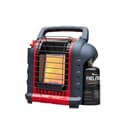
An enclosed hub or box blind is a small room, and a 9,000 BTU radiant heater turns it into a warm one. This is the single biggest comfort change available to a blind hunter and it costs less than a good jacket. If your blind is big, cold or shared, the 18,000 BTU Big Buddy PRO in best blind heaters is the step up; the three Buddy sizes are compared directly in Portable Buddy vs Little Buddy vs Big Buddy.
The non-negotiable part is ventilation. CPSC testing of portable propane radiant heaters documented carbon monoxide accumulation in enclosed spaces, which is exactly what a zipped blind is. Two cracked windows on opposite walls, nothing flammable within the clearance the manual states, and the heater never left running while you doze.
2. Heat your core, if you do not
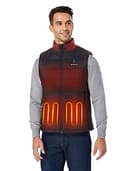
In a tree stand or a saddle there is no flame option, and a heated vest is the closest substitute: battery heat against your core, worn under your camo so it does not cost you concealment. Note the published gap — ORORO does not publish a run time for this vest, which is the one number you would want, so carry a spare battery for an all-day sit and expect less on the high setting. The whole heated-layer category, including the camo outer versions, is in best heated vests.
3. Fix the feet, because they fail first
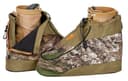
A seated hunter’s feet are motionless, in contact with cold metal or cold ground, and below the level of every bit of warm air in the blind. No boot is rated for sitting still at 20 degrees for five hours; boots are rated for walking. Over- boot insulators are the honest fix: you walk in wearing boots, then slide the insulators on once you are seated. Our pick publishes no temperature rating — none of them do — and the alternatives, heated socks and the boot-blanket style covers, are compared in boot blanket vs heated socks. A floor mat matters here too: a bare blind floor on frozen ground pulls heat out of your soles, which is half of what blind flooring is for.
4. Build the layer system from the inside out
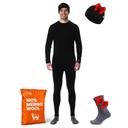
Merino next to skin is the layer that makes the rest work: it holds warmth when damp, which matters because the real enemy of a cold-weather sit is the sweat you generated on the walk in. The set above covers top, bottom and head in one buy — and legs lose heat on a stand as fast as a core does, which is the half most hunters skip. The sequencing argument, including why you should carry your outer layer and put it on at the blind, is in how to layer for cold weather hunting.
5. The outer shell, last
A 3-in-1 system is the efficient outer purchase for a whole season rather than one cold week: the liner alone for early firearm season, the shell alone in the rain, both together in December. What it does not publish is an insulation weight, so you cannot compare it on paper to a specific parka. For the quiet-fabric version of this same decision — which matters if you draw a bow — see best quiet hunting clothes.
6. Hands, with the cheapest thing on the page
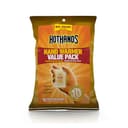
Warm hands are still hands. A box of air-activated warmers in the blind bag covers gloves, a muff, boots and pockets for a whole season at a price that makes the decision irrelevant. The one caveat is published on the package: they take a few minutes to reach full heat, so open them when you leave the truck, not when your fingers already hurt. The rechargeable and refillable alternatives are in best hand warmers.
The free half of staying warm
- Walk in slow and underdressed. Sweat is the mechanism that freezes hunters. Carry the outer layer and put it on when you sit down.
- Get off the ground and out of the wind.A seat cushion between you and a cold chair or a cold stand is a real insulation layer, and the wind is what makes the air temperature a lie — a zipped blind with two small window gaps is dramatically warmer than an open one.
- Eat and drink something warm. A thermos is cheaper than any item on this page and does more for a four-hour sit than an upgrade from one jacket to another.
- Plan the sit around the cold, not against it.The late-season timing argument — when a brutally cold day is actually the day to be out — is in how to hunt late season deer.
What we did not include, and why
Heated jackets and heated pants. They exist and they work; they also cost multiples of a heated vest while heating areas your base layer already handles. A vest under a camo shell is the better value, and it keeps the camo on the outside.
Catalytic and kerosene heaters. Different fuel, different safety profile, and no model in our registry resolves to a currently purchasable listing. We do not rank what we cannot verify is buyable.
Anything with a temperature rating we could not trace.If a listing claims a comfort rating with no published test behind it, the number is marketing. Where a figure is not published, the spec tables above say “Not published” — which, across an entire cold-weather category, is itself the finding.