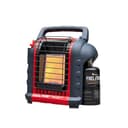
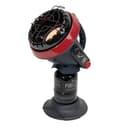
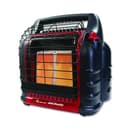
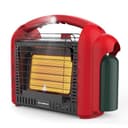
The comparison, spec by spec
Every figure below is what the manufacturer or the listing publishes. Nothing here is a measurement we took — we own none of these units, and how we review explains exactly what we do instead.
- Output. Little Buddy is a fixed 3,800 BTU. Portable Buddy adjusts between 4,000 and 9,000 BTU. Big Buddy PRO steps through 4,000 / 9,000 / 18,000 BTU and is rated to 450 square feet. Adjustability matters more than peak output in a blind: a heater you can turn down is a heater you can run through a whole sit without roasting yourself out of the window.
- Safety hardware.All three publish an Oxygen Depletion Sensor and tip-over shutoff, and all three carry an indoor-safe rating. Those three specs are the floor, not a feature list — a heater missing any of them has no place in an enclosed blind at any price.
- Fuel. Little Buddy runs a single 1 lb cylinder that seats under the unit. Portable Buddy runs 1 lb cylinders and takes a hose adapter for a bulk tank. Big Buddy PRO runs either, and Mr. Heater publishes up to 216 hours on two 20 lb tanks on low with the optional hose. The 1 lb cylinders empty faster than new owners expect; if you hunt more than a handful of cold sits a season, the hose-and-tank route is both cheaper and less fiddly in the dark.
- Weight and bulk. Little Buddy is the pack-it-anywhere unit. Big Buddy PRO is 14 lb, which is a genuine haul on a walk-in and a non-starter if you carry your blind, chair and pack in one trip. Portable Buddy sits in the middle, which is a large part of why it is the default.
- Heat distribution.Only the Big Buddy PRO adds a built-in fan, so the heat actually circulates instead of radiating in one direction. In a large box blind that is the difference between a warm corner and a warm room. In a pop-up it is irrelevant — the space is too small to need help moving air.
Which one your blind actually needs
Solo hunter, standard hub blind: Little Buddy
A one-man hub is a small volume of air, and 3,800 BTU takes the edge off it without dominating the floor space you need for your feet and your pack. The trade is that the output is fixed — you cannot dial it down — and in a big blind on a cold morning it will run flat out and still feel weak. It is also the one most likely to be enough on its own in milder weather, where the real fix is usually your layers rather than more BTU. Our cold-weather layering guide and the synthetic vs down breakdown both save more heat than a bigger heater buys.
Most hunters, most blinds: Portable Buddy
The adjustable 4,000-9,000 BTU range is the single most useful spec in this comparison. A hub blind warms up fast at 9,000 and then holds temperature at 4,000, which is how you get through a six-hour sit on one cylinder instead of two. It is light enough to carry with everything else, and the accessory ecosystem around it — hoses, filters, regulators — is the deepest in the category. If you are buying one blind heater and you do not already know you need something else, this is it.
Big box blind or two hunters in deep cold: Big Buddy PRO
An 18,000 BTU setting and a fan are what a hard-sided box blind or a 4-person hub needs in single digits, and the dual-tank capability means you are not swapping cylinders at first light. The costs are real: 14 lb, more bulk, and a greater ventilation obligation, because more BTU in the same sealed room means more combustion byproduct. Size the heater to the blind, not to the coldest day you can imagine.
If you would rather not buy Mr. Heater
The Camplux 12,000 BTU unit is the most credible alternative we found in the registry, for one reason: it publishes both of the safety specs that matter — low-oxygen shutoff and tip-over protection — alongside an indoor/outdoor rating, which many budget heaters quietly do not. It sits between the Portable and Big Buddy on output and takes either fuel format. Buy it if the price is right on the day; the checklist it has to pass is identical.
The warning that applies to all four
Burning propane consumes oxygen and produces carbon monoxide. The U.S. Consumer Product Safety Commission has documented CO deaths from portable propane radiant heaters used in tents, campers and vehicles — small enclosed spaces, which is exactly what a ground blind is. An Oxygen Depletion Sensor is a backstop that shuts the gas off when oxygen falls; it is not a licence to seal yourself in. Crack windows on two sides, keep the heater away from the blind wall and your gear, and never run one while you doze off. Our full ground blind heater safety guide covers the clearances and the ventilation routine in detail, and it is worth ten minutes before your first cold sit.
One more thing worth saying plainly: a heater is the least efficient way to solve cold hands and cold feet, because it heats air you then vent. If those are your actual problem, start with warm hands and warm feet, which cost less and do not need ventilation. The heater is for the core of the sit in genuine cold — the kind of morning covered in hunting in the snow— not a substitute for layers.