Why hunters look for an alternative
Four reasons account for almost all of it, and each one points at a different pick above.
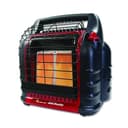
- Not enough heat. 9,000 BTU is right for a one- or two-person hub blind. In a 6x6 tower blind in December, or a box blind with a cold floor, it struggles. The answer is output: the Big Buddy PRO publishes 4,000 / 9,000 / 18,000 BTU settings, and the Camplux publishes 12,000.
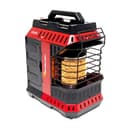
- The heat only goes one way.A single radiant panel heats what is in front of it. The Buddy FLEX publishes an omni-directional mesh burner with a 180-degree radiant spread at 8,000–11,000 BTU for roughly 275 sq ft — which in a small blind means your hands and your feet rather than just your shins.
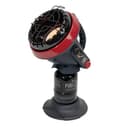
- Too much heater for the blind. A solo pop-up warms up fast, and hunters routinely end up running the Buddy on low with a window open. The Little Buddy publishes 3,800 BTU with the same indoor rating, ODS and tip-over cutoff, at a lower price and a smaller footprint on a crowded blind floor.
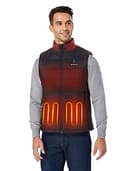
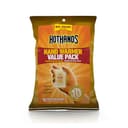
- No flame allowed, or no walls. This is the one no propane heater can solve. In a stand or saddle you need body heat: a heated vest under your camo, over-boot insulators, warmers in the gloves. The full cold-weather stack is in best cold weather hunting gear.
The safety features to insist on, whatever you buy
This is the part of the comparison that is not about comfort. CPSC testing of portable propane radiant heaters measured carbon monoxide build-up in enclosed spaces, and a zipped fabric blind is an enclosed space with a person asleep in a chair at 6 a.m.
So treat these three as requirements rather than features, and note that every propane pick above publishes all three:
- An indoor-safe rating.Not “can be used outdoors” — an explicit rating for indoor use. A patio or construction heater is not a substitute.
- An oxygen depletion sensor (ODS). It shuts the heater off when oxygen in the space drops. This is the single feature that matters most in a sealed blind.
- A tip-over shutoff. A blind floor is uneven, there is a chair leg and a pack in the way, and you will knock it at some point.
None of that makes ventilation optional. Two windows cracked on opposite walls so there is actual air exchange, clearance from fabric per the manual, never running while you doze. The complete routine is in ground blind heater safety, and it applies identically to every brand.
How to choose between the propane alternatives
Match BTU to the enclosure, not to the weather:
- Solo pop-up hub blind: 3,800 BTU is enough. The Little Buddy.
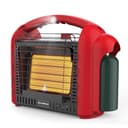
- Two-person hub, or one person in hard cold:9,000–12,000. The Portable Buddy, or the Camplux for more margin.
- Tower or box blind, or sharing with a kid: 18,000 with a bulk tank hose. The Big Buddy PRO.
- Small blind where you want even warmth rather than maximum output: the 180-degree Buddy FLEX.
Then budget for fuel honestly. One-pound cylinders are convenient and expensive per hour; a 20 lb tank with a hose is cheaper per sit and a nuisance to carry. If you hunt a fixed box blind you drive to, the tank is the obvious call. The three Buddy sizes are compared head to head in Portable Buddy vs Little Buddy vs Big Buddy, and the whole heater category, including the propane-versus-battery question, is in best blind heaters.
The alternatives that are not heaters at all
Worth saying plainly, because a heater is often the wrong purchase:
A floor mat. A bare blind floor on frozen ground pulls heat out through your boot soles all sit. An insulating floor mat costs a fraction of a heater and fixes the coldest surface in the blind.
Zipping the blind and closing the windows you are not using. Free. Most blind hunters run a heater against a crosswind they created themselves.
Over-boot insulators and a seat cushion. Feet fail first on a long sit, and the chair under you is a cold surface too. Both are covered in boot blanket vs heated socks.
A thermos. Cheaper than everything on this page.
What we did not include, and why
Battery and electric blind heaters. They exist, and the physics is unkind: a battery pack that fits in a blind bag cannot deliver anything close to 9,000 BTU for four hours. We do not rank a product category we would have to oversell to justify.
Catalytic and kerosene heaters. Different fuel and a different safety profile, and no model in our registry resolves to a currently purchasable listing with a live offer. Absence here is a verification result, not a verdict.
Any claim about which brand is safer.Every propane pick above publishes the same three safeguards. We are not going to rank certified safety features against each other on anything other than what the makers publish, and we have no test of our own. Where a figure is not published — a run time, a heated area — the spec tables say “Not published.”