Blind & Brush

Best Saddle Hunting Platforms Under $100

A hundred dollars buys a platform that publishes a rated capacity and a levelling range, or one that publishes neither. Three platforms that were under the cap at the last price refresh, ranked on what their makers will actually commit to in writing.

By Stephen V.Last updated How we pick

Buy the UIIHUNT platform. Under this cap it is the only one that publishes both numbers that decide whether a platform is worth standing on — a 500 lb rated capacity against a 3.9 lb carry weight — plus a 12 x 12 in. non-slip standing area and a built-in levelling system with 35 degrees of adjustment. It is for the saddle hunter who wants a platform that survives being looked up rather than one that survives being advertised.

The budget pick is the Tomaki adjustable aluminium platform, the cheapest platform in our registry with a live offer. It publishes an adjustable angle and an aluminium build, and it publishes neither a weight nor a rated capacity — so treat the rating printed on the unit itself as the only rating, inspect it before every climb, and buy it as a way to find out whether you like platform hunting rather than as a lifetime piece.

Why cap at a hundred dollars at all? Because the platform is the piece most first-time saddle hunters underbudget, and it is the piece that decides whether the setup is comfortable. You stand on it for hours, you lean off it to shoot, and in a leaning tree it is the only part of the system that can put your feet level. All three picks below were under $100 at the last price refresh and the cap is enforced from that live figure rather than from a tier label, so check the number under each button and its “as of” stamp before you order.

How this is funded: we earn a commission if you buy through our links, at no extra cost to you. It never changes which product we recommend, and we’ll tell you plainly when we’d skip one. Full disclosure.

Quick picks

Ranked on published specs, concealment fit and value. Select a row to jump to the full write-up. We have not field-tested this gear — here is exactly what we do instead.

#ProductBest forPrice
1
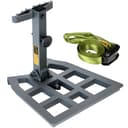
UIIHUNT Saddle Hunting Platform

UIIHUNT Saddle Hunting Platform

A value platform that publishes the two numbers that matter and does well on both: 3.9 lb on your back, 500 lb rated capacity under your boots. Add 35 degrees of built-in levelling and it is the pick for a saddle hunter who wants solid footing without paying flagship money.

Best under $100: publishes both numbers
$84.99 · View on Amazon

$99.9915% off

Price as of November 21, 2026. #ad How we’re funded

2
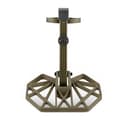
XOP Edge Aluminum Tree Saddle Platform

XOP Edge Aluminum Tree Saddle Platform

A light aluminum platform to stand on while you hunt from a saddle — the piece a bare saddle doesn't include and beginners forget. Solid footing turns a saddle from a hang-there ordeal into an all-day setup.

Best from a saddle brand
$99.99 · View on Amazon

Price as of November 21, 2026. #ad How we’re funded

3
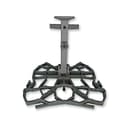
Tomaki Adjustable Aluminum Platform

Tomaki Adjustable Aluminum Platform

The budget entry into a real platform — light aluminum with an adjustable angle at a rock-bottom price. It's the cheap way to add solid footing to a saddle setup and find out whether you like standing versus a ring of steps.

Budget pick: cheapest live platform
$56.99 · View on Amazon

$59.995% off

Price as of November 21, 2026. #ad How we’re funded

The picks in full

#1Best under $100: publishes both numbersSaddle platform

UIIHUNT Saddle Hunting Platform

A value platform that publishes the two numbers that matter and does well on both: 3.9 lb on your back, 500 lb rated capacity under your boots. Add 35 degrees of built-in levelling and it is the pick for a saddle hunter who wants solid footing without paying flagship money.

Strengths

  • 3.9 lb carried against a 500 lb rated capacity
  • 12 x 12 in standing area, non-slip coated with a ridged angled perimeter
  • Built-in levelling system with 35 degrees of adjustment for a leaning tree

Trade-offs

  • Die-cast aluminium — heavier than the machined ultralight platforms
  • 12 x 12 in is a standard footprint; big-deck hunters will want more room
TypeStand-on saddle platform
MaterialDie-cast aluminium
Weight3.9 lb
Rated capacity500 lb
Standing area12 x 12 in, non-slip coated
LevellingBuilt-in, 35° of adjustment

The spec that matters. You don't need the priciest platform to hunt comfortably — a stable, correctly-sized stand-on at a mid price does the job. Spend the difference on a good tether and lineman's rope, where safety actually lives.

Specs read from the product listing, on September 23, 2026. “Not published” means the maker does not state that figure.

#2Best from a saddle brandSaddle platform

XOP Edge Aluminum Tree Saddle Platform

A light aluminum platform to stand on while you hunt from a saddle — the piece a bare saddle doesn't include and beginners forget. Solid footing turns a saddle from a hang-there ordeal into an all-day setup.

Strengths

  • Light aluminum platform for a stable stance
  • The missing piece of a saddle system
  • Packable for mobile hunts

Trade-offs

  • Another separate purchase on top of the saddle
  • Takes practice to set at the right height
TypeStanding platform (saddle)
MaterialAluminum
PackableYes
Rated capacityNot published
WeightNot published

The spec that matters. A platform is what makes all-day saddle hunting bearable — without solid footing you're hanging in the harness the whole sit. It's not optional gear, it's part of the system.

Specs read from the product listing, on July 22, 2026. “Not published” means the maker does not state that figure.

#3Budget pick: cheapest live platformSaddle platform

Tomaki Adjustable Aluminum Platform

The budget entry into a real platform — light aluminum with an adjustable angle at a rock-bottom price. It's the cheap way to add solid footing to a saddle setup and find out whether you like standing versus a ring of steps.

No published rating. Tomaki publishes neither a weight nor a rated capacity, which we print as “Not published” rather than filling in. On a part that holds you off the ground that absence is the spec. Read whatever is stamped on the platform itself, respect it, and inspect the welds and the strap every climb.

Strengths

  • Lowest price for an aluminum platform
  • Adjustable angle for comfort
  • A cheap way to try platform-style saddle hunting

Trade-offs

  • Off-brand — inspect and respect the rating
  • Smaller and less refined than premium platforms
TypeAdjustable stand-on platform
MaterialAluminum
AngleAdjustable
WeightNot published
Rated capacityNot published

The spec that matters. A budget platform is a fine way to learn your saddle style before spending up — just inspect an off-brand stand-on carefully and never exceed the stated weight rating, since it's holding you off the ground.

Specs read from the product listing, on July 22, 2026. “Not published” means the maker does not state that figure.

The four specs that decide a platform, and who publishes them

A saddle platform is a simple object with four numbers behind it. Under a $100 cap, the useful thing is not which platform is best in the abstract — it is which maker will write the number down.

  • Rated capacity. You plus your clothing plus your pack plus your weapon, with a margin. Of the three picks here, only UIIHUNT publishes a figure (500 lb). XOP and Tomaki publish none, and we print that rather than estimate it.
  • Carried weight.A platform lives on the outside of your pack for every walk in and out. UIIHUNT publishes 3.9 lb; the other two publish nothing. For reference, the premium platform above this cap publishes 4 lb, which tells you that under $100 you are not paying a weight penalty — you are paying an information penalty.
  • Standing area. The difference between shifting your feet and setting them. UIIHUNT publishes 12 x 12 in. with a non-slip coating and a ridged angled perimeter. Twelve inches square is the category standard; a hunter with big boots or a habit of turning to shoot will feel the edge of it.
  • Levelling. The spec nobody shops for and everybody needs. Most trees lean. A platform with no levelling puts your feet on a slope for the whole sit, which is where ankle and knee fatigue comes from. UIIHUNT publishes 35 degrees of built-in adjustment; XOP publishes a fully levelling design; Tomaki publishes an adjustable angle.

Our full method for choosing between them, including how to set platform height relative to your tether, is in how to choose a saddle platform.

What a hundred dollars does and does not buy

It buys the function. All three picks are cast or extruded aluminium, all three attach with a strap to a tree, and all three let you stand and turn. Compare them against the premium platform we rank on best tree saddle platforms and the published gap is narrow: the premium pick publishes 4 lb, a 300 lb rating and a 13.5 x 13.25 in. surface with raised micro-cleat traction. Under this cap UIIHUNT publishes a lighter weight, a higher rating and a slightly smaller surface.

What it does not buy is traction detail and finish. Micro-cleat surfaces, sloped front edges built for leaning, and aggressive edge profiles for 360-degree shooting are where the money above this cap goes. On an icy December morning that matters, and it is the honest reason to spend up. The cold-weather case is in saddle hunting in cold weather.

It also does not buy you out of the rest of the system. A platform is one of five pieces, and the one just above it in the order of importance is the thing holding you to the tree, not the thing under your feet. Rated ropes first, always — best saddle hunting ropes and saddle hunting safety tips.

Which of these three is yours

If this is your first platform

The UIIHUNT. The levelling range is the feature a beginner cannot anticipate needing and will use on most trees, and the published rating is the only one on the page. Pair it with a bare budget saddle and rated ropes and you have a working setup for less than a mid-price complete kit — the arithmetic for both routes is in how much does a saddle hunting setup cost.

If your saddle is already an XOP

The XOP Edge. It is the platform that ships inside XOP’s own complete system, so it is a known quantity next to the rest of your kit, it is fully levelling, and it sits a dollar under this page’s cap at the last refresh. That proximity to the cap is worth watching: if the price moves, it moves off this page and onto best tree saddle for the money, where the system it belongs to is the top pick.

If you are testing whether you like standing in a tree

The Tomaki, with your eyes open about the missing specs. A cheap platform used carefully for one season tells you more about whether saddle hunting suits you than any amount of reading — and if the answer is yes, you will know exactly what you want from the next one. Start with saddle hunting for beginners.

If you want a bigger deck or a published traction surface

Then this cap is the wrong cap and you should read best tree saddle platforms instead. A hunter who shoots in a full circle from the platform, or who hunts iced-up timber, is buying the surface rather than the frame.

What we left out, and why

Platforms that were over the cap at the last refresh. One aluminium platform in our registry sat a few dollars above $100 and the premium cast platform sits well above it. Neither is on this page, because a page with a number in its title has to enforce the number from the live price rather than from a judgement about what feels affordable. Both are ranked in best tree saddle platforms.

The ring-of-steps approach.The genuinely cheapest way to stand in a tree is not a platform at all — it is screw-in steps or a stick section used as a foot rest, which costs a fraction of anything here. It is a legitimate answer and it is argued out in ring of steps vs one stick and best tree steps.

Any strength claim we cannot source.We own no units, we have loaded nothing, and we publish no rating a maker has not published. Where the spec table says “Not published,” nobody has published it — here is exactly what we do instead.
Frequently asked questions

What is the best saddle hunting platform under $100?

The UIIHUNT platform, because it is the only pick under the cap whose maker publishes both numbers that matter: a 500 lb rated capacity and a 3.9 lb carry weight. It also publishes a 12 x 12 in. non-slip standing area and a built-in levelling system with 35 degrees of adjustment, which is the spec that keeps your feet flat in a leaning tree. The other platforms under this cap publish neither a weight nor a rating.

Is a budget saddle platform safe?

It depends entirely on whether the maker publishes a rated capacity and whether you stay inside it. One platform under this cap publishes 500 lb; the other two publish nothing, and we print 'Not published' rather than filling the gap. With an unrated platform, treat whatever is stamped on the unit as the limit, inspect the welds and the strap before every climb, and remember that your actual life-safety gear is the tether and lineman's rope, not the thing under your feet.

How much should a saddle hunting platform cost?

The working range in our registry runs from roughly the price of a pair of boots at the bottom to several times that for a premium cast platform, and the published specs do not scale cleanly with the money. The cheapest platform with a published rating under $100 publishes a higher capacity and a lower weight than the premium pick above the cap. What the extra money buys is traction detail, surface area and finish — not strength on paper.

What size should a saddle platform be?

Twelve inches square is the category standard and it is enough to stand and turn on. A 13 to 13.5 in. deck is what the premium platforms publish, and the difference is noticeable if you have big boots, shoot in a full circle, or like to set your feet rather than shift them. Published standing area is worth more attention than published weight for most hunters, because you feel it for every hour of the sit.

Do I need a levelling platform?

If you hunt real trees, yes. Most trees lean at least a little, and a platform that cannot level puts your feet on a slope for the entire sit — which is where ankle and knee fatigue comes from, and why hunters quit saddles. Two of the three platforms under this cap publish a levelling mechanism, one of them with 35 degrees of range. It is the single most useful feature available at this price.

Can I use a saddle platform without a saddle?

No. A platform is a standing surface, not a fall-arrest device, and it is designed to be used with a saddle, a bridge and a tether that take your weight. Standing on a platform with nothing holding you to the tree is the single most dangerous thing a saddle hunter can do. Our safety rules are in 'saddle hunting safety tips', and the ropes you actually hang from are ranked in 'best saddle hunting ropes'.

Sources

  • Tree Stand Safety (Wisconsin Department of Natural Resources) — State wildlife agency guidance to always wear a full-body harness/fall-arrest system; ~1 in 4 bowhunters have fallen or nearly fallen (accessed July 22, 2026)
  • Tree Stand Safety Awareness Foundation — Safety nonprofit citing a 10-state study: 99% of fall victims were not attached to the tree and 86% wore no harness (accessed July 22, 2026)
  • Standards (Treestand Manufacturers Association) — TMA's own standards index, read on November 8, 2026. It lists the ASTM standards its member products are tested against, including F3249 “Standard Specification for Treestands, Climbing Sticks and Tripod or Tower Stands” (which absorbed the withdrawn TMS 01/02/03/05, the last of which covered “Standard Practice for Testing Treestand Ladder, Tripod Stands and Climbing Stick Load Capacity”), F3545 “Standard Test Method for Static Loading of Treestands, Climbing Sticks and Tripod or Tower Stands,” F2337 “Standard Test Method for Treestand Fall Arrest System,” F2123 “Standard Practice for Treestand Instructions” and F2128 “Standard Test Method for Treestand Repetitive Loading Capability.” The page states that association bylaws require manufacturing-class members to submit products to a third-party testing firm, and that “Beginning January 1, 2016 TMA Members' products are required to be compliant with current ASTM standards.” What it does NOT publish is a numeric load requirement, so a stand's own rated capacity is the only capacity figure a buyer gets (accessed November 8, 2026)

Keep reading