Blind & Brush

Best Hunting Binoculars Under $200

Under $200 is where binoculars stop being a compromise and start being a choice. Five that were under the line at the last price refresh, ranked on the two specs that decide a blind window: eye relief and exit pupil.

By Stephen V.Last updated How we pick

Buy the Nikon PROSTAFF P3 8x42. It publishes 20.2 mm of eye relief and a 5.3 mm exit pupil — the two numbers that decide whether a binocular works in low light and works with glasses on — and almost nothing else under $200 publishes both. For a hunter glassing out of a blind window at first and last light, that pair of figures matters more than magnification, coatings or brand.

The budget pick is the Vortex Triumph HD 10x42 at roughly half this page’s cap, and it is not a toy. Vortex publishes 334 feet of field of view at 1,000 yards and 17 mm of eye relief for it — more field of view and more eye relief than the Crossfire HD above it in this list. It is the right answer for a second pair that lives in the blind bag, and an honest first pair for a hunter who is not sure they will use binoculars much.

One structural note on this category. Under $200, exit pupil is the spec most makers decline to publish — Nikon prints it, Vortex does not print it on the model pages we read, and that is the single most useful low-light number there is. Where it is missing, the spec tables below say “Not published.” All five picks were under $200 at the last price refresh and one sits a penny under the cap, so the live number under each button, with its “as of” date, is the one that counts.

How this is funded: we earn a commission if you buy through our links, at no extra cost to you. It never changes which product we recommend, and we’ll tell you plainly when we’d skip one. Full disclosure.

Quick picks

Ranked on published specs, concealment fit and value. Select a row to jump to the full write-up. We have not field-tested this gear — here is exactly what we do instead.

#ProductBest forPrice
1
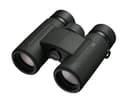
Nikon PROSTAFF P3 8x42 Binocular

Nikon PROSTAFF P3 8x42 Binocular

The binocular most blind hunters should buy, because the three numbers that matter from a seat are all on its side: 377 feet of field at 1,000 yards, 20.2 mm of eye relief and a 5.3 mm exit pupil. Wide field means you find the deer that just stepped out of the brush without sweeping; long eye relief means it works over glasses and with a hood up; a big exit pupil is what you are paying for in the last ten minutes of legal light.

Best overall under $200
$96.95 · View on Amazon

$159.9539% off

Price as of November 21, 2026. #ad How we’re funded

2
Vortex Crossfire HD 10x42 Binocular

Vortex Crossfire HD 10x42 Binocular

The value answer in 10x, and the pick for a hunter who wants a real warranty and a real harness without the Diamondback's premium. You give up a little weight and some of the coating package; you keep the 10x reach, the lifetime warranty and the GlassPak harness.

Best 10x for open country
$149.00 · View on Amazon

Price as of November 21, 2026. #ad How we’re funded

3
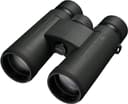
Nikon PROSTAFF P3 8x30 Binocular

Nikon PROSTAFF P3 8x30 Binocular

The compact that earns its place in a blind bag: 16.8 oz, 456 ft of field at 1,000 yards and an 8.2 ft close focus. The trade is published and real — a 3.8 mm exit pupil, the smallest here, and the one number that will show at last light.

Best for packing light
$96.95 · View on Amazon

$149.9535% off

Price as of November 21, 2026. #ad How we’re funded

4
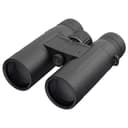
Leupold BX-2 Timberline HD 10x42 Binocular

Leupold BX-2 Timberline HD 10x42 Binocular

The one to buy if the binocular has to live inside a blind window frame: 5.6 inches long and 22 oz, with the widest 10x field here at 342 ft and a 1/4-20 tripod port built in. Short bodies are easier to brace on a sill and easier to raise one-handed without clouting the frame.

Best for tight windows and tripods
$149.99 · View on Amazon

$199.9925% off

Price as of November 21, 2026. #ad How we’re funded

5
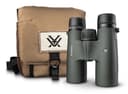
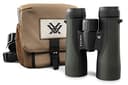
Vortex Triumph HD 10x42 Binocular

Vortex Triumph HD 10x42 Binocular

The cheapest binocular on this page we would actually hunt with, and the honest answer for a hunter who needs glass this weekend. It is waterproof, fogproof, carries the same unlimited lifetime warranty as the dearer Vortex models, and publishes 17 mm of eye relief — more than either of them.

Budget pick: half the cap, real specs
$99.00 · View on Amazon

Price as of November 21, 2026. #ad How we’re funded

The picks in full

#1Best overall under $200Full-size 8x42 roof prism

Nikon PROSTAFF P3 8x42 Binocular

The binocular most blind hunters should buy, because the three numbers that matter from a seat are all on its side: 377 feet of field at 1,000 yards, 20.2 mm of eye relief and a 5.3 mm exit pupil. Wide field means you find the deer that just stepped out of the brush without sweeping; long eye relief means it works over glasses and with a hood up; a big exit pupil is what you are paying for in the last ten minutes of legal light.

Strengths

  • 20.2 mm eye relief — the longest here, and the reason it works with glasses or a head net
  • 377 ft at 1,000 yds is the widest full-size field on this page: easier to find a moving deer
  • 5.3 mm exit pupil, the brightest-on-paper of the 42 mm picks for first and last light

Trade-offs

  • 8x, so it reads antler detail at distance less well than a 10x on an open field edge
  • 9.8 ft close focus is the longest here — no use on something in the brush right outside the window
  • 20.3 oz with no chest harness in the box, unlike the Vortex picks
Magnification / objective8x / 42 mm
Field of view at 1,000 yds377 ft (7.2 degrees)
Eye relief20.2 mm
Exit pupil5.3 mm
Close focus9.8 ft
Weight20.3 oz
Waterproof / fogproofWaterproof to 1 m for 10 min, nitrogen filled

The spec that matters. Nikon publishes the whole optical table for this model — field, eye relief, exit pupil, close focus — which is more than most makers at this price do. Exit pupil is the spec to read if you hunt the last light: 42 mm divided by 8x gives 5.3 mm, against 4.2 mm for a 10x42, and that difference is visible at dusk.

Specs read from the product listing, on October 17, 2026. “Not published” means the maker does not state that figure.

#2Best 10x for open countryFull-size 10x42 roof prism

Vortex Crossfire HD 10x42 Binocular

The value answer in 10x, and the pick for a hunter who wants a real warranty and a real harness without the Diamondback's premium. You give up a little weight and some of the coating package; you keep the 10x reach, the lifetime warranty and the GlassPak harness.

Strengths

  • Same unlimited lifetime warranty and GlassPak chest harness as the dearer Vortex picks
  • 325 ft of field and 15 mm eye relief — ordinary numbers, but honest ones for the money
  • Nitrogen purged and O-ring sealed, so a wet morning in a blind is a non-event

Trade-offs

  • 23.0 oz: the heaviest binocular on this page
  • 6.0 ft close focus and 15 mm eye relief are both beaten by picks costing the same or less
  • No dielectric prism coating, which is where the Diamondback's dusk advantage comes from
Magnification / objective10x / 42 mm
Field of view at 1,000 yds325 ft (6.2 degrees)
Eye relief15.0 mm
Close focus6.0 ft
Weight23.0 oz
Height / width6.0 in / 5.2 in
Waterproof / fogproofNitrogen purged, O-ring sealed

The spec that matters. The Crossfire HD and Diamondback HD are 5 ft apart on field of view and identical on eye relief. The real differences are weight, close focus and the prism coating — worth knowing before you pay for the upgrade.

Specs read from the product listing, on October 17, 2026. “Not published” means the maker does not state that figure.

#3Best for packing lightCompact 8x30 roof prism

Nikon PROSTAFF P3 8x30 Binocular

The compact that earns its place in a blind bag: 16.8 oz, 456 ft of field at 1,000 yards and an 8.2 ft close focus. The trade is published and real — a 3.8 mm exit pupil, the smallest here, and the one number that will show at last light.

Strengths

  • 456 ft at 1,000 yds — by far the widest field on this page, so you find deer fast
  • 16.8 oz, light enough that it does not fight a harness under a jacket
  • 8.2 ft close focus, short enough to use on something just outside the blind

Trade-offs

  • 3.8 mm exit pupil: dimmer than the 42 mm picks in the first and last twenty minutes
  • 15.4 mm eye relief, short for a glasses wearer
  • A 30 mm objective is the wrong buy if your hunting is mostly dawn and dusk
Magnification / objective8x / 30 mm
Field of view at 1,000 yds456 ft (8.7 degrees)
Eye relief15.4 mm
Exit pupil3.8 mm
Close focus8.2 ft
Weight16.8 oz
Waterproof / fogproofWaterproof to 1 m for 10 min, nitrogen filled

The spec that matters. Compact binoculars are sold on weight and bought on regret at dusk. Nikon publishes the exit pupil on both models, so the comparison is a fact rather than a matter of opinion: 3.8 mm here against 5.3 mm for the 8x42.

Specs read from the product listing, on October 17, 2026. “Not published” means the maker does not state that figure.

#4Best for tight windows and tripodsCompact-body 10x42 roof prism

Leupold BX-2 Timberline HD 10x42 Binocular

The one to buy if the binocular has to live inside a blind window frame: 5.6 inches long and 22 oz, with the widest 10x field here at 342 ft and a 1/4-20 tripod port built in. Short bodies are easier to brace on a sill and easier to raise one-handed without clouting the frame.

Right at the line. At the last refresh this one sat a penny under $200, so confirm the live price under the button before treating it as an under-$200 buy. What you get for the top of the band is a 5.6-inch body and a 1/4-20 tripod port — the two things that matter in a cramped blind.

Strengths

  • 5.6 in long — the most compact full-size body here, which is the spec that matters in a window
  • 342 ft at 1,000 yds, the widest field of any 10x on this page
  • Built-in 1/4-20 tripod port and a large focus wheel that works in gloves

Trade-offs

  • 15 mm eye relief, so glasses wearers should try before committing
  • 7.7 ft close focus — longer than both Vortex picks
  • Leupold does not publish an exit-pupil figure on this product page
Magnification / objective10x / 42 mm
Field of view at 1,000 yds342 ft
Eye relief15 mm
Close focus7.7 ft
Weight22 oz
Length5.6 in
Tripod adaptableYes — 1/4-20 port

The spec that matters. Leupold's lifetime guarantee covers the binocular for the life of the original owner, and the eyecups are field replaceable — the part that usually fails first on a binocular that lives in a blind bag.

Specs read from the product listing, on October 17, 2026. “Not published” means the maker does not state that figure.

#5Budget pick: half the cap, real specsBudget 10x42 roof prism

Vortex Triumph HD 10x42 Binocular

The cheapest binocular on this page we would actually hunt with, and the honest answer for a hunter who needs glass this weekend. It is waterproof, fogproof, carries the same unlimited lifetime warranty as the dearer Vortex models, and publishes 17 mm of eye relief — more than either of them.

Strengths

  • 17.0 mm eye relief, better than the Diamondback and Crossfire above it
  • 334 ft of field at 1,000 yds — wider than both dearer Vortex 10x picks
  • Unlimited lifetime warranty at the lowest price here

Trade-offs

  • 15.3 ft close focus is poor: it will not focus on anything near the blind
  • Fully multi-coated, but without the dielectric and phase coatings of the Diamondback
  • A GlassPak case rather than the chest harness the other Vortex picks include
Magnification / objective10x / 42 mm
Field of view at 1,000 yds334 ft (6.4 degrees)
Eye relief17.0 mm
Close focus15.3 ft
Weight22.9 oz
Height / width6.1 in / 5.0 in
Waterproof / fogproofNitrogen sealed, O-ring sealed

The spec that matters. The close-focus figure is the giveaway on where the money went: 15.3 ft against 5 ft for the Diamondback. It costs you nothing at 200 yards and everything if you wanted to watch something at the blind window.

Specs read from the product listing, on October 17, 2026. “Not published” means the maker does not state that figure.

What you are actually buying

You are buying the ability to decide without moving.

Binoculars are usually sold to the western hunter picking elk out of a basin two miles off. That is not what they do in a blind. From a chair behind a window, a binocular answers one question — is that deer worth getting ready for? — and the value of answering it is that you do not stand up, lean out, or raise a rifle to use the scope as a spotting device. Every one of those is movement inside a window frame with a deer already in range.

Reframe it that way and the ranking changes. Reach stops mattering much. What matters is how fast the glass gets to your eye, how much of the trail you can see at once, whether it works in the ten minutes of light that produce most shots, and whether it works while you are wearing glasses.

The two specs that decide the buy

Eye relief, if you wear glasses or a face mask

Eye relief is how far behind the eyepiece your eye can sit and still see the full field. Under about 16 mm, a glasses wearer loses the edges of the image; at 20 mm there is room to spare. Nikon publishes 20.2 mm for the P3 8x42, which is the best figure on this page by a wide margin and the reason it leads. Vortex publishes 15.0 mm for the Crossfire HD and 17.0 mm for the cheaper Triumph HD; Leupold publishes 15 mm for the BX-2 Timberline HD; Nikon publishes 15.4 mm for the 8x30.

This is not a minor convenience. It also applies if you hunt in a face mask or a headnet, which adds thickness in exactly the same place.

Exit pupil, for the light you actually hunt in

Exit pupil is the objective diameter divided by magnification — the width of the cone of light the binocular delivers to your eye. At dawn and dusk your own pupil opens to roughly 5–7 mm, so a binocular delivering 5.3 mm (the P3 8x42) fills most of it and one delivering 3.8 mm (the P3 8x30) does not. That is the real cost of the compact, and Nikon deserves credit for printing both numbers.

You can compute it yourself when it is not published: a 10x42 is 4.2 mm, an 8x42 is 5.25 mm, an 8x30 is 3.75 mm. This is the argument for 8x over 10x in a blind, and it is the same argument made at length in 8x42 vs 10x42 binoculars.

The field-of-view surprise in this price band

The widest field of view on this page belongs to the cheapest-objective binocular on it. Nikon publishes 456 feet at 1,000 yards (8.7 degrees)for the P3 8x30 — against 377 feet for its own 8x42, 342 for the Leupold, 334 for the Triumph HD and 325 for the Crossfire HD.

That is worth understanding rather than just noting, because field of view does not track price or objective size: it tracks the eyepiece design, and it varies far more between makers than most buyers expect. Vortex’s own published figures for its Diamondback HD pair differ by 63 feet between the 8x42 and the 10x42, where Nikon’s P3 pair differ by 10 feet. There is no rule of thumb here. Read the published number for the exact model.

For a blind hunter, a wide field is genuinely useful — you are looking through a rectangular hole at a trail, and more of the trail in view means less panning, which means less motion. The compact’s trade is the exit pupil above. Choose on which of the two your hunting actually tests.

What else to check before you buy

  • Weight, because it hangs on you.Published: 16.8 oz for the 8x30, 20.3 oz for the 8x42, 22 oz for the Leupold, 22.9 oz for the Triumph HD, 23.0 oz for the Crossfire HD. The spread is a third of a pound — which matters if you walk to a saddle and not at all if you drive to a box blind.
  • Close focus, if you hunt thick cover. 6.0 ft on the Crossfire HD, 7.7 ft on the Leupold, 8.2 ft and 9.8 ft on the two Nikons, and 15.3 ft on the Triumph HD— the budget pick’s real weakness, and irrelevant unless you glass things inside fifteen feet.
  • Waterproofing, which is published in different languages. Nikon publishes a tested figure (waterproof to 1 m for 10 minutes, nitrogen filled). Vortex publishes a construction method (nitrogen purged, O-ring sealed) without a depth or duration. Both are fine; only one is a measurement.
  • A tripod port, if you glass for long stretches. Leupold publishes a 1/4-20 port on the BX-2 Timberline HD. Holding 10x steady by hand across a long sit is harder than people expect, and a tripod turns a 10x into a far more useful instrument.

Where the money goes above this cap

Honest answer: not into reach. Above $200 you buy better glass and coatings, which show up as contrast in the last ten minutes of light, and better build. The jump is real but it is a refinement of the same job, not a new capability. If you want to see what the next step looks like, the Vortex Diamondback HD pair sits just over this cap and is covered in best binoculars for deer hunting.

What you should not do is stretch your optics budget past a rangefinder. A binocular tells you whether a deer is worth getting ready for; a rangefinder tells you whether the shot is legal and clear, and in a blind with a fixed set of windows you can pre-range the lanes before daylight. If you own neither, read do you need a rangefinder for bow hunting before deciding the order.

What we did not include, and why

Anything over the cap at the last refresh. This is a price-band page, so the band is enforced from the live price layer rather than from a tier label. The 8x42 Diamondback HD and one 10x42 with no current offer are both in the unrestricted roundup instead.

Binoculars with no published eye relief or field of view. Plenty of inexpensive glass publishes a magnification and a price and nothing else. There is nothing for a buying guide to compare, and the gaps tend to be where the disappointment lives.

Compact 8x25 and 10x25 models. The exit-pupil arithmetic rules them out for dawn and dusk hunting: 2.5 mm at 10x25 is a bright-daylight instrument.

Any rating or test of our own.We own none of these units, so every figure above is read from the maker’s own published specification — imaging.nikon.com, vortexoptics.com and the listings — and where a maker does not publish a number, the table says “Not published.”

If a hundred dollars is the real ceiling, the band below this one still publishes full optical spec sheets, and the spec to shop on gets simpler: exit pupil first, eye relief second. The three pairs that were under $100 at the last price refresh are in best hunting binoculars under $100.
Frequently asked questions

What are the best hunting binoculars under $200?

The Nikon PROSTAFF P3 8x42, because it publishes the two numbers that decide a binocular for low-light hunting and almost nothing else in this band publishes both: 20.2 mm of eye relief and a 5.3 mm exit pupil. The eye relief means it works with glasses or a face mask on; the exit pupil means it delivers a wide enough cone of light to be useful at dawn and dusk. Its 377-foot field of view at 1,000 yards is also comfortably wide for watching a trail through a blind window.

Is 8x or 10x better for hunting from a blind?

8x, in most cases. Divide the objective by the magnification and you get the exit pupil — 5.25 mm for an 8x42 against 4.2 mm for a 10x42 — which is the width of the light cone reaching your eye at the exact moment you need it, in the first and last minutes of legal light. 8x is also steadier to hold by hand and usually wider in field of view. Choose 10x if you glass genuinely open country, or if you intend to put the binocular on a tripod.

Do you need expensive binoculars for deer hunting?

No. Above $200 you are buying better glass, coatings and build, which show up as contrast in the final ten minutes of light — a real improvement, but a refinement of the same job rather than a new capability. Under $200 you can already get published 20 mm eye relief, a 5 mm-plus exit pupil and a wide field of view, which covers everything a blind or stand hunter asks of a binocular. Spend the saved money on a rangefinder instead.

What does exit pupil mean on binoculars?

It is the diameter of the light cone the binocular delivers to your eye, calculated as the objective lens diameter divided by the magnification. A human pupil opens to roughly 5 to 7 mm in low light, so a binocular with a 5.3 mm exit pupil fills most of it while a 3.8 mm compact does not — which is why compacts feel dim at dusk. It is the single most useful low-light spec and, under $200, the one most makers decline to publish. You can always compute it yourself.

How much eye relief do you need if you wear glasses?

Aim for 16 mm at minimum and prefer 18 mm or more. Below that, a glasses wearer cannot get close enough to the eyepiece to see the full field, so the image appears to have black edges and you end up taking your glasses off at the worst possible moment. The same applies if you hunt in a face mask or headnet, which adds thickness in the same place. On this page the published figures run from 15 mm to 20.2 mm — a bigger practical difference than any of the brand names.

Is a wider field of view better for hunting?

For a blind or stand hunter, yes — you are watching a trail through a fixed opening, and more of that trail in view means less panning, which means less movement. What surprises buyers is that field of view does not track price or objective size: it depends on the eyepiece design and varies widely between makers. The 8x30 on this page publishes 456 feet at 1,000 yards, far wider than any of the 42 mm models here. Always read the published figure for the exact model.

Are cheap binoculars waterproof?

Often yes, but pay attention to how the claim is worded. Nikon publishes a tested figure for the PROSTAFF P3 — waterproof to 1 metre for 10 minutes, nitrogen filled. Vortex publishes a construction description instead, nitrogen purged and O-ring sealed, with no depth or duration. Both describe sealed, fog-resistant glass that will survive a rainy sit; only one of them is a measurement you could verify. Where a maker publishes nothing at all, assume water resistance rather than waterproofing.

Sources

  • PROSTAFF P3 8x42 / 10x42 specifications (Nikon) — Nikon's own published optical table for both PROSTAFF P3 42 mm models, side by side. 8x42: 7.2-degree real field of view (377 ft at 1,000 yds), 5.3 mm exit pupil, 28.1 relative brightness, 20.2 mm eye relief, 9.8 ft close focus, 20.3 oz, waterproof to 1 m for 10 minutes and nitrogen filled. 10x42: 7.0-degree real field (367 ft at 1,000 yds), 4.2 mm exit pupil, 17.6 relative brightness, 15.7 mm eye relief, 9.8 ft close focus (accessed October 17, 2026)
  • Diamondback HD 8x42 binocular specifications (Vortex Optics) — Vortex's own published specification for the Diamondback HD 8x42: 393 ft field of view at 1,000 yds (7.5 degrees), 17.0 mm eye relief, 5.0 ft close focus, 55-73 mm interpupillary distance, 21.8 oz, 5.7 in high by 5.1 in wide, argon purged and O-ring sealed — and, like the 10x42 page, no published exit pupil (accessed October 24, 2026)
  • Diamondback HD 10x42 binocular specifications (Vortex Optics) — Vortex's own published specification for the Diamondback HD 10x42: 330 ft field of view at 1,000 yds (6.3 degrees), 15 mm eye relief, 5 ft close focus, 21.3 oz, 5.7 in long, argon purged and O-ring sealed, GlassPak harness included (accessed October 17, 2026)
  • A Review of Cervidae Visual Ecology (Newman & D'Angelo, Animals, 2024) — Peer-reviewed review: deer are dichromats — sensitive to short/blue wavelengths, poor at red/orange, which is why blaze orange reads as muted to them (accessed July 22, 2026)

Keep reading