Blind & Brush

Best Hunting Binoculars Under $100

Under a hundred dollars the spec that decides a whitetail binocular is not magnification — it is exit pupil and eye relief, because you glass at dusk and you glass with a hat on. Three pairs that were under the cap at the last price refresh.

By Stephen V.Last updated How we pick

Buy the Nikon PROSTAFF P3 8x42. Under a hundred dollars it publishes the two numbers that decide a whitetail binocular — a 5.3 mm exit pupil, the largest here, and 20.2 mm of eye relief, also the largest here — with a 377 ft field of view at 1,000 yards and a 20.3 oz weight. It is for the hunter who glasses in the last twenty minutes of legal light and wears glasses or a brimmed hat while doing it.

The budget pick is the Nikon PROSTAFF P3 8x30: the lightest pair we track at 16.8 oz, the widest field of view on the page at 456 ft, and tied for the lowest price here at the last refresh. Be clear about the trade. Its 3.8 mm exit pupil is the smallest of the three, and exit pupil is exactly what you need at dusk, so it is the pair for daylight scouting and long walks rather than for the final minutes of a sit.

One thing worth saying before the picks. Every pair here publishes its full optical spec sheet — magnification, objective, field of view, eye relief, close focus, weight and sealing. That is unusual for a sub-$100 category and it is the reason these three are rankable at all. All three were under $100 at the last price refresh and the cap is enforced from the live figure rather than from a tier label, so check the number under each button and its “as of” stamp.

How this is funded: we earn a commission if you buy through our links, at no extra cost to you. It never changes which product we recommend, and we’ll tell you plainly when we’d skip one. Full disclosure.

Quick picks

Ranked on published specs, concealment fit and value. Select a row to jump to the full write-up. We have not field-tested this gear — here is exactly what we do instead.

#ProductBest forPrice
1
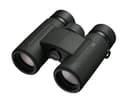
Nikon PROSTAFF P3 8x42 Binocular

Nikon PROSTAFF P3 8x42 Binocular

The binocular most blind hunters should buy, because the three numbers that matter from a seat are all on its side: 377 feet of field at 1,000 yards, 20.2 mm of eye relief and a 5.3 mm exit pupil. Wide field means you find the deer that just stepped out of the brush without sweeping; long eye relief means it works over glasses and with a hood up; a big exit pupil is what you are paying for in the last ten minutes of legal light.

Best overall under $100
$96.95 · View on Amazon

$159.9539% off

Price as of November 21, 2026. #ad How we’re funded

2
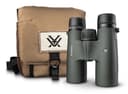
Vortex Triumph HD 10x42 Binocular

Vortex Triumph HD 10x42 Binocular

The cheapest binocular on this page we would actually hunt with, and the honest answer for a hunter who needs glass this weekend. It is waterproof, fogproof, carries the same unlimited lifetime warranty as the dearer Vortex models, and publishes 17 mm of eye relief — more than either of them.

Best 10x under $100
$99.00 · View on Amazon

Price as of November 21, 2026. #ad How we’re funded

3
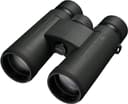
Nikon PROSTAFF P3 8x30 Binocular

Nikon PROSTAFF P3 8x30 Binocular

The compact that earns its place in a blind bag: 16.8 oz, 456 ft of field at 1,000 yards and an 8.2 ft close focus. The trade is published and real — a 3.8 mm exit pupil, the smallest here, and the one number that will show at last light.

Budget pick: lightest and widest view
$96.95 · View on Amazon

$149.9535% off

Price as of November 21, 2026. #ad How we’re funded

The picks in full

#1Best overall under $100Full-size 8x42 roof prism

Nikon PROSTAFF P3 8x42 Binocular

The binocular most blind hunters should buy, because the three numbers that matter from a seat are all on its side: 377 feet of field at 1,000 yards, 20.2 mm of eye relief and a 5.3 mm exit pupil. Wide field means you find the deer that just stepped out of the brush without sweeping; long eye relief means it works over glasses and with a hood up; a big exit pupil is what you are paying for in the last ten minutes of legal light.

Strengths

  • 20.2 mm eye relief — the longest here, and the reason it works with glasses or a head net
  • 377 ft at 1,000 yds is the widest full-size field on this page: easier to find a moving deer
  • 5.3 mm exit pupil, the brightest-on-paper of the 42 mm picks for first and last light

Trade-offs

  • 8x, so it reads antler detail at distance less well than a 10x on an open field edge
  • 9.8 ft close focus is the longest here — no use on something in the brush right outside the window
  • 20.3 oz with no chest harness in the box, unlike the Vortex picks
Magnification / objective8x / 42 mm
Field of view at 1,000 yds377 ft (7.2 degrees)
Eye relief20.2 mm
Exit pupil5.3 mm
Close focus9.8 ft
Weight20.3 oz
Waterproof / fogproofWaterproof to 1 m for 10 min, nitrogen filled

The spec that matters. Nikon publishes the whole optical table for this model — field, eye relief, exit pupil, close focus — which is more than most makers at this price do. Exit pupil is the spec to read if you hunt the last light: 42 mm divided by 8x gives 5.3 mm, against 4.2 mm for a 10x42, and that difference is visible at dusk.

Specs read from the product listing, on October 17, 2026. “Not published” means the maker does not state that figure.

#2Best 10x under $100Budget 10x42 roof prism

Vortex Triumph HD 10x42 Binocular

The cheapest binocular on this page we would actually hunt with, and the honest answer for a hunter who needs glass this weekend. It is waterproof, fogproof, carries the same unlimited lifetime warranty as the dearer Vortex models, and publishes 17 mm of eye relief — more than either of them.

Check the close focus. Vortex publishes a 15.3 ft close focus on this pair — the longest here by a wide margin. In open country it is irrelevant. In thick timber, or looking at a deer that has walked inside fifteen yards of your blind, you cannot focus on it at all.

Strengths

  • 17.0 mm eye relief, better than the Diamondback and Crossfire above it
  • 334 ft of field at 1,000 yds — wider than both dearer Vortex 10x picks
  • Unlimited lifetime warranty at the lowest price here

Trade-offs

  • 15.3 ft close focus is poor: it will not focus on anything near the blind
  • Fully multi-coated, but without the dielectric and phase coatings of the Diamondback
  • A GlassPak case rather than the chest harness the other Vortex picks include
Magnification / objective10x / 42 mm
Field of view at 1,000 yds334 ft (6.4 degrees)
Eye relief17.0 mm
Close focus15.3 ft
Weight22.9 oz
Height / width6.1 in / 5.0 in
Waterproof / fogproofNitrogen sealed, O-ring sealed

The spec that matters. The close-focus figure is the giveaway on where the money went: 15.3 ft against 5 ft for the Diamondback. It costs you nothing at 200 yards and everything if you wanted to watch something at the blind window.

Specs read from the product listing, on October 17, 2026. “Not published” means the maker does not state that figure.

#3Budget pick: lightest and widest viewCompact 8x30 roof prism

Nikon PROSTAFF P3 8x30 Binocular

The compact that earns its place in a blind bag: 16.8 oz, 456 ft of field at 1,000 yards and an 8.2 ft close focus. The trade is published and real — a 3.8 mm exit pupil, the smallest here, and the one number that will show at last light.

Strengths

  • 456 ft at 1,000 yds — by far the widest field on this page, so you find deer fast
  • 16.8 oz, light enough that it does not fight a harness under a jacket
  • 8.2 ft close focus, short enough to use on something just outside the blind

Trade-offs

  • 3.8 mm exit pupil: dimmer than the 42 mm picks in the first and last twenty minutes
  • 15.4 mm eye relief, short for a glasses wearer
  • A 30 mm objective is the wrong buy if your hunting is mostly dawn and dusk
Magnification / objective8x / 30 mm
Field of view at 1,000 yds456 ft (8.7 degrees)
Eye relief15.4 mm
Exit pupil3.8 mm
Close focus8.2 ft
Weight16.8 oz
Waterproof / fogproofWaterproof to 1 m for 10 min, nitrogen filled

The spec that matters. Compact binoculars are sold on weight and bought on regret at dusk. Nikon publishes the exit pupil on both models, so the comparison is a fact rather than a matter of opinion: 3.8 mm here against 5.3 mm for the 8x42.

Specs read from the product listing, on October 17, 2026. “Not published” means the maker does not state that figure.

The four specs that decide it, in order

  • Exit pupil, which is the dusk spec.Divide the objective by the magnification: 42 ÷ 8 gives 5.3 mm, 42 ÷ 10 gives 4.2 mm, 30 ÷ 8 gives 3.8 mm. The bigger that circle of light, the more your eye gets when the sun is gone — and legal light at either end of the day is precisely when you need to tell a shooter from a doe. This is the single reason an 8x42 beats a 10x42 for whitetails and the reason the small-objective pair is the compromise here rather than the bargain.
  • Eye relief, which is the glasses-and-hat spec. Nikon publishes 20.2 mm on the 8x42, 15.4 mm on the 8x30; Vortex publishes 17.0 mm on the 10x42. If you wear glasses, short eye relief means a black ring round the image and you will never be comfortable. Twenty millimetres is generous at any price.
  • Field of view, which is the find-it-fast spec. 456 ft at 1,000 yards on the 8x30, 377 ft on the 8x42, 334 ft on the 10x42. A wider field finds a moving deer in thick cover faster; a narrower, higher magnification field picks apart a rack at distance.
  • Weight, which is the will-you-carry-it spec. 16.8 oz, 20.3 oz and 22.9 oz respectively. The best binocular is the one on your chest, and a heavy pair ends up in the pack where it is useless.

Our full argument about magnification is in 8x42 vs 10x42 binoculars, and the short version is that most whitetail hunters are better served by 8x.

Why you need binoculars in a blind at all

Because the alternative is moving. A hunter who cannot resolve a deer at 120 yards leans, shifts, picks up the rifle to use the scope, and does all of it inside a box with walls that rustle. Glass on your chest is a movement-reduction device as much as an identification device, and whitetails detect motion far better than they discriminate detail — deer vision explained.

Two practical notes for blind use. Keep the binocular on a bino harness rather than a neck strap so it does not swing into the window frame when you lean, and keep it inside the blind’s shadow line — a lens catching low sun is a flash of light from outside. More on what belongs in the blind in best ground blind accessory kit and how to pack a blind bag.

Which of these three is yours

If you hunt whitetails in the last half hour of light

The 8x42, and it is not close. The 5.3 mm exit pupil is the largest number on the page and it is the one that pays you back at the moment deer actually move. Add that Nikon publishes waterproofing to 1 m for 10 minutes with a nitrogen fill, and the only reason to buy anything else here is weight.

If you glass open country or cut fields

The 10x42. The extra magnification earns its keep when you are counting points at 300 yards across a bean field, and the 17 mm eye relief is still workable with glasses. Watch the 15.3 ft close focus — it is the longest here and a real limitation in timber.

If the binocular has to be forgettable

The 8x30. At 16.8 oz it is a third lighter than the 10x42 and it publishes the widest field of view here at 456 ft, which makes it the best pair on the page for finding a deer that is already moving. Its small exit pupil is the price, so pair it with the understanding that you will reach for a rangefinder or a rifle scope at last light instead — best hunting rangefinder under $100.

If you also need to range

Buy a rangefinder before you upgrade the binocular. Knowing the distance to the field edge changes shot decisions more than another millimetre of exit pupil does, and it is the cheaper purchase — best rangefinders and do you need a rangefinder for bow hunting.

What we left out, and why

Both Vortex Diamondback HD pairs. The 8x42 and the 10x42 are the pairs we would normally expect to anchor a value binocular page, and both returned no live offer when this page was published. We will not rank a product you cannot buy, and we will not re-point a recommendation at a different model with a different name and a different price to keep a slot filled. They remain on best binoculars for deer hunting on their published specs.

Everything between $100 and $200.Two more pairs in our registry — a 10x42 with HD glass and a 10x42 from another established maker — sat a dollar under $150 at the last refresh, which is over this page’s cap and under the next one. They are ranked in best hunting binoculars under $200.

Any optical judgement we cannot source.No resolution test, no light-transmission figure, no “glass quality” ranking. We own no units and we have compared no images. Every number above is read from the maker’s own published spec sheet and dated — here is exactly what we do instead.
Frequently asked questions

What are the best hunting binoculars under $100?

The Nikon PROSTAFF P3 8x42, because it publishes the two numbers that decide a whitetail binocular and leads the page on both: a 5.3 mm exit pupil, which is what your eye uses at dusk, and 20.2 mm of eye relief, which is what makes it usable with glasses or a brimmed hat. It also publishes a 377 ft field of view at 1,000 yards, a 20.3 oz weight and waterproofing to 1 m for 10 minutes with a nitrogen fill.

Is 8x42 or 10x42 better for deer hunting?

For most whitetail hunting, 8x42. Dividing the objective by the magnification gives the exit pupil — 5.3 mm for an 8x42 against 4.2 mm for a 10x42 — and that larger circle of light is exactly what you need in the last twenty minutes of legal light, which is when deer move. 10x42 wins when you are judging antlers across open fields in good light. The full comparison is in '8x42 vs 10x42 binoculars'.

Are cheap binoculars good enough for hunting?

Under $100 you can get a full published spec sheet, a nitrogen-filled waterproof body and generous eye relief, which covers most whitetail hunting from a blind or a stand. What you cannot verify at any price without owning the units is image quality, and we will not rank glass we have not looked through. The honest sub-$100 advice is to buy on exit pupil, eye relief and weight, since those are published, repeatable and decide most real-world outcomes.

What magnification do I need for hunting from a ground blind?

Eight power is plenty, and often more than you need. In a blind your shots and your identification happen inside about 150 yards, and the job of the binocular is to let you identify a deer without leaning, shifting or picking up the rifle. Lower magnification gives you a wider field of view to find a moving deer and a bigger exit pupil for low light, both of which matter more in a box than reach does.

Does eye relief matter if I wear glasses?

It is the spec that decides whether the binocular is usable at all. Short eye relief with glasses on means you cannot get your eye close enough to the lens and you see a black ring around a shrunken image. Look for roughly 18 mm or more: the top pick here publishes 20.2 mm, which is generous at any price, while the budget pick publishes 15.4 mm and will feel tight with glasses.

Why are the Vortex Diamondback HD binoculars not on this page?

Because both the 8x42 and the 10x42 returned no live offer when we published, and we do not rank products you cannot buy. We also will not re-point the recommendation at a differently named, differently priced anniversary model just to keep the slot filled, because that would break the price claim in the page title. Their published specs stay on 'best binoculars for deer hunting'.

Sources

  • PROSTAFF P3 8x42 / 10x42 specifications (Nikon) — Nikon's own published optical table for both PROSTAFF P3 42 mm models, side by side. 8x42: 7.2-degree real field of view (377 ft at 1,000 yds), 5.3 mm exit pupil, 28.1 relative brightness, 20.2 mm eye relief, 9.8 ft close focus, 20.3 oz, waterproof to 1 m for 10 minutes and nitrogen filled. 10x42: 7.0-degree real field (367 ft at 1,000 yds), 4.2 mm exit pupil, 17.6 relative brightness, 15.7 mm eye relief, 9.8 ft close focus (accessed October 17, 2026)
  • PROSTAFF 7i laser rangefinder and the Target Priority Switch System (Nikon) — Nikon's own published description of the two target-priority modes, which is the mechanical difference between a golf and a hunting rangefinder: First Target Priority mode “allows you to measure the distance of the closest subject” and is “useful when measuring the distance to a subject in front of an overlapping background,” while Distant Target Priority mode “displays that of the farthest subject” for wooded terrain where the subject “may be partly obscured by bushes and undergrowth.” The same page publishes the PROSTAFF 7i's specification: 6x magnification, 8-1,300 yd measurement range, accuracy of +/- 0.5 yd under 600 yd, display in approx. 0.5 second, and switchable Horizontal Distance and Actual Distance display modes (accessed October 31, 2026)
  • A Review of Cervidae Visual Ecology (Newman & D'Angelo, Animals, 2024) — Peer-reviewed review: deer are dichromats — sensitive to short/blue wavelengths, poor at red/orange, which is why blaze orange reads as muted to them (accessed July 22, 2026)

Keep reading